Australia Faces Severe Bushfire Crisis Amid Heatwave Conditions
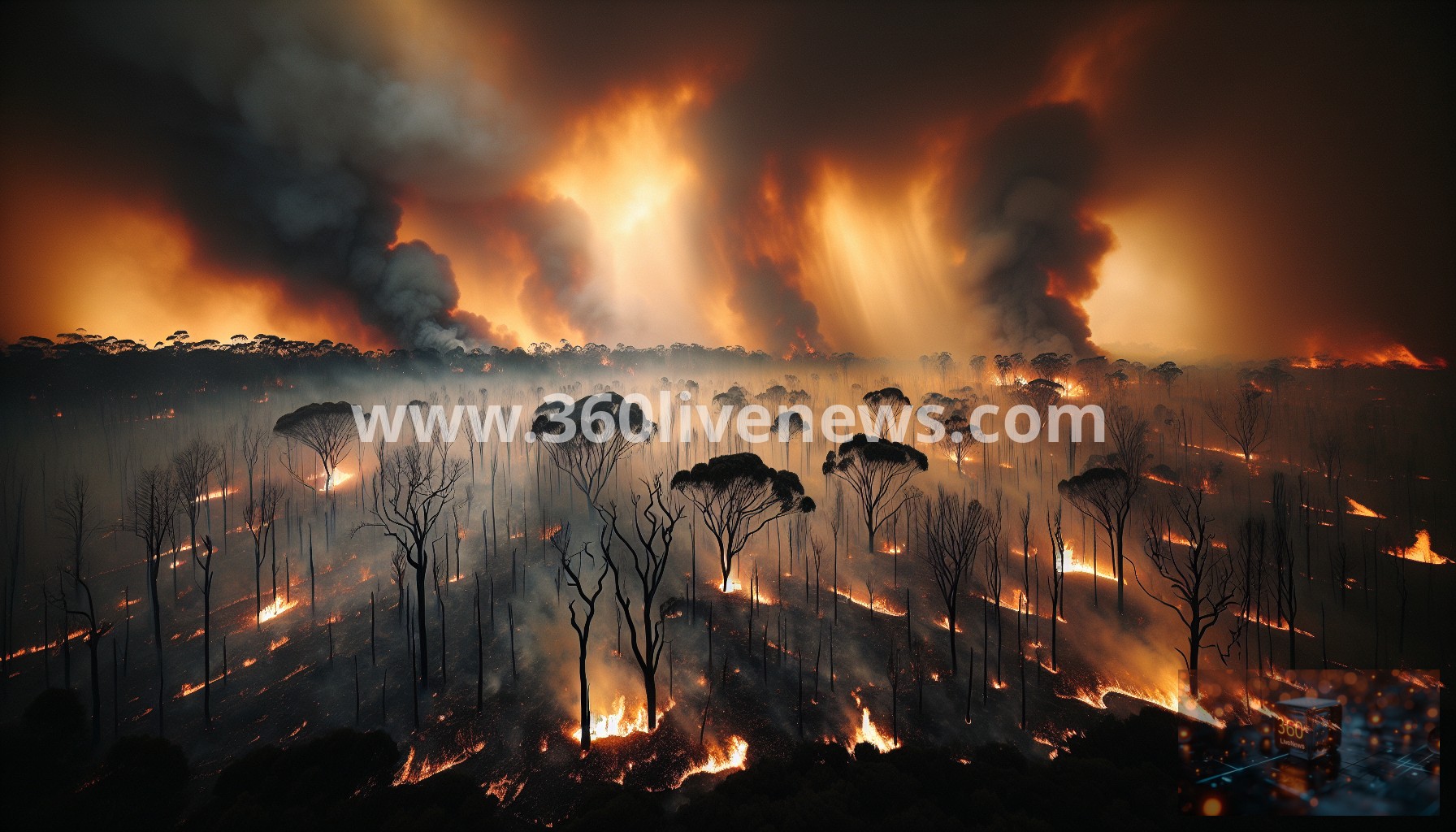
Human remains have been discovered near a vehicle in Longwood, approximately 70 miles north of Melbourne, Australia, as catastrophic bushfires continue to wreak havoc across the country. The victim has not yet been identified, adding to the distress caused by the ongoing disaster. The fires are part of a broader environmental crisis, occurring during a blistering summer heatwave that has engulfed regions of southeast Australia.
The bushfires have devastated more than 860,000 acres of land in Victoria since the beginning of the week, leading to significant destruction and widespread power outages. Authorities reported that over 300 structures, including homes, have been lost, leaving thousands without electrical power and forcing many to evacuate. With escalating temperatures in excess of 40°C, emergency conditions have prompted officials to declare a state of disaster across the state.
Victoria's Premier, Jacinta Allan, stated that more than 30 fires are actively burning throughout the state, some approaching the highest danger rating. The Rural Fire Service of New South Wales, which borders Victoria, has reported that several fires near the state line are also under severe threat. Firefighters have indicated it may take weeks to bring the fires under control, with conditions remaining precarious.
Emergency Management Commissioner Tim Wiebusch revealed that the fires have destroyed approximately 300 buildings, including numerous homes and various rural structures. The significant loss impacts residential areas and threatens vast agricultural lands and native forests. The unfolding crisis is reminiscent of the devastating Black Summer bushfires that ravaged Australia from late 2019 to early 2020, which resulted in the loss of human life and millions of hectares of wildlife habitat.
Rescue operations are ongoing, with hundreds of firefighters mobilized from across the nation to combat the blazes. Australian Prime Minister Anthony Albanese announced the government's commitment to providing emergency funding for those affected by the fires. Furthermore, he has been in discussions with officials in Canada and the United States for possible additional assistance in managing the crisis.
Witnesses describe harrowing scenes as flames engulfed their properties. One cattle farmer near Longwood recounted witnessing a terrifying spectacle as embers fell from the sky, transforming the night into a glowing, orange hellscape. Fire conditions have prompted concern among residents who are experiencing some of the most extreme weather patterns in recent history, exacerbated by climate change.
Research indicates that Australia's climate has warmed by an average of 1.51°C since 1910, contributing to the emergence of increasingly severe weather phenomena. As one of the world's largest producers and exporters of natural gas and coal, Australia faces scrutiny regarding its energy policies and their impact on global warming.
The recent spike in bushfire activity has once again raised questions about the nation’s preparedness for extreme weather conditions. Experts emphasize the urgent need for comprehensive strategies to mitigate fire risks, particularly as Australia enters a hotter future characterized by more frequent climate-driven disasters. With the consequences of these fires still unfolding, communities across the region are coming together to support one another, sharing resources and providing shelter for those displaced.
This unfolding crisis has prompted discussions about broader environmental issues, emergency management protocols, and the need for national cooperation in times of disaster. As firefighters continue to battle the blazes, the resilience of Australian communities is being tested once more, highlighting both the immediate human toll and the longer-term challenges posed by climate change.
#AustraliaFires #BushfireCrisis #ClimateChange #EmergencyResponse #Victoria
