Spain Approves Draft Constitutional Reform to Guarantee Right to Voluntary Pregnancy Termination
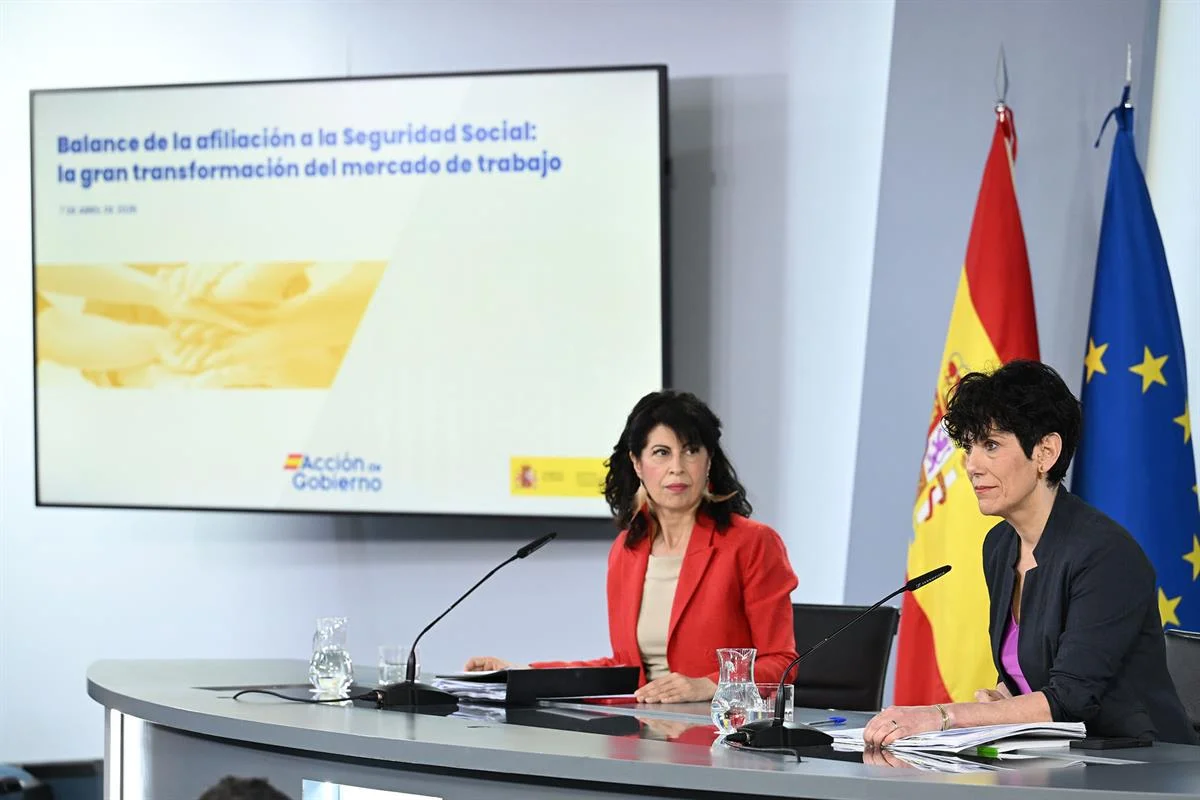
The proposal seeks to guarantee the exercise of this right under equal conditions throughout the national territory. In addition, the Executive has reinforced the fight against gender-based violence with â¬180 million and has activated aid to mitigate the damage caused by the recent storms. The Minister for Equality, Ana Redondo, and the Minister for Inclusion, Social Security and Migration, and Government Spokesperson, Elma Saiz, during the press conference after the Council of Ministers (Pool Moncloa/Borja Puig de la Bellacasa) The Council of Ministers has approved sending to Parliament the draft reform of the Spanish Constitution to recognise and safeguard women's sexual and reproductive rights. The amendment adds a fourth paragraph to Article 43 with the following wording: "Public authorities shall guarantee the exercise of women's right to voluntary termination of pregnancy under conditions of real and effective equality, with all the benefits and services necessary for said exercise." The Minister for Equality, Ana Redondo, highlighted that the new paragraph has been validated by the State Council, which considers that the proposal agreed upon by the Council of Ministers on 14 October, "with some modifications that we have accepted, is completely constitutional." Redondo explained that the right to voluntary termination of pregnancy is not at risk as a subjective right because the Constitutional Court has reiterated that it is connected to dignity, the free development of personality, and physical and moral integrity, all of which are recognised in the Constitution. However, she added, the real and effective exercise of this right throughout the country is indeed in danger, as reflected in the data from the latest study presented by the Ministry of Health. Only 20% of voluntary terminations of pregnancy are performed in public health care facilities. Furthermore, the situation varies greatly between autonomous communities: while around 60% of terminations occur in the public healthcare system in Cantabria, Galicia, La Rioja, and Navarre, that percentage barely reaches 1% in Madrid and Andalusia. "This is creating a substantial difference between first- and second-class women regarding their sexual rights, depending on where they live," the Minister for Equality pointed out. Ana Redondo summarised the motivation behind the constitutional reform in three reasons. The Minister for Equality, Ana Redondo, during the press conference after the Council of Ministers | Pool Moncloa/Borja Puig de la Bellacasa First, it is a response to the "ultra-reactionary movement that has targeted women's sexual and reproductive rights globally and also in our country," as the minister stated. Redondo stressed that, in contrast to this institutionalised movement against laws on voluntary termination of pregnancy, the vast majority of Spanish society supports this right. Second, the bill seeks to strengthen the jurisprudence of the Constitutional Court and increase the legal grounds for upholding women's right to voluntarily terminate their pregnancies. The third reason put forward by the Minister for Equality is consistency: "We are a citizenry that embraces democracy, women's rights, and equality, and we must also enshrine this in the Constitution." Ana Redondo pointed out that Spanish legislation has been progressing in recognising women's right to self-determination, from the 1985 law decriminalising certain abortion circumstances to the 2023 reform.
