UK FCDO Advises Against Travel to Most of Lebanon Amid Escalating Israel-Hezbollah Conflict
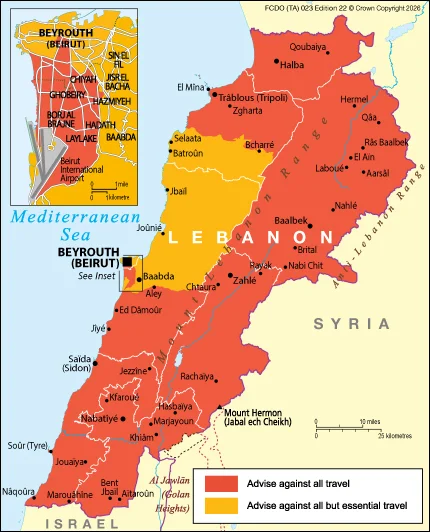
The UK Foreign, Commonwealth & Development Office (FCDO) has published a detailed and urgent travel advisory regarding Lebanon amid a fast-escalating conflict between Israel and Lebanese Hezbollah. The advisory strongly advises against all travel to the southern suburbs of Beirut (excluding the main Route 51), the southern areas of Mount Lebanon Governorate, South Governorate, Nabatiyeh Governorate, Beqaa, Baalbek-Hermel, Akkar, and specific northern regions including Tripoli and areas north of Chekka to Ariz. Travel is also forbidden to all 12 Palestinian refugee camps in Lebanon. The FCDO further advises against all but essential travel to other parts of Beirut, Mount Lebanon, and the Northern Governorate. This travel ban arises amid an intensification of hostilities since 2 March when regional conflict escalated following Israel-Lebanon exchanges. Israeli Defense Forces (IDF) have issued evacuation warnings for southern Lebanon, including large areas south of the Litani River and Beirut’s southern suburbs. Since early March, Israel has conducted multiple airstrikes targeting over 100 locations across Lebanon including the South Litani Sector, Beqaa Valley, Baalbek-Hermel, and parts of Beirut. These strikes focus mostly on Hezbollah and military infrastructure but have also targeted civilian facilities such as ports, hotels, roads, bridges, energy sites, water systems, and airports. The FCDO notes that the Iranian regime has publicly declared intentions to attack US-affiliated entities in the region, escalating regional security risks. Travelers are strongly cautioned to avoid all areas near military or security installations and locations with US associations. The advisory stresses additional dangers including the risk of celebratory or reactive gunfire in residential zones, spontaneous and potentially volatile protests related to regional developments, and sudden changes to the security environment. UK nationals are urged to remain alert and monitor local news sources such as Virgin Radio Lebanon and Voice of Lebanon. Due to the deteriorating situation, some UK government staff and dependents have been temporarily withdrawn from Beirut, although the embassy continues to function. The FCDO warns that if travelers choose to remain, consular support may be significantly limited, and they must have personal emergency plans independent of UK government assistance. Such plans should enable them to shelter in place safely or depart quickly if necessary. Travelers are advised to keep departure plans under continuous review, ensure travel documents, including visas for onward travel, are current, and verify airline reservations before proceeding to airports. Beirut airport remains open and operational but is subject to rapid changes in security conditions. The advisory warns that travel insurance may be invalidated if traveling contrary to official FCDO guidance. UK nationals planning to travel to Lebanon must independently assess risks and ensure their insurance coverage properly reflects their itinerary and activities. Emergency contact information is provided: dialing 112 for local emergency services and +961 (0)1 960 800 for urgent UK consular assistance such as in cases of attacks, arrests, or death. In summary, the escalating military conflict between Israel and Hezbollah, compounded by Iranian threats and structural damage to civilian infrastructure, has led the UK government to issue one of the most restrictive travel advisories to Lebanon in recent years. The situation remains highly fluid, volatile, and hazardous for all travelers, with advice to avoid travel unless essential and to prepare for the possibility of rapid evacuation or sheltering under threat.
