President Meloni addresses Parliament on government activities and justice reform after referendum
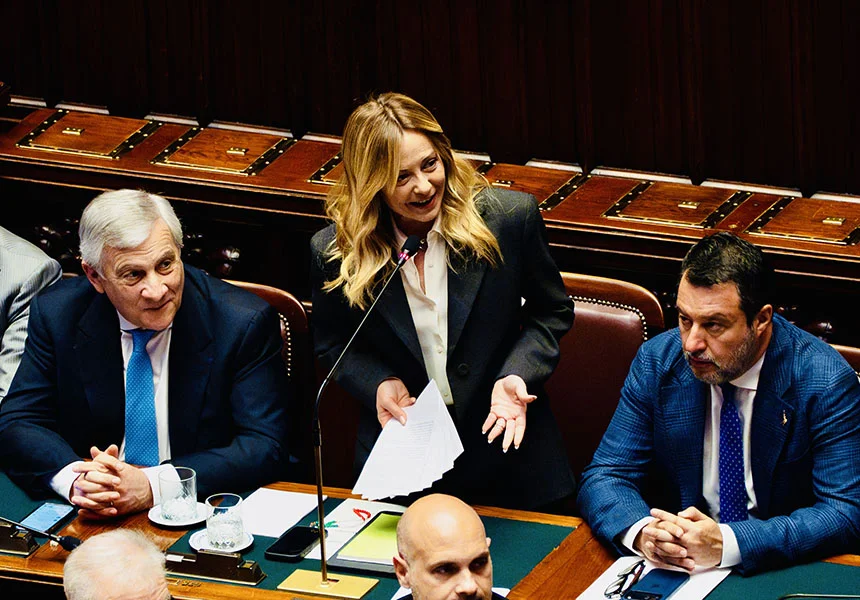
Honourable Deputies, I first of all wish to thank Parliament for this opportunity. I gladly accepted the invitation and I believe it is important to have a discussion with both houses following the result of the constitutional justice reform referendum, moreover in what is an increasingly delicate international context. Before going into detail about what has been done so far and what is yet to be done, colleagues, I would like to briefly reflect on the Italy that emerged from the referendum vote of 22-23 March , an Italy which saw a high voter turnout at the same time as an equally high degree of polarisation. It was a closely fought debate, which regrettably did not always focus on the substance but nevertheless gave a clear outcome. As I have already said, we always respect the verdict of the Italian people, whatever that may be, even when it does not coincide with our own views or expectations. Of course, there is still a sense of regret at having missed what, in our view, was a historic opportunity to modernise Italy by aligning it with European standards because, colleagues, justice reform remains a necessity. And I am not the only one to say so; numerous representatives of the judiciary and politics also say so, including those who predicted all sorts of disasters while supporting the 'no' vote, only to then candidly state the day after the referendum that the justice system needs to be reformed, that a step change is needed, that the drift into factionalism is a problem and that the excessive power of part of the judiciary is a real risk. Hence why it is my hope, all the more so today, that the work on this reform is not abandoned, as some are likely calling for. The problems on the table remain, and we have a duty to find concrete, courageous and effective solutions, preferably in a climate of cooperation. This is certainly not an attack on the judiciary, as some have sought to portray, but is rather in favour of a judiciary free from political and ideological influence, and, I would like to add, in favour of a political class that would be making a historic mistake if, for tactical reasons, it were to abandon its role, which is to make laws, constitutional amendments included. As far as we are concerned, our conscience is clear, because the constitutional justice reform was one of the commitments we made to Italians when we presented ourselves before them, as indeed has been the case for so many other things: we said we would do it during our election campaign, and we have done it now we are in government. For this is our view of politics: to honour the deeper meaning of the word 'responsibility'. 'Responsibility' derives from the verb 'respondeo', whose origins in turn come from 'spondeo', meaning 'the solemn act of promising and providing a guarantee'. Responsibility therefore means answering to others, not to yourself, and certainly not based on what is convenient for you.
