The Madness of Power, From Balfour to the Edge of World War Three

A Voice in the Wilderness of War: Who Still Dares to Speak Truth While Empires March

As an Amazon Associate we earn from qualifying purchases.
There are moments in history when the world suddenly accelerates toward disaster, moments when anyone who has studied history can feel the temperature rising even before the explosions reach their peak. The current escalation in the Middle East is one of those moments. According to the facts we now see unfolding, the United States and Israel made the unilateral decision to attack Iran without the approval of the United Nations, without a global coalition mandate, and without the support of most of the international community.
Once that door was opened, the consequences began spreading like wildfire.
France rushed naval assets to the eastern Mediterranean. Italy began preparing anti drone and missile defence support. The United Kingdom activated operations from RAF Akrotiri in Cyprus. Greece deployed frigates and fighter jets. Spain and the Netherlands moved naval coordination into the region. Portugal opened the Lajes base in the Azores for American logistical operations. Australia sent military aircraft. Ukraine offered expertise in defending against Iranian drones. Suddenly the map began to look familiar to anyone who has ever studied how world wars begin.
Not one country saying stop
Not one country saying diplomacy first
Not one serious global push to sit everyone around the table
Instead, we see bases opening, fleets moving, air defence systems activating, alliances tightening, and slogans repeating. History teaches us something very uncomfortable. Which is that world wars rarely start because someone officially declares them. They start because too many countries slowly step into the same fire.
The Smell of the Big Cheese
Now let us ask the question that nobody wants to ask.
Why are so many countries suddenly moving military assets toward this conflict?
Is it really about protecting peace Or is it about protecting interests?
Yesterday the European Union had serious tensions with Israel. Yesterday many European leaders were criticizing the United States under Donald Trump for aggressive policies, including the extraordinary proposal to take over Greenland. Yesterday Washington and European capitals were arguing about trade, NATO responsibilities, and geopolitical strategy. And suddenly everyone is lining up behind the same military escalation. Why?
One explanation is simple.
Advert for a company owned by the publisher of 360LiveNews.
“When the big cheese appears on the table, everyone wants a piece”
The Middle East is not only about oil anymore. The world is entering the age of artificial intelligence, advanced electronics, quantum technologies, and green energy systems. These industries depend on rare earth minerals and strategic resources that are extremely concentrated in certain parts of the world.
Iran sits on enormous strategic resources. The surrounding region sits on energy corridors that control global markets. The Mediterranean gas fields off Lebanon, Israel, and Cyprus represent one of the most important energy discoveries of the modern era.
Suddenly the slogans of security start sounding very convenient.
Protecting peace.
Protecting democracy.
Protecting stability.
But behind every slogan there is usually a balance sheet!
Zoom Out Before You Lose the Truth
Sometimes when we zoom too deeply into daily headlines, we lose the ability to see the full picture. The world of geopolitics is often like a chessboard. The moves are slow, calculated, and sometimes invisible until the final moment.
Zoom out and you start seeing patterns.
· Gas fields in the Mediterranean.
· Rare earth minerals needed for the AI revolution.
· Strategic maritime corridors.
· Control of energy supply.
· Control of industrial resources.

As an Amazon Associate we earn from qualifying purchases.
Suddenly wars that appear ideological begin to look suspiciously economic. But, don’t take my word for it, instead, take Lebanon as an example.
Several years ago, a major energy exploration operation announced promising gas discoveries in Lebanese waters near the border with Israel. Excitement spread quickly. The possibility that Lebanon might finally develop its own energy wealth created huge expectations. Then suddenly the project was halted! The announcement came quietly, the discovery was declared not commercially viable, the operation closed. Three days earlier it had been celebrated as a breakthrough and three days later it was declared worthless.
Anyone paying attention understands that geopolitics often decides which resources can be developed and which must remain buried. Control the territory, control the government, control the extraction. The wells question becomes philosophical all of a sudden “to be or not to be”.
The Old Ghosts of History
Anyone who thinks these patterns are new has not studied history carefully. The modern Middle East cannot be understood without remembering the Balfour Declaration of 1917. That document, issued by the British government during World War One, promised the establishment of a national home for the Jewish people in Palestine. It was issued at a time when Britain did not even fully control the territory, which was still part of the collapsing Ottoman Empire.
After the war, the British Mandate took control of Palestine. Jewish immigration increased dramatically, tensions between Jewish and Arab communities intensified, and the foundations of the modern Israeli Palestinian conflict were laid.
But history did not stop there.
In 1946 the King David Hotel in Jerusalem, which served as the headquarters of the British administration, was bombed by the Irgun, a Zionist paramilitary organization. The explosion killed ninety one people including British officials, Arabs, and Jews. The attack shocked the world and accelerated British withdrawal from Palestine.
The same British Empire that had helped shape the future of the territory found itself violently pushed out by forces that wanted full independence.
History is never simple. Those who once helped create a political reality can later become targets within it.
Religion and Power
Another dangerous element now returning to the centre of politics is the language of religion.
We hear leaders referencing ancient struggles, invoking historical enemies, speaking about conflicts that date back thousands of years. When political leaders begin framing modern wars as civilizational or religious struggles, history tells us that danger increases dramatically.
Benjamin Netanyahu has repeatedly referenced historical and religious dimensions of the struggle with Iran. Iranian leaders respond with their own ideological language.
But this raises an uncomfortable question.
What exactly is the difference between leaders invoking religious justification for war today and militant movements doing the same?
Advert for a company owned by the publisher of 360LiveNews.
When extremist groups like ISIS justified atrocities by citing religious slogans, the world condemned them. Yet when powerful states wrap military operations inside ideological narratives, suddenly it becomes strategy.
Violence does not become more moral simply because the flag behind it is larger.
Children Are Not Strategic Assets
One of the most disturbing aspects of modern war is the way human life becomes abstract in political calculations.
A child killed in one country is described as a tragedy.
A child killed in another country is described as collateral damage.
Who made this measurement?
Who decided that one life weighs more than another?
A child in Gaza, a child in Israel, a child in Lebanon, a child in Iran, a child anywhere in the world deserves exactly the same chance to live, to learn, to grow, and to contribute to the future of humanity. When we allow political narratives to rank the value of human life, we enter very dangerous territory.
Civilization itself begins to erode.
The Media Machine
Another battlefield that often escapes attention is the battlefield of narratives. Modern media ecosystems can amplify slogans faster than facts. If a powerful country launches an operation and attaches a compelling slogan to it, many media outlets will repeat that slogan before analysing its consequences.
· “Protecting freedom”
· “Defending democracy”
· “Pre-emptive security.”
These slogans travel quickly. Meanwhile the images of destroyed neighbourhoods and dead civilians arrive later, often after public opinion has already been shaped.
Advert for a company owned by the publisher of 360LiveNews.
History again offers parallels. Extremist groups like ISIS built entire propaganda systems around ideological slogans. Their followers committed atrocities under those banners (still are). The difference today is that state power operates with far more sophisticated communication systems but the principle remains similar.
· Create a slogan
· Act under the slogan
· Justify the action through the slogan.
The World War Pattern
Let us look at the pattern before World War One:
· A regional crisis in the Balkans
· A network of alliances.
· Mobilizations triggered by mobilizations miscalculations.
Within weeks the entire continent was at war. Now look at the pattern before World War Two:
· Economic competition
· Territorial ambitions
· Expansionist leadership
· Global alliances forming around rival blocs
· Escalations justified by ideological narratives
The early twenty first century is showing disturbing similarities:

As an Amazon Associate we earn from qualifying purchases.
· Regional conflicts
· Global alliances
· Resource competition
· Technological arms races
Advert for a company owned by the publisher of 360LiveNews.
· Nationalist rhetoric
All the ingredients that historically precede major wars.
The Nuclear Edge
The difference today is far more frightening as, in 1914 nuclear weapons did not exist as well as In 1939 nuclear weapons did not exist however today, several of the countries involved directly or indirectly in global tensions possess nuclear arsenals.
It only takes one moment of miscalculation.
One missile misinterpreted.
One retaliatory strike that spirals beyond control.
China, Russia, the United States, North Korea, Israel, and other nuclear capable actors are all watching the same geopolitical chessboard.
If the current escalation continues without diplomatic restraint, the world could reach a point where the phrase World War Three is no longer theoretical.
A Warning Before the Point of No Return
Human civilization has reached extraordinary levels of technological sophistication. We can build artificial intelligence, explore deep space, manipulate genetic code, and communicate instantly across continents. Yet we still struggle with the most basic challenge of civilization, learning how to resolve conflicts without destroying ourselves.
If the current trajectory continues, humanity may one day look back at this moment as the point where leaders had the chance to step back from the abyss, or, the point where they continued walking towards it (if anyone is left to tell the story!).
Advert for a company owned by the publisher of 360LiveNews.
The dinosaurs were not destroyed by their own decisions; it was a cosmic impact that changed the course of life on Earth.
Humanity now possesses the power to become its own extinction event.
The Voice in the Wilderness
That is why someone must still speak even if that voice sounds lonely, even if it is unpopular, even if the powerful prefer silence. History shows that truth is rarely welcomed during moments of escalation. The prophets of caution are often dismissed as pessimists, dreamers, or troublemakers.
But the wilderness needs voices.
Voices that remind the world that power without wisdom leads to catastrophe.
Voices that ask uncomfortable questions.
Voices that refuse to measure human life through the lens of strategic convenience.
Before the madness reaches the point of no return, before the chess players push one move too far, before the nuclear shadows fall across civilization, the world must remember something very simple.
“War has never solved the problems that created it”
Only negotiation, compromise, and the recognition of shared humanity have ever done that.
I hope the world wakes up before it is too late.
But …
I am not holding my breath,,, neither my pen (my keyboard nowadays)
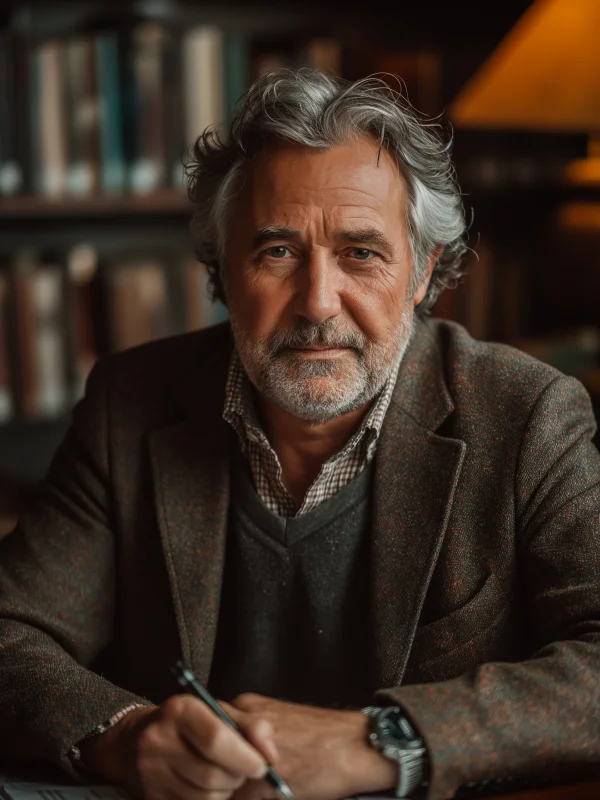
Anthony Sterling
Signing off.
As an Amazon Associate we earn from qualifying purchases.