The Ghosn Paradox The Imperial Savior, His Cinematic Escape, and the Desperate Call to Salvage a Crumbling Nissan

The Man Who Defied Corporate Gravity


Sponsored
Few corporate sagas in modern history possess the cinematic drama, geopolitical friction, and sheer psychological tension as the rise and fall of Carlos Ghosn. Once lauded as the ultimate transnational executive, a multi-lingual titan capable of bridging disparate business cultures, Ghosn became the absolute center of a global firestorm. His story cuts through the pristine facade of global corporate governance to reveal a messy underbelly of nationalism, legal vulnerability, and strategic failure.
Rebuilding an Empire from the Ashes of Bankruptcy
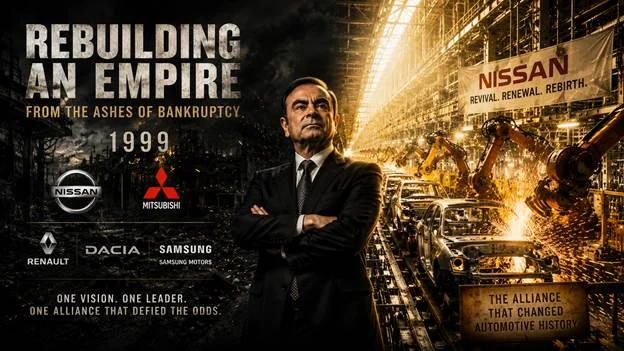
The mythos of Carlos Ghosn began in 1999. Nissan, one of Japan's proudest manufacturing jewels, was on life support, drowning under more than $20 billion in structural debt. In a highly unusual cross-border alliance, French automaker Renault purchased a controlling stake and sent Ghosn to Tokyo to salvage the wreckage. To the Japanese business establishment, sending a foreign executive to fix a historic institution was seen as a desperate gamble.
Ghosn acted with ruthless, surgical precision. He tore through traditional Japanese corporate norms, dismantling the 'keiretsu' system of interlocking cross-shareholdings, shuttering underperforming manufacturing plants, and eliminating thousands of legacy jobs. His uncompromising strategy earned him the nickname 'The Cost Killer.' Yet, within three years, the gamble paid off spectacularly. Nissan returned to aggressive profitability, and Ghosn was elevated to the status of a living corporate savior. He was celebrated in Japanese manga, received national honors, and established the Renault-Nissan-Mitsubishi Alliance, forming a global juggernaut that challenged the world's largest automotive groups.
The Cult of Personality and Cultural Collision
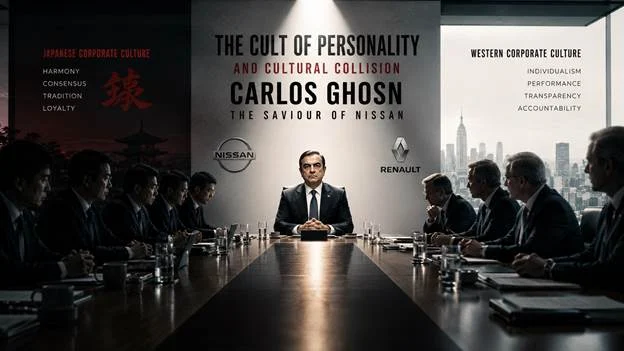
As the years progressed, Ghosn's power grew absolute. He wore multiple hats simultaneously, serving as CEO and Chairman across different entities within the Alliance. This concentration of authority fostered a massive cult of personality. However, beneath the surface of successful earnings reports, deep cultural and nationalistic fault lines were forming. Inside Nissan's Tokyo headquarters, a growing contingent of traditionalist executives felt that the alliance was becoming increasingly lopsided, fearing that the French government (which held a major stake in Renault) was orchestrating a permanent, irreversible takeover of a crown jewel of Japanese industry.
Sudden Ambush: The Haneda Airport Arrest
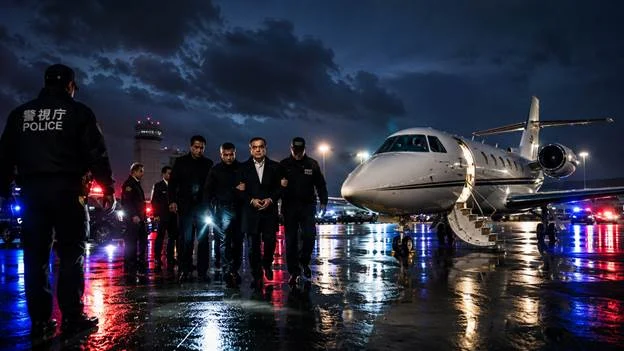
The breaking point arrived on November 19, 2018. Carlos Ghosn’s private corporate jet touched down at Tokyo's Haneda Airport under the assumption of another routine business trip. Instead, the aircraft was boarded by Japanese prosecutors. In a highly synchronized and public ambush, Ghosn was arrested on the tarmac, stripped of his executive titles within hours, and thrust into the global news cycle as an accused criminal.
The formal accusations levied against him were severe: underreporting his compensation package by tens of millions of dollars, transferring personal investment losses directly onto Nissan’s balance sheets, and misusing corporate funds to secure ultra-luxury residences in cities like Beirut and Rio de Janeiro. Ghosn denied every charge from day one, aggressively maintaining that the entire legal action was an internal corporate coup engineered by nationalistic Nissan insiders terrified of a full corporate merger.
The Hostage Justice System of Tokyo

Following his arrest, Ghosn was subjected to the harsh realities of the Tokyo Kosuge Detention House. For months, he was kept in solitary confinement, denied access to his family, and interrogated for hours daily without a defense attorney present. This process spotlighted Japan's controversial 'hostage justice' framework, a system where defendants face prolonged detention designed to extract a confession, contributing to the country's staggering 99% criminal conviction rate. Ghosn's legal team fought relentlessly, eventually securing a multi-million-dollar bail, but under conditions that amounted to digital house arrest: 24-hour video surveillance, no internet access, and a strict ban on communicating with his wife, Carole.

Sponsored
Orchestrating the Impossible: The Audio Box Escape
Convinced that a fair trial in Japan was a statistical impossibility, Ghosn began planning one of the most audacious, high-stakes escapes in corporate history. In late December 2019, he put the plan into motion.
The operational details read like an espionage thriller: walking past guards in broad daylight, a bullet train sprint, a disguised ex-Green Beret, and a heavy-duty concert audio box.
On December 29, 2019, Ghosn slipped out of his heavily monitored Tokyo home wearing a bucket hat, sunglasses, and a surgical mask. He boarded a high-speed shinkansen train to Osaka, completely evading surveillance teams. In an Osaka hotel room, he met his extraction team, led by Michael Taylor, a former US Army Green Beret.
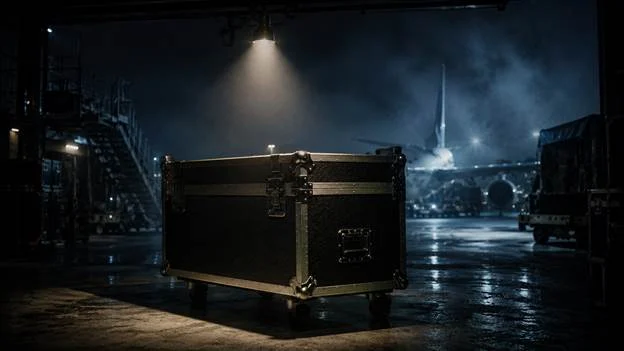
The core of the escape relied on an oversized, black, wheeled transit case designed to transport heavy concert audio equipment. Ghosn, a man who once ruled the global automotive industry, squeezed himself into the cramped box, which had small breathing holes drilled into the bottom. The box was transported to Kansai International Airport. Because private charter luggage was exempt from standard large-scale X-ray scanning at the time, airport security bypassed the container. The box was loaded onto a private jet, which took off into the night sky toward Istanbul, where Ghosn transferred to another aircraft bound for Beirut, Lebanon.
The Fugitive in Beirut

Lebanon does not maintain an extradition treaty with Japan, offering Ghosn a safe, if constrained, haven. Safe from Japanese prosecutors, Ghosn held a massive, globally televised press conference in Beirut, lambasting the Japanese justice system and reiterating that he fled injustice rather than justice. Today, he remains an international fugitive under an Interpol Red Notice, confined to Lebanon, while the individuals who helped him escape, including Michael Taylor and his son, were later arrested, extradited to Japan, and sentenced to prison.
The Post-Ghosn Vacuum and Financial Collapse
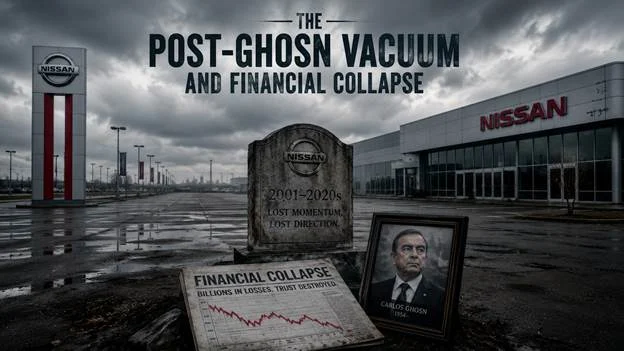
While Ghosn adjusted to life as a corporate exile, the empire he left behind entered a devastating downward spiral. The executives who engineered his departure promised a return to clean governance and renewed focus, but the reality was a catastrophic operational vacuum. Without Ghosn's centralized authority, decision-making ground to a halt, and deep internal factionalism crippled the company.
Between 2018 and mid-2026, Nissan suffered an unprecedented collapse. The automaker's global sales plummeted from over five million vehicles annually to barely three million. Its stock price lost roughly 80% of its total market value, erasing billions in shareholder wealth. Crucially, the company entirely missed the initial wave of the global electric vehicle (EV) transition, falling years behind legacy rivals and agile new entrants. Nissan found itself right back where it was in 1999: deeply vulnerable, lacking strategic direction, and burning through capital.
The Desperate Cry of the Forgotten Shareholder
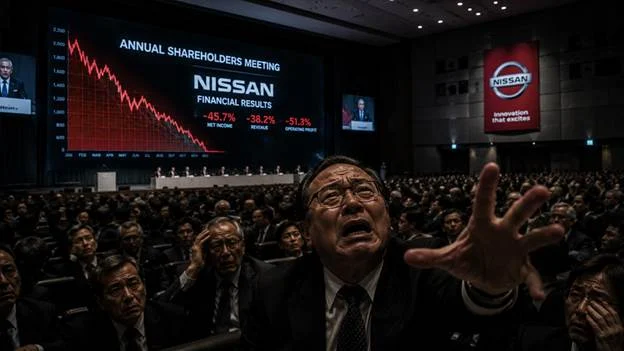
The ultimate irony of this multi-year tragedy culminated during Nissan's annual general shareholder meeting in Yokohama. Facing a room of furious investors witnessing the erosion of their portfolios, the current executive team, led by CEO Ivan Espinosa, faced intense criticism.
In a stunning twist, a disgruntled shareholder took the floor and openly demanded the return of Carlos Ghosn. The investor noted that while Ghosn undoubtedly possessed significant personal flaws and ethical baggage, he was the only leader in Nissan's history with the raw executive power and strategic vision to enforce a real corporate turnaround. The request instantly shifted the atmosphere from a standard corporate update to a stark acknowledgment of an ongoing existential crisis.
Sponsored
An Unachievable Return and an Uncertain Future

The board immediately dismissed the proposal, as Ghosn's legal status as an international fugitive makes any official corporate return impossible. However, the true significance of the moment was symbolic. When a highly controversial, fugitive figure like Carlos Ghosn becomes a beacon of hope for institutional investors, it signifies that trust in current management has completely collapsed.
Nissan stands at a historical crossroads, proving that while removing a polarizing leader is simple, replicating the vision that saved a global empire from total destruction is infinitely harder.
This is Anthony Sterling signing off,
Till I write again…
Multimedia Reference Documentation:
To watch the comprehensive BBC investigative documentary breaking down the mechanical execution of his escape, view the verified report here: https://www.youtube.com/watch?v=m-L2hMB2rYs