THE TRAM AND THE TREATY: FOURTEEN CENTURIES OF EVIDENCE BEHIND EUROPE'S FEAR OF POLITICAL ISLAM


More from 360LiveNews Opinion
Introduction: Separating Facts from Panic
Everywhere you look today, online and in print, the debate about migration, integration and Muslim communities in Europe has turned into a noisy wave of alarm. Far-right groups shout their warnings louder and louder, while public worry reaches fever pitch over the feeling that Western values are slipping away. Yet much of this talk only looks at the surface, selling general fear instead of facts.
Joining that chorus would mean failing the most basic duty of an investigative journalist. Real analysis means stripping away the drama and looking at how these societies actually work. The aim of this piece is not to feed knee-jerk guesswork, but to take a careful, side-by-side look at how the main Arab nations and regional powers were built, and how their populations changed. If we understand how these societies were formed, how their populations shifted, and where the line falls between practising a faith and the political machine of Islamism, we can set a fair starting point. Only by looking at the historical record can we separate real security concerns from invented panic, and find where the true points of friction lie where civilisations meet.
1. The Arabian Peninsula: Treaties, Wars and a Changing Population
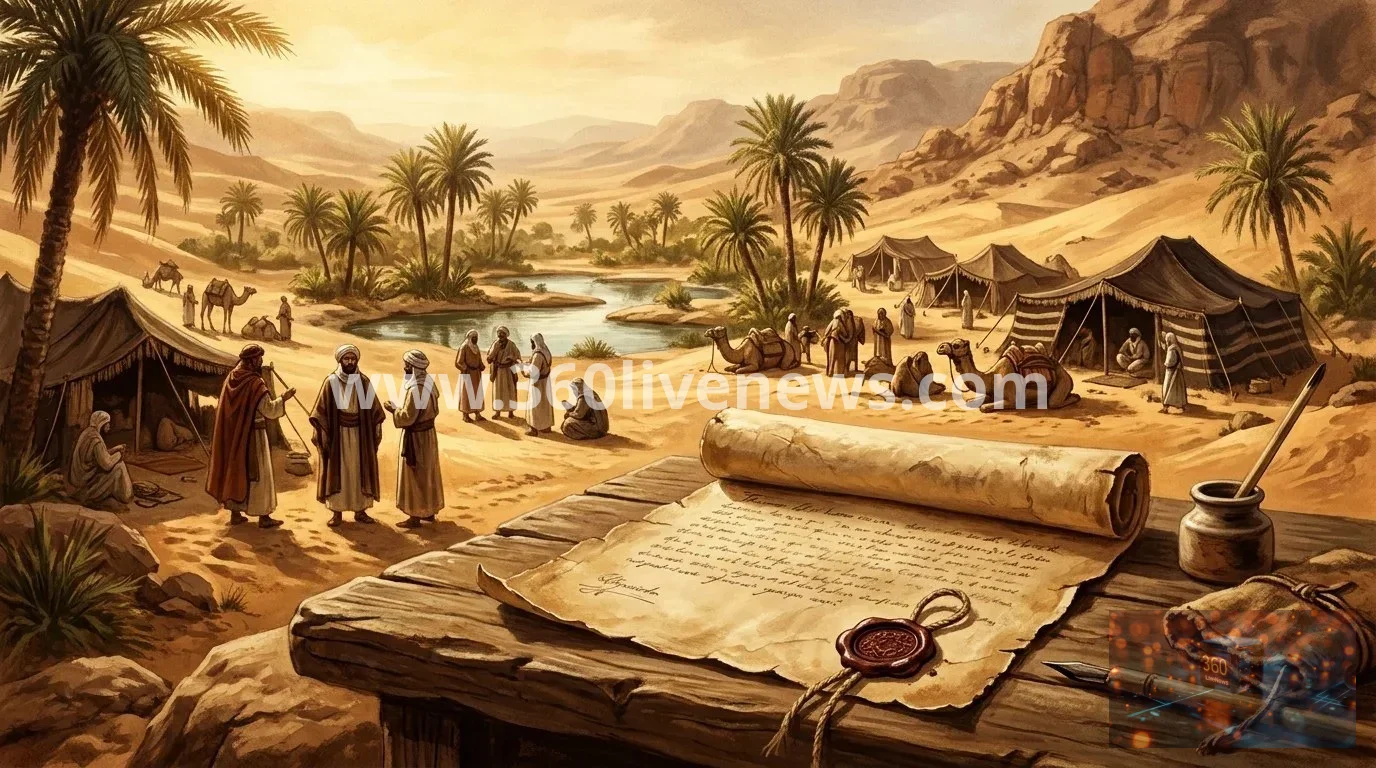
To understand the Arabian Peninsula, we must look at it before the seventh century. It was far from a single society. It was a patchwork of tribal alliances, most of which worshipped many gods. Historical records, both Islamic traditions and outside sources, confirm that there were settled Jewish communities, notably in towns like Medina (Yathrib) and the oasis of Khaybar, alongside Christians living in places such as Najran and among several northern tribes. Under Muhammad, scattered tribal alliances quickly became a single religious and political state. After him, the conquests under the first four caliphs (the Rashidun Caliphate) steadily changed who lived there. The dhimmi system, a legal status for protected non-Muslims, set out their rights and duties, and started a process lasting centuries in which minorities slowly converted or left, ending in the overwhelming Sunni Muslim majority of modern Saudi Arabia.
To test what today's Islamist movements claim about taking territory, we have to go back to the original sources on Muhammad's military and diplomatic campaigns. The classical Islamic histories, including Ibn Ishaq's Sirat Rasul Allah (passed down by Ibn Hisham), and the main Hadith collections such as Sahih al-Bukhari, describe a series of pacts, sieges and treaties through which power in the region was brought into one hand. After the migration to Medina in 622 CE, the Constitution of Medina (Sahifat al-Madina) set up a formal agreement between the Muslim migrants, the local tribes of Aws and Khazraj, and the Jewish clans. It recognised the Jewish communities' own religious identity, gave them equal political and security rights within the alliance, and required each side to defend the other.
The same histories then describe how these agreements fell apart. The Banu Qaynuqa were thrown out after a market dispute following the Battle of Badr (624 CE), while the Banu Nadir were driven out in 625 CE after being accused of plotting to kill Muhammad. The harshest outcome came with the Banu Qurayza in 627 CE: according to classical Islamic accounts, their adult men were executed after they surrendered following the Battle of the Trench. In the last years of Muhammad's life, while diplomatic missions and treaties, such as the pact with the Christians of Najran, carried on, the period was also marked by major military campaigns, notably the Conquest of Mecca and the Tabuk Expedition in 630 CE.
2. Egypt and the Great Change of the Seventh Century
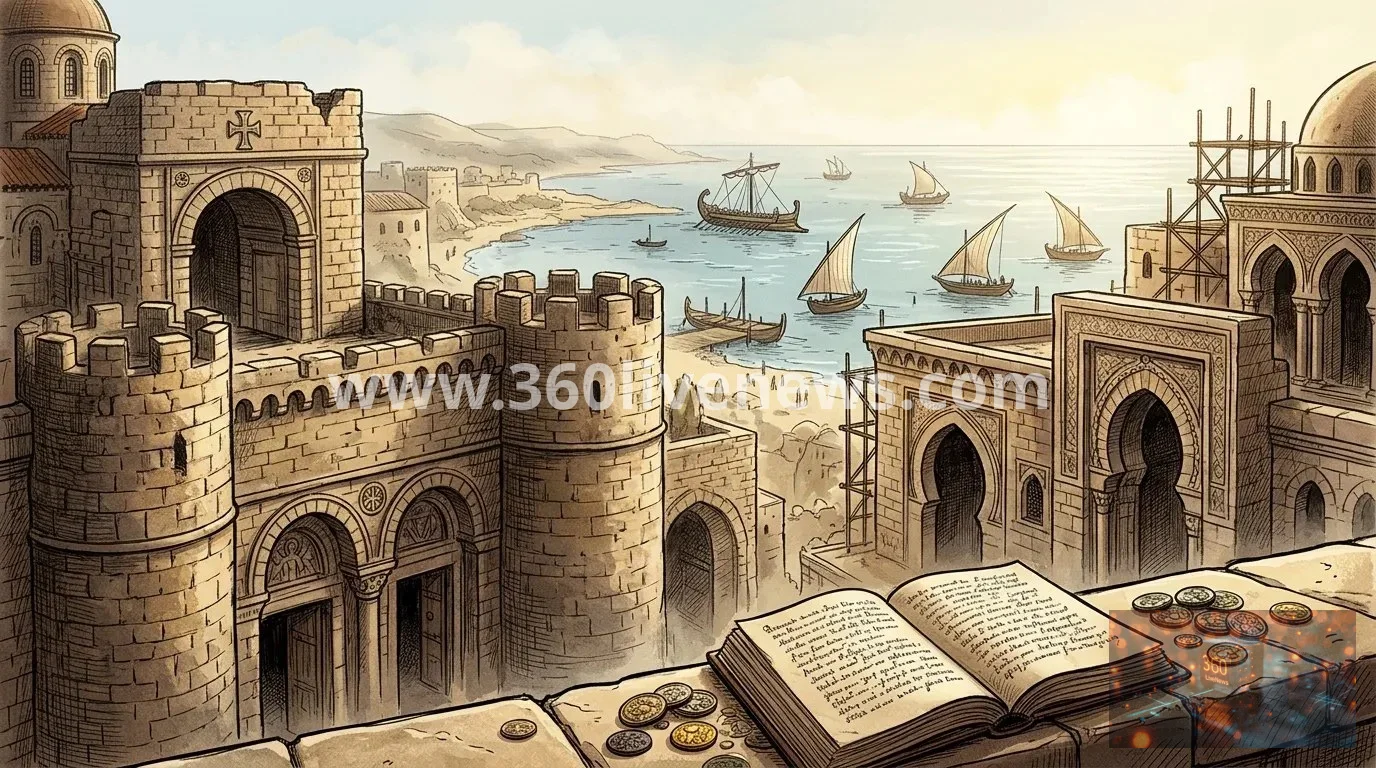
Before the seventh century, Egypt was a central part of the Byzantine Empire, and its people were overwhelmingly Christian. Most belonged to the Coptic Church, alongside Melkite communities and large Jewish populations in cities like Alexandria. After the conquest launched under the Caliphate, Egypt slowly became Arabic-speaking and Muslim. As early Islamic histories such as Ibn Abd al-Hakam's Futuh Misr record, the military campaign led by Amr ibn al-As began in 639 CE and ended with the Treaty of Alexandria in 641 CE. The treaty set the terms of surrender: Byzantine troops would leave, and the people and their churches would be kept safe, as long as they paid tribute, namely the jizya.
Under Muslim rule, the Copts were placed in the dhimmi system. Historical records show that while this status protected their lives and their worship, it came at a heavy social and economic price. The main burden was the jizya, a tax on every able-bodied adult non-Muslim man, alongside the kharaj, a land tax. In the centuries after the conquest, several things pushed people to convert to Islam. Beyond plain money reasons, such as escaping the jizya, the switch to Arabic as the only language of government under the Umayyad and Abbasid Caliphates added official pressure, and the Christian share of the population fell steadily.
Across the wider Near East, this change of rulers happened mainly in the seventh century. In the Arabian Peninsula, political control was largely complete by Muhammad's death in 632 CE. The conquest of Iraq, then part of the Sasanian (Persian) Empire, began under Caliph Abu Bakr, with decisive victories such as the Battle of al-Qadisiyyah in 636–637 CE, while the campaign in Egypt ran from 639 to 642 CE. The wider shift from non-Muslim majorities to Muslim-majority societies happened gradually over the following centuries, through taxes, government rules and people blending into the ruling culture.

More from 360LiveNews Opinion
3. The Secular Experiment and the Comeback: Turkey's Return to Ottoman Dreams
Turkey is the boldest attempt in modern history to cut a people off from its Islamic heritage by force. After the defeat of the Sunni Ottoman Empire in the First World War, Mustafa Kemal Atatürk's reforms were not just changes to the law; they were a deep shock, meant to cut out the Ottoman past and attach a Western identity to the Turkish heartland. By abolishing the Sultanate (1922) and the Caliphate (1924), adopting Swiss civil law and Italian criminal law (1926), replacing the Arabic script with the Latin alphabet (1928) and writing secularism into the constitution (1937), Atatürk set out to separate religion from the state for good. Yet the return of political Islam under the Justice and Development Party (AKP) shows that when an identity is forced on people and never truly takes root, the old traditions come back in the end.
The rise of Recep Tayyip Erdogan brought the steady dismantling of Atatürk's defences. As Mayor of Istanbul, Erdogan presented elections not as a value in themselves but as a tool for gaining power, famously remarking in a July 1996 interview with the Turkish newspaper Milliyet that democracy is like a tram: you ride it until you arrive at your destination, then you step off. Since tightening his grip, his government has steadily turned away from the road to the West and towards a project of rebuilding Ottoman influence: weakening the independence of the courts, silencing secular critics, symbolically taking back places like the Hagia Sophia, and reaching into former Ottoman lands across the Levant.
4. The Lebanon Lesson: Shifting Numbers and the End of Balance
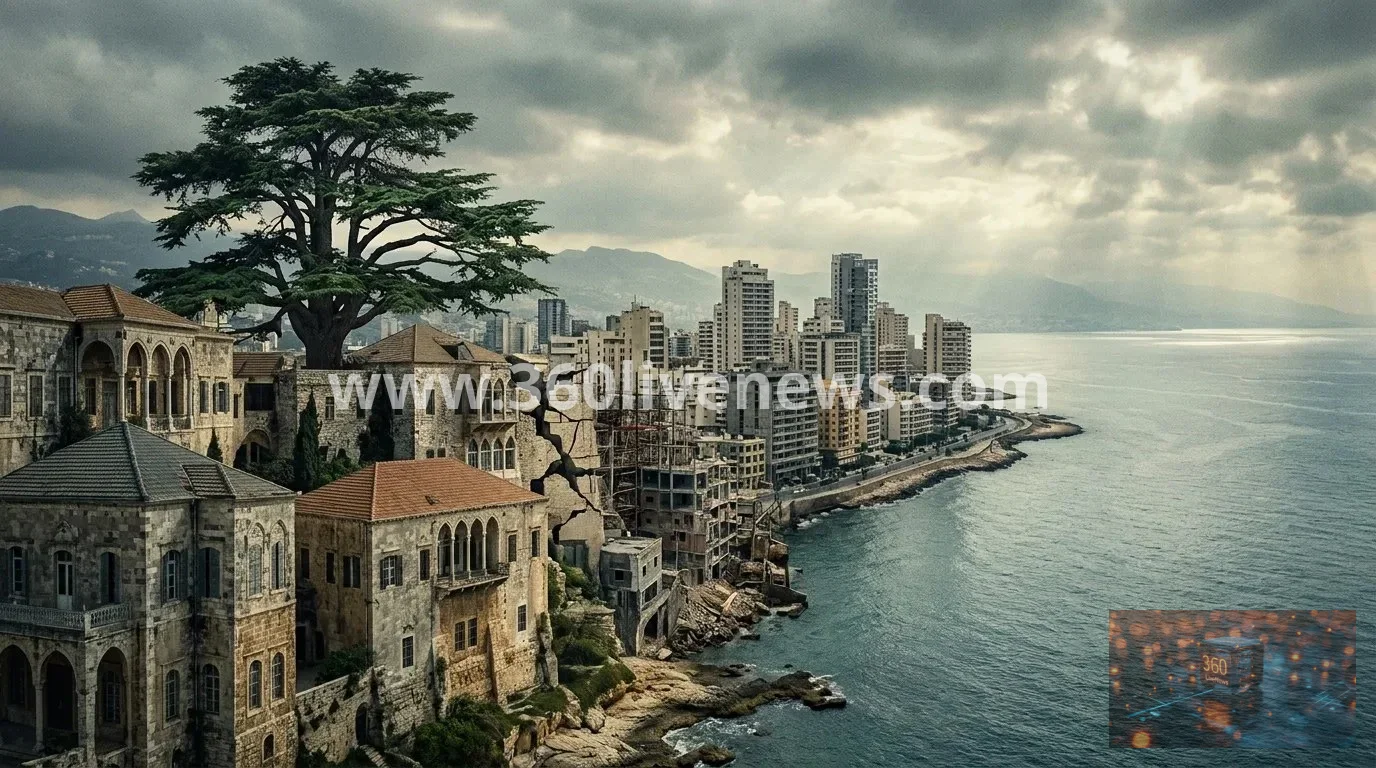
To understand the worries in the West about a changing population, there is no need for theory. Modern Lebanon offers a clear, real-life lesson. Built on a careful balance between Christians and Muslims under the National Pact of 1943, which shared out power according to the 1932 census, the last one Lebanon has ever held, which recorded a Christian majority, the country was steadily transformed by population pressure, foreign interference and political domination. Tension broke out in the crisis of 1958 and ended in the long Lebanese Civil War that began in 1975.
The Taif Agreement of 1989 in effect sealed this change. It replaced the six-to-five Christian majority in parliament with an equal split between Christians and Muslims, and moved much of the power of the Maronite Christian President to the Council of Ministers, led by a Sunni Prime Minister, locking in a political order in which Christian influence was permanently reduced. With no census in more than ninety years, most estimates today put Christians at about a third of the population, with Muslims, split between Sunni and Shia, forming the deciding majority. When loyalty to one's community comes before loyalty to the nation, the normal tools of government become instruments of sectarian authority.
5. Europe's Future and the Irony of Arab Warnings
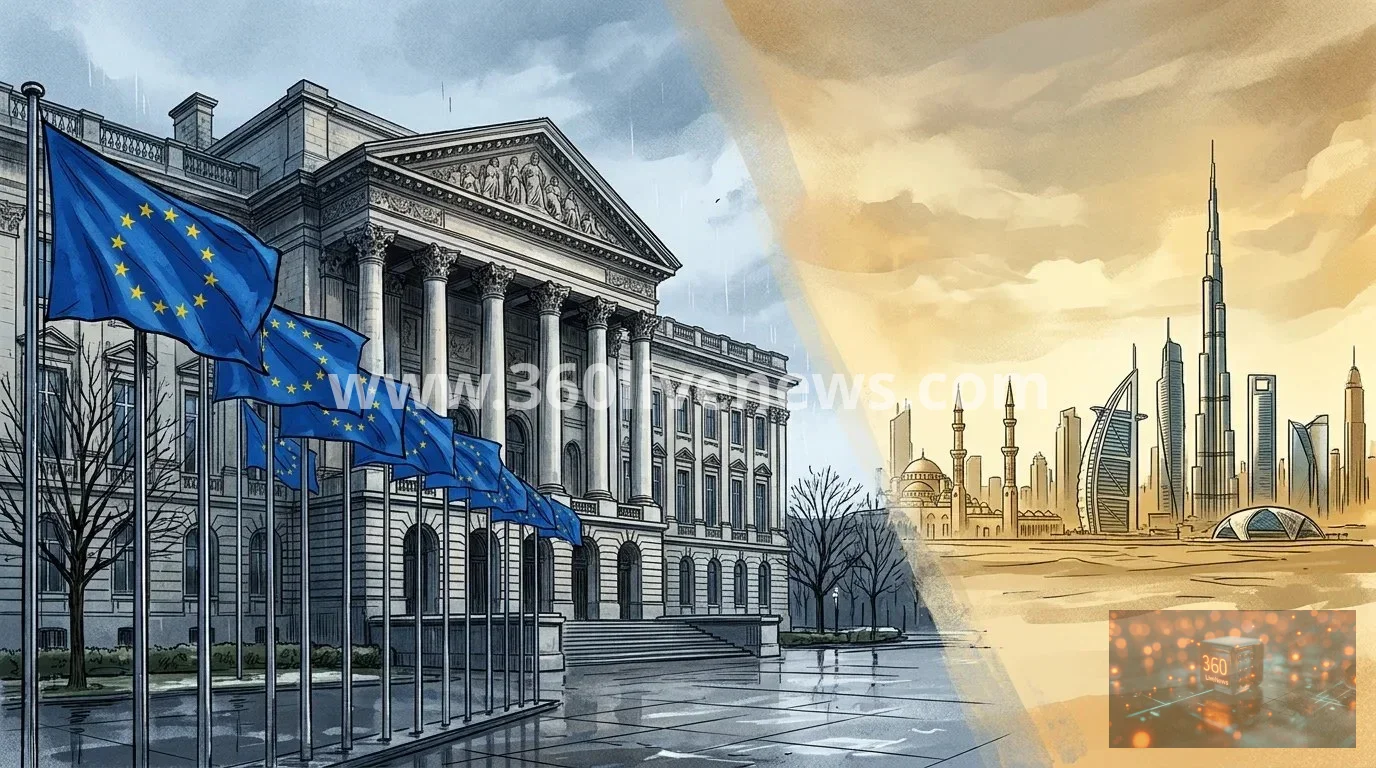
Worries about the future of Europe's nations often centre on cities like Brussels. To see why, look at moments such as the rise of the ISLAM political party in Belgium. Founded in Brussels in 2012 by Redouane Ahrouch, it won two local council seats that October, in Anderlecht and Molenbeek, on a programme that called for an Islamic state in Belgium and Sharia in place of civil law. In 2013 it briefly gained a seat in the federal parliament when the sitting MP Laurent Louis joined it, only for him to fall out with its leaders within weeks; by 2018 it had lost both council seats. Critics saw it as proof that political Islam was trying to get a foot in the door of Europe's institutions. Others see these changes as part of life in a borderless Europe, where falling church-going among native Europeans and growing, active faith communities simply reflect a changing population.
Ironically, the loudest warnings about Europe's soft handling of political Islam now come from Arab capitals. Leaders in countries like the United Arab Emirates and Saudi Arabia are sounding the alarm, a change of thinking born of need at home after their own battles with groups such as the Muslim Brotherhood. At the Tweeps Forum in Riyadh in May 2017, UAE Foreign Minister Sheikh Abdullah bin Zayed Al-Nahyan did not mince his words: "There will come a day when we see far more radicals, extremists and terrorists coming from Europe," he warned, because of a "lack of decision-making, and trying to be politically correct." His verdict on Europe's governments was blunter still: "We will classify them as incubators of terror if they don't address this problem of terrorism in their lands."

6. Are the Far-Right Groups Right? Weighing the Evidence
The central question of this piece, whether the worries about political Islam in Europe are backed by facts, brings us back to the lesson of Lebanon. The loss of a mixed society in the Levant is a stark warning of how fragile liberal protections are once the balance of the population is lost. When loyalty to one's community comes before loyalty to the nation, the tools of government become instruments of sectarian authority, leaving liberal democracies open to the rule of the biggest group.
So, are the far-right groups right? I have laid the facts in front of you, and you are free to make up your own mind. This is mine.
Yes, we should fear. But we must be clear about what we fear, because there is a world of difference between a Muslim and an Islamist. The Muslims we meet every day, at the school gate, in the shop, at the next desk, have chosen the good verses in their book and left the bad ones where history put them. They took the goodness out of what they were served, and they live alongside us in peace. The same is true of the Christian and the Jew who choose the values in their own scriptures that do not preach killing, stealing or hatred, but living together.
The Islamist has made the opposite choice. And here lies the irony. One of the best-known verses in the Quran, sitting right after the Throne Verse, says it in four Arabic words: "La ikraha fid-din", there is no compulsion in religion (2:256). You cannot force your faith on another human being. Yet that is exactly what the Islamist has been doing since the dawn of Islam and, arguably, Muhammad as well, in the wars he waged in the last decade of his life until he was killed. Exactly that.
That is no reason to fear our Muslim neighbours. It is every reason to stop pretending the Islamist does not exist. Erdogan told us in 1996 that democracy is a tram you ride until you reach your stop. Europe would do well to ask who is on board, and where they plan to get off.
Till I write again… This is Anthony Sterling signing off…
References & Primary Sources
- Quran, Surah Al-Baqarah (2:256), "La ikraha fid-din" ("There is no compulsion in religion"): https://quran.com/al-baqarah/256
- Ibn Ishaq, Sirat Rasul Allah (trans. Alfred Guillaume, The Life of Muhammad, Oxford University Press), on the Constitution of Medina, Banu Qaynuqa, Banu Nadir, Banu Qurayza and the Conquest of Mecca: https://en.wikipedia.org/wiki/Sirat_Rasul_Allah
- Constitution of Medina (Sahifat al-Madina, 622 CE): https://en.wikipedia.org/wiki/Constitution_of_Medina
- Sahih al-Bukhari, the Medinan campaigns and Banu Nadir (Hadith 4028, 4031): https://sunnah.com/bukhari
- Dhimmi legal status and jizya taxation: https://en.wikipedia.org/wiki/Dhimmi
- Ibn Abd al-Hakam, Futuh Misr, and the Siege of Alexandria (641 CE): https://en.wikipedia.org/wiki/Siege_of_Alexandria_(641)
- The Muslim conquest of Egypt (639–642 CE) and the Treaty of Alexandria: https://en.wikipedia.org/wiki/Muslim_conquest_of_Egypt
- Battle of al-Qadisiyyah (636–637 CE): https://en.wikipedia.org/wiki/Battle_of_al-Qadisiyyah
- Atatürk's reforms (1922–1937): https://en.wikipedia.org/wiki/Atat%C3%BCrk%27s_reforms
- Erdogan's "democracy is like a tram" remark (Milliyet, July 1996), bianet: https://bianet.org/haber/the-ambition-to-get-off-the-tram-244299
- "Democracy is Like a Tram", Turkey Institute: https://www.turkeyinstitute.org.uk/commentary/democracy-like-tram/
- Lebanese National Pact (1943) and the 1932 census: https://en.wikipedia.org/wiki/National_Pact
- Taif Agreement (1989): https://en.wikipedia.org/wiki/Taif_Agreement
- ISLAM (Belgian political party): https://en.wikipedia.org/wiki/ISLAM_(Belgian_political_party)
- "UAE foreign minister warns Europe over terror threat", Arab News, 22 May 2017: https://www.arabnews.com/node/1103086/saudi-arabia