

Cuba faces nationwide blackout affecting over 10 million residents due to failure at Nuevitas thermoelectric plant
Cuba has experienced a significant power outage, plunging over 10 million residents into darkness. The national electrical grid collapsed for a third time in March, marking the second nationwide blackout within a week. This latest blackout is attributed to a failure at the Nuevitas thermoelectric plant located in Camaguey province, which was reported by the Cuban Electric Union, an entity reporting to the Ministry of Energy and Mines. The outage occurred as the government struggles with a rigorous fuel blockade imposed by the United States, which affects oil imports necessary for energy generation. The Electric Union’s statement confirmed the blackout... [Continue Reading]


US Lifts Sanctions on Certain Iranian Oil to Address Energy Crisis Amid Ongoing Conflict
The United States has taken a significant step by lifting sanctions on certain Iranian oil, a move seen as an attempt to mitigate the escalating energy crisis exacerbated by the ongoing conflict in Iran. Treasury Secretary Scott Bessent announced a narrowly tailored, short-term authorization that permits the sale of Iranian oil, which has been stranded at sea due to previous sanctions. This action marks a noteworthy reversal of longstanding U.S. policy concerning Iranian oil, with implications that remain uncertain. The recent surge in oil and gas prices reflects the immediate impact of the ongoing conflict in Iran. The price of... [Continue Reading]


Cuba experiences nationwide blackout for second time in less than a week due to total disconnection of national electricity system
A nationwide blackout has struck Cuba, marking the second time in less than a week that the entire island has been plunged into darkness. The energy ministry reported a "total disconnection" of the national electricity system, which began affecting buildings in Havana before nightfall. This latest power outage comes just five days after a similar blackout left citizens without power, underscoring the persistent vulnerabilities in Cuba's aging energy grid. The ministry confirmed that efforts have commenced to restore electricity as the country grapples with severe fuel shortages exacerbated by the US oil blockade. This blackout incident highlights the fragility of... [Continue Reading]

Israeli military conducts air strikes on Hezbollah in Beirut following rocket fire into Israel
In a significant escalation of hostilities, the Israeli military launched a series of air strikes early this morning targeting the Iran-backed militant group Hezbollah in Beirut, Lebanon. The strikes follow a military warning issued to residents of various southern districts of the city, urging them to evacuate ahead of the attacks. This military action marks a continued response to Hezbollah's provocative measures, including rocket fire into Israel that began earlier this month. The current wave of strikes by Israel represents a deepening conflict that has progressively ensnared Lebanon since Hezbollah's reaction to increased tensions after the killing of Iran's supreme... [Continue Reading]


Iran Conflict Triggers Global Energy Supply Concerns and Calls for Emergency Measures by International Energy Agency
The geopolitical conflict involving Iran has escalated dramatically, resulting in significant implications for global energy supplies. Reports indicate that the conflict intertwined with military actions by the US and Israel against Iranian targets has triggered a systemic shock to fuel availability and prices worldwide. In particular, the International Energy Agency (IEA) has called for emergency measures among its member states to mitigate the impending fuel shortages and to manage soaring oil prices. In the United Kingdom, senior officials are formulating contingency plans to address the potential fallout from this energy crisis. Although government sources have clarified that there is currently... [Continue Reading]

German Foreign Minister Visits Middle East to Curb War Expansion and Energy Crisis
German Foreign Minister Michael Wadephul conducted a diplomatic visit spanning Cyprus, Israel, Gulf states, and Turkey amid heightened military confrontations in the Middle East. His tour aims to show solidarity with affected nations and work toward containing the conflict to avoid wider regional warfare and a potential energy crisis. In Cyprus, Wadephul discussed security challenges with Cypriot Foreign Minister Constantinos Kombos, focusing on recent threats including an Iranian drone strike targeting a UK military base located on Cypriot soil. These developments underline the island's key strategic role in European and Mediterranean security. Germany considers Cyprus a vital partner within the... [Continue Reading]
 360LiveNews | 20 Mar 2026 18:57


India to supply 45,000 tonnes of diesel to Bangladesh amid global energy crisis
India has recently intensified its energy diplomacy in the region, particularly in response to Bangladesh’s urgent need for diesel amid a looming global energy crisis. Under the backdrop of rising tension over oil supply, India is poised to provide a total of 45,000 tonnes of diesel to Bangladesh, with initial shipments already underway. As of now, 5,000 tonnes have been dispatched, utilising the 131.5 km long India-Bangladesh Friendship Pipeline. This pipeline is a significant infrastructure project aimed at enhancing energy cooperation between the two nations. According to New Delhi’s foreign ministry spokesperson, Randhir Jaiswal, the call for assistance from Bangladesh... [Continue Reading]
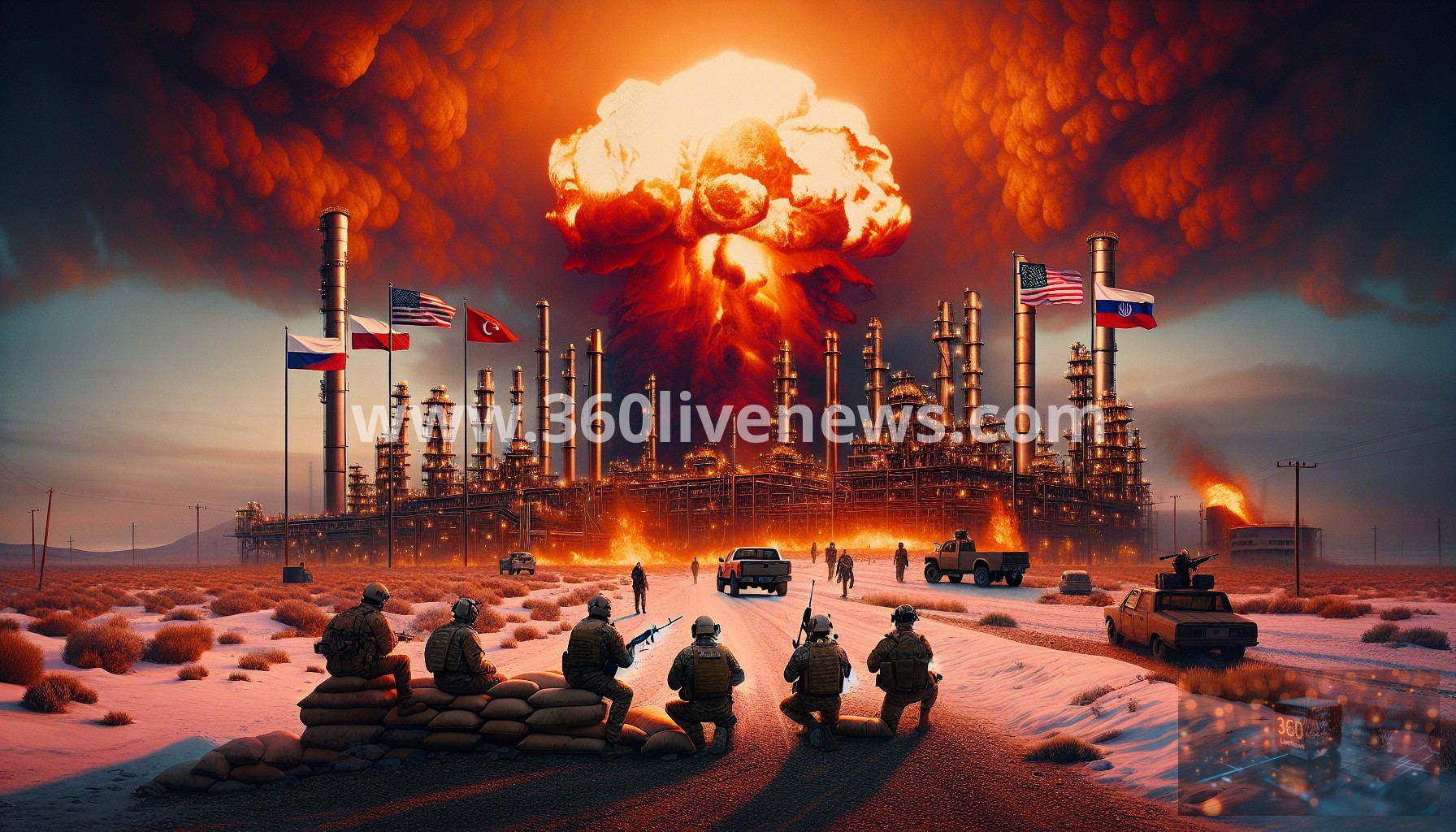

Trump warns of severe US response to Iran's attack on Qatar's energy complex amid rising Middle East tensions
In a significant escalation of tensions in the Middle East, President Trump has issued a stark warning following Iran's recent attack on Qatar's Ras Laffan energy complex. Trump threatened that the US would "massively blow up" the world's largest gas field if Iran conducts further assaults on Qatari territory. This warning comes in the wake of heightened military and diplomatic agitation between Iran, Israel, and their respective allies. The situation reportedly escalated when Iran bombed Qatar's energy infrastructure in retaliation against earlier Israeli strikes targeting its South Pars Gas Field. This retaliation marks a troubling development in the already strained... [Continue Reading]
Missile Strikes on Qatar's Ras Laffan Industrial City Disrupt Global LNG Supplies and Increase Energy Prices
A significant escalation in regional tensions has unfolded following missile strikes on Qatar's Ras Laffan Industrial City, a crucial hub for liquefied natural gas (LNG) production. The attacks, attributed to Iran, have reportedly caused "extensive damage" to the facility, leading to substantial disruptions in gas supplies and a subsequent spike in global energy prices. Ras Laffan, responsible for about 20% of the world's LNG production, is vital for various global energy markets, making this situation particularly concerning for international stakeholders. The strikes on Ras Laffan came as retaliation after Israel reportedly targeted Iran's South Pars gas field, part of the... [Continue Reading]


Israel's attack on Iran's South Pars gas field leads to significant rise in global oil prices
Recent military actions between Israel and Iran have resulted in a dramatic rise in global oil and gas prices. Following Israel's attack on the South Pars gas field in Iran, the world's largest natural gas field, Brent crude oil prices increased by 8%, reaching $116 per barrel. This incident marks a significant escalation in the regional conflict initially ignited by US and Israeli strikes on Iran on 28 February, which have increased oil prices by nearly 60% since the beginning of hostilities. The impact on gas prices has been particularly pronounced in Europe and the UK. European prices surged, with... [Continue Reading]


Southeast Asian nations implement energy conservation measures amid escalating energy crisis linked to Middle East conflict
With an escalating energy crisis linked to the ongoing conflict in the Middle East, several Southeast Asian nations are instituting immediate measures to conserve energy and alleviate financial burdens on their citizens. Countries like Thailand, the Philippines, and Vietnam are implementing new policies aimed at reducing energy usage in response to what has been described by the International Energy Agency as the largest supply disruption in the history of the global oil market. In Thailand, the public has been urged to minimize air conditioning use. News anchors boldly removed their jackets on air as a symbol of the campaign, demonstrating... [Continue Reading]


Cuba Faces Widespread Power Outages After National Electric Grid Collapse
Millions of residents across Cuba are experiencing widespread power outages following the collapse of the national electric grid on Monday, according to the state-owned electric utility, Unión Eléctrica (UNE). This incident has left significant portions of the estimated 10 million population without electricity, amid ongoing national challenges including chronic fuel shortages exacerbated by a recent blockade on oil shipments by the United States. The utility is in the process of gradually restoring power across various provinces and cities, yet persistent blackouts have become a significant source of public discontent in recent years. The collapse of the grid represents just the... [Continue Reading]


Reserve Bank of Australia Holds Meeting to Address Economic Impact of Rising Energy Prices Amid Iran Conflict
In an urgent response to the significant surge in energy prices driven by the ongoing conflict in Iran, the Reserve Bank of Australia (RBA) is conducting a crucial two-day meeting to discuss the economic implications. The RBA's deputy governor, Andrew Hauser, has issued a stark warning regarding the potential for a "toxic inflation" scenario if immediate measures are not taken. This alarming assessment underscores the direct correlation between geopolitical conflicts and national economic stability, particularly in relation to fuel prices. The RBA has been facing mounting pressure to act as energy hurdles escalate. According to Hauser, the conflict in Iran... [Continue Reading]


Asean ministers meet in Manila to discuss reducing economic dependence on the US and China amid rising trade tensions
Amid growing trade tensions, the Association of Southeast Asian Nations (Asean) is intensifying efforts to reduce its economic dependence on both the United States and China. Economic ministers from Asean convened in Manila on Friday, highlighting the urgency of seeking new markets and bolstering regional cooperation to mitigate uncertainties in global supply chains exacerbated by recent U.S. tariff investigations. Asean's economic framework focuses on strengthening the confidence of business and investors within the bloc. In their latest statement, ministers underscored the commitment to collaborating with industry stakeholders, external partners, and development organizations. The goal is to reinforce regional supply chains... [Continue Reading]


Bangladesh implements new electricity conservation measures to support manufacturing sector amid global energy supply challenges
Bangladesh has initiated new measures to conserve electricity, vital for its manufacturing sector, particularly the garment industry which is crucial to the nation's economy. The measures come in the wake of an ongoing conflict impacting energy supplies globally, making it increasingly difficult for factories to maintain production levels. This initiative reflects Bangladesh's struggle to balance its economic needs with the realities of external circumstances affecting energy availability. According to reports, the energy crisis has been exacerbated by the ongoing conflict, which has disrupted supply chains and increased operational costs for manufacturing industries in Bangladesh. The factory sector is significantly reliant... [Continue Reading]