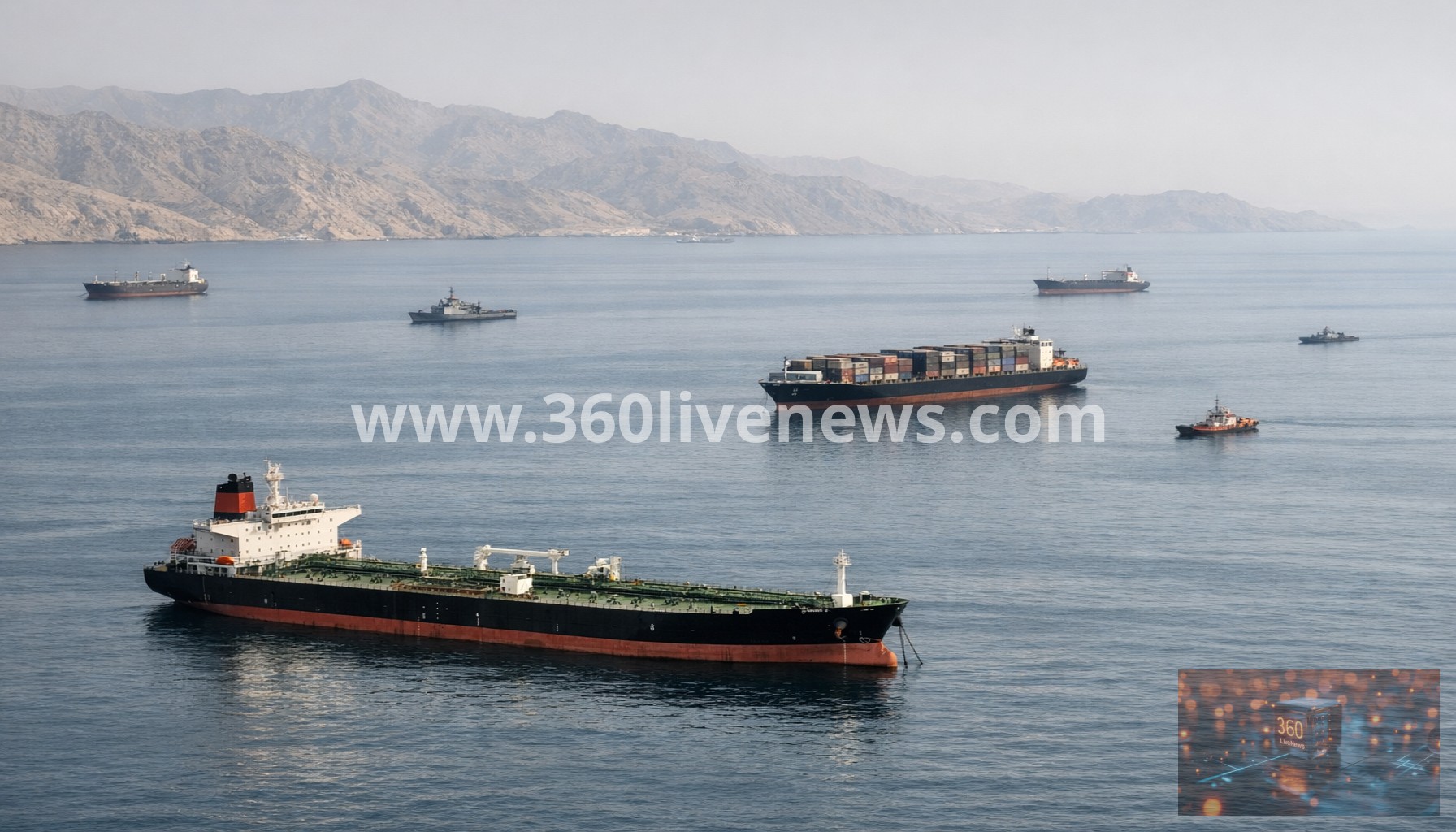

Shipping traffic in the Strait of Hormuz nearly halted amid rising threat of Iranian sea mines and tensions with the IRGC
The situation in the Strait of Hormuz has reached a critical juncture as shipping traffic remains nearly at a standstill due to the rising threat of Iranian sea mines. The tensions have escalated following recent actions by Iran's Islamic Revolutionary Guard Corps (IRGC), which issued a map showing a so-called "danger zone" where these mines are purportedly deployed. This strategic maneuver appears aimed at consolidating Tehran's influence over this vital maritime passageway, crucial for global oil shipments. The Iranian assertion of the sea mine threat follows a series of negotiations meant to facilitate the reopening of the strait for shipping.... [Continue Reading]
 360LiveNews | 10 Apr 2026 20:23 LONDON

Iran’s Revolutionary Guard Declares Strait of Hormuz Will Not Return to Previous Status
Iran’s Islamic Revolutionary Guard Corps (IRGC) Navy has confirmed it is finalizing new operational measures to control navigation through the Strait of Hormuz. This reflects Tehran’s refusal to comply with U.S. demands to restore the Strait’s previous status, particularly opposing unrestricted access for the United States and Israel. The Strait of Hormuz is vital to global energy transportation, channeling roughly one-fifth of the planet’s oil and gas shipments. Closure or restricted access has significant implications for international energy markets, impacting supply and prices worldwide. Iran asserts it will set maritime passage rules jointly with Oman, excluding foreign powers like the... [Continue Reading]
Breaking-360LiveNews | 06 Apr 2026 18:54 LONDON

US and Israel conduct military strikes on Iran following death of Supreme Leader Khamenei amid escalating Middle East tensions
As tensions continue to escalate across the Middle East, the United States and Israel have launched extensive military strikes on Iran in a conflict that has already taken a devastating toll. The airstrikes, reported to have commenced early in the week, resulted in the death of Iran's Supreme Leader, Ayatollah Ali Khamenei, marking a significant turning point in the conflict. Following the US-Israel operation, Iran has retaliated with missile attacks targeting Israel and US-allied states in the Gulf region, leading to increased military activity and rising casualties on all sides. Reports indicate that one of the primary objectives of the... [Continue Reading]
360LiveNews | 05 Apr 2026 23:10 LONDON
Iranian missiles strike residential and industrial areas in Israel, causing destruction and multiple injuries
In a troubling escalation of hostilities, Iranian missiles struck residential and industrial areas in Israel today, resulting in significant destruction and multiple casualties. Video footage has surfaced showing a missile direct hit on a residential building in Haifa, causing part of the structure to collapse and trapping several individuals beneath the rubble. Initial reports indicate that at least ten people have sustained injuries, with emergency services working urgently to rescue those trapped. Separately, missiles targeting the Ramat Hovav industrial area in southern Israel were also recorded hitting their mark, contributing to widespread alarm across affected communities. The direct impact of... [Continue Reading]
360LiveNews | 05 Apr 2026 20:09 LONDON


US federal agents arrest Hamideh Soleimani Afshar, niece of Qassem Soleimani, and her daughter in Los Angeles
In a notable development, US federal agents have arrested Hamideh Soleimani Afshar, the niece of the late Iranian military commander Qassem Soleimani, along with her daughter. This action follows a revocation of their lawful permanent resident status by US Secretary of State Marco Rubio. The arrests took place after the pair were found in Los Angeles, where they were described as having celebrated attacks against US military personnel. The arrests were confirmed by the US Department of State, which stated that Hamideh Soleimani Afshar and her daughter have been transferred to the custody of US Immigration and Customs Enforcement (ICE).... [Continue Reading]
360LiveNews | 04 Apr 2026 18:17 LONDON


UAE Implements Ban on Most Iranians from Entering or Transiting Through Airports Amid Rising Tensions with Iran
The United Arab Emirates (UAE) has enacted stringent measures, effectively banning most Iranians from entering or transiting through the country's airports. This move follows a notable pattern of escalating tensions between the UAE and Iran, particularly as the UAE acts to clamp down on networks affiliated with the Islamic Revolutionary Guard Corps (IRGC). The action has raised alarms within the large Iranian expatriate community residing in the UAE, many of whom have strong ties to the ruling elite in Tehran. The UAE's new entry protocol, which emerged late this week, restricts entry primarily to those Iranians holding long-term residency visas,... [Continue Reading]
360LiveNews | 04 Apr 2026 10:09 LONDON

Shadows of Fire: The Long Arc of Iran–United States Tensions
A Region on Edge: The Latest Escalation In recent months, tensions between Iran and the United States have intensified once again, fueled by disputes over regional security, nuclear development, maritime incidents in the Persian Gulf, and the broader strategic balance in the Middle East. Officials in Washington have expressed renewed concern over Iran’s uranium enrichment levels, while leaders in Tehran have accused the United States of economic warfare through sanctions and diplomatic isolation. The fragile equilibrium that followed earlier rounds of indirect negotiations appears increasingly strained, with both sides engaging in sharp rhetoric at the United Nations, reinforcing military postures... [Continue Reading]
360LiveNews-Opinion | 19 Feb 2026 08:49 LONDON