Fuel tanker explosion occurs after 18-wheeler collision in Fort Worth, prompting emergency response
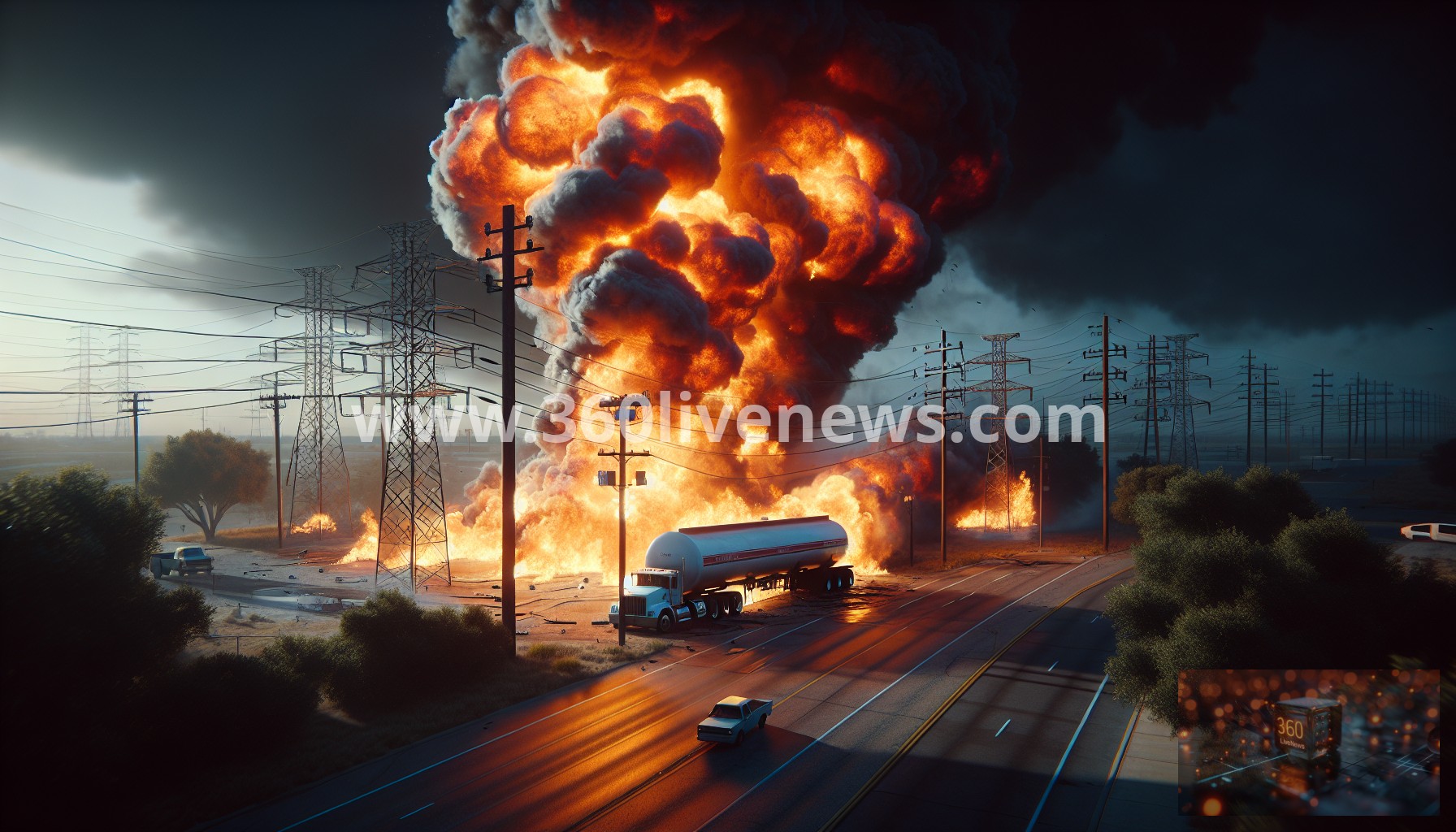
An early morning incident outside Fort Worth has resulted in a dramatic fuel tanker explosion, as an 18-wheeler collided with another vehicle, leading to the vehicle toppling power lines and subsequently igniting into flames. The accident occurred on a Sunday morning when the tanker, carrying 9,000 gallons of gasoline, lost control, prompting immediate emergency responses from local authorities.
The fire erupted after the driver, in a bid to prevent the gasoline from spilling, was reportedly trying to contain the situation when the flames ignited. Craig Trojacek, a spokesperson for the Fort Worth Fire Department, emphasized the urgency of the scenario, highlighting the driver’s heroic attempt to mitigate the risk of a catastrophic fuel spill. Fortunately, the driver has been treated for burns and is expected to recover.
Firefighters arrived swiftly on the scene, employing water hoses to combat the intense blaze and constructing sand dams to manage the runoff of gasoline that could pose further hazards. According to reports, extinguishing the fire and ensuring the area was safe took approximately six hours, during which time nearby roads were closed to facilitate the firefighting efforts and clean-up operation.
This incident underscores several critical safety concerns related to fuel transport in urban areas. Given the high volume of fuel being transported across such routes, the risks associated with accidents can lead to significant hazards for local residents and emergency responders alike. Authorities have been on alert regarding the safe transportation of hazardous materials, and such incidents amplify the ongoing discussions about safety regulations.
Fort Worth has seen a number of incidents involving fuel tankers, raising questions about infrastructure limitations and emergency preparedness. The local fire department noted that their preparedness protocols were key in managing this incident efficiently, ensuring that the situation did not escalate beyond the immediate confines of the fire, which could have endangered nearby structures and residents.
As the city evaluates the incident, it may prompt further examinations of existing safety protocols for hazardous materials transportation. Previous incidents have called attention to the need for stringent regulations and tracking of vehicles carrying flammable goods, particularly in urban settings where accidents can have widespread impacts.
In light of recent events, local councils and transportation authorities may re-assess their strategies concerning the routes taken by such large vehicles, especially those carrying dangerous materials. Fuel transport governance and regulatory oversight are crucial to preventing future occurrences of similar accidents.
This incident is further compounded by existing infrastructure issues within the area, as the growth of Fort Worth necessitates a re-evaluation of road safety and transport policies. Stakeholders may consider reviewing transport policies and enhancing driver training programs to address the unique challenges of handling fuel tankers in urban environments.
Moreover, this situation exemplifies the potential vulnerabilities within hazardous materials transport and the urgent need for comprehensive crisis management plans. Each incident not only poses immediate risks but also highlights systemic issues within transportation policy and urban planning that could foster safer environments for communities.
#FortWorth #FuelTanker #EmergencyResponse #FireDepartment #SafetyRegulations #TransportationPolicy #HazardousMaterials #UrbanPlanning
