Indigenous groups in Brasília continue protests for land rights for third day, raising concerns over sovereignty and environmental issues
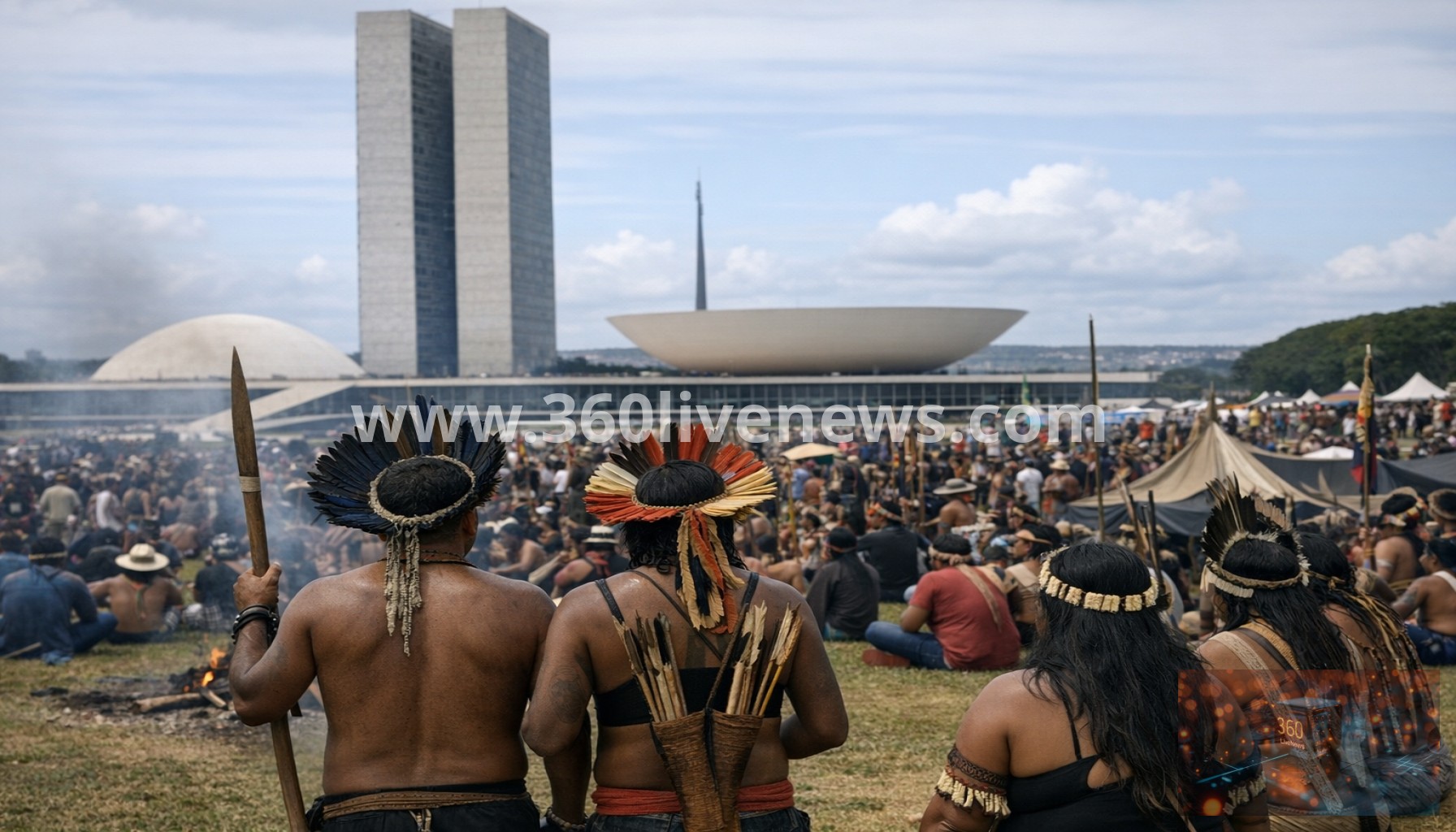
Protests led by indigenous groups in Brasília are continuing for a third consecutive day, with demonstrators rallying over land rights that they claim are being threatened by government policies. These marches have attracted significant attention, raising urgent questions about indigenous sovereignty and environmental protection in Brazil.
The demonstrations commenced on April 8, with thousands of indigenous individuals converging on the capital to make their voices heard. Protestors from various tribes across the country have gathered to defend their ancestral lands, urging the government to halt any further encroachments. Activists assert that current governmental initiatives jeopardize their rights to land and resources, which are crucial for their cultural and physical survival.
Throughout the duration of the protests, participants have taken to the streets, engaging in singing, dancing, and chanting traditional songs. They have also displayed banners and signs that communicate their grievances. Among participants, leaders from influential indigenous organizations, such as the Indigenous Peoples' Council, have stressed the importance of maintaining ecological balance and respecting the rights of indigenous communities in Brazil.
Eyewitness accounts from various news sources indicate that tension between protestors and law enforcement has been palpable, with the military police deploying to ensure public order. Although the demonstrations have remained largely peaceful, authorities have expressed concern over potential disruptions in the capital related to the increasing number of protestors. The situation is illustrative of broader societal divides regarding indigenous rights in Brazil, a topic that has gained prominence under the current administration.
Official statements from both the Brazilian government and indigenous leaders offer a contrasting view of the protests. Indigenous spokespersons emphasize the need for legal recognition of their lands, supported by constitutional protections. In response, government officials have previously articulated their focus on developmental policies aimed at resource extraction, claiming that such initiatives are essential for economic growth. This clash of interests highlights ongoing discussions regarding land use and environmental stewardship in Brazil's biodiversity-rich regions.
The historical context of these protests is rooted in decades of disputes over land rights in Brazil. Indigenous populations have faced significant challenges since European colonization, experiencing land dispossession and marginalization. In 2016, the suspension of a vital governance structure for processing land claims further exacerbated these tensions, leading to a stark increase in land invasions and illegal logging activities across various territories.
Legislative actions over recent years have also drawn sharp criticism from indigenous groups. Proposed amendments to laws governing land rights—such as the Marco Funcional—have routinely come under fire for eroding protections instead of enhancing them. Critics argue that these legislative changes favor agribusiness interests over the rights of indigenous peoples. This backdrop sets the stage for the current protests, which demand immediate governmental action and accountability.
The implications of the protests extend beyond just the indigenous communities involved. As environmental concerns mount globally, the struggles facing Brazil's indigenous peoples are emblematic of larger environmental conflicts tied to land use and resources. Deforestation rates in the Amazon rainforest have surged, and these protests highlight the integral connection between indigenous land rights and ecological preservation.
Indigenous leaders have emphasized that their fight is not only for their people but for the future of Brazil's environment. They argue that preserving indigenous territories is crucial for safeguarding biodiversity and combating climate change. The outcome of these protests could influence future environmental policies and set precedents for land claims throughout Brazil.
As this situation unfolds, observers are closely monitoring both the protest dynamics and governmental responses. The indigenous groups have vowed to continue their demonstrations until their demands for legal recognition of land rights are met. They are calling for a comprehensive review of all existing land claims and a moratorium on any projects that infringe upon indigenous territories.
In summary, the indigenous marches in Brasília signify a pivotal moment in Brazil's ongoing battle over land rights and environmental stewardship. The diverging narratives between protestors and the government illustrate a critical intersection of indigenous rights, environmentalism, and national policy that could reshape the landscape of Brazil for generations to come.
#IndigenousRights #Brazil #Protests #LandRights #Amazon #Environment #Deforestation #Biodiversity