Taiwan's KMT Chairwoman Meets Chinese Communist Party Representative in First Direct Dialogue in Nearly a Decade
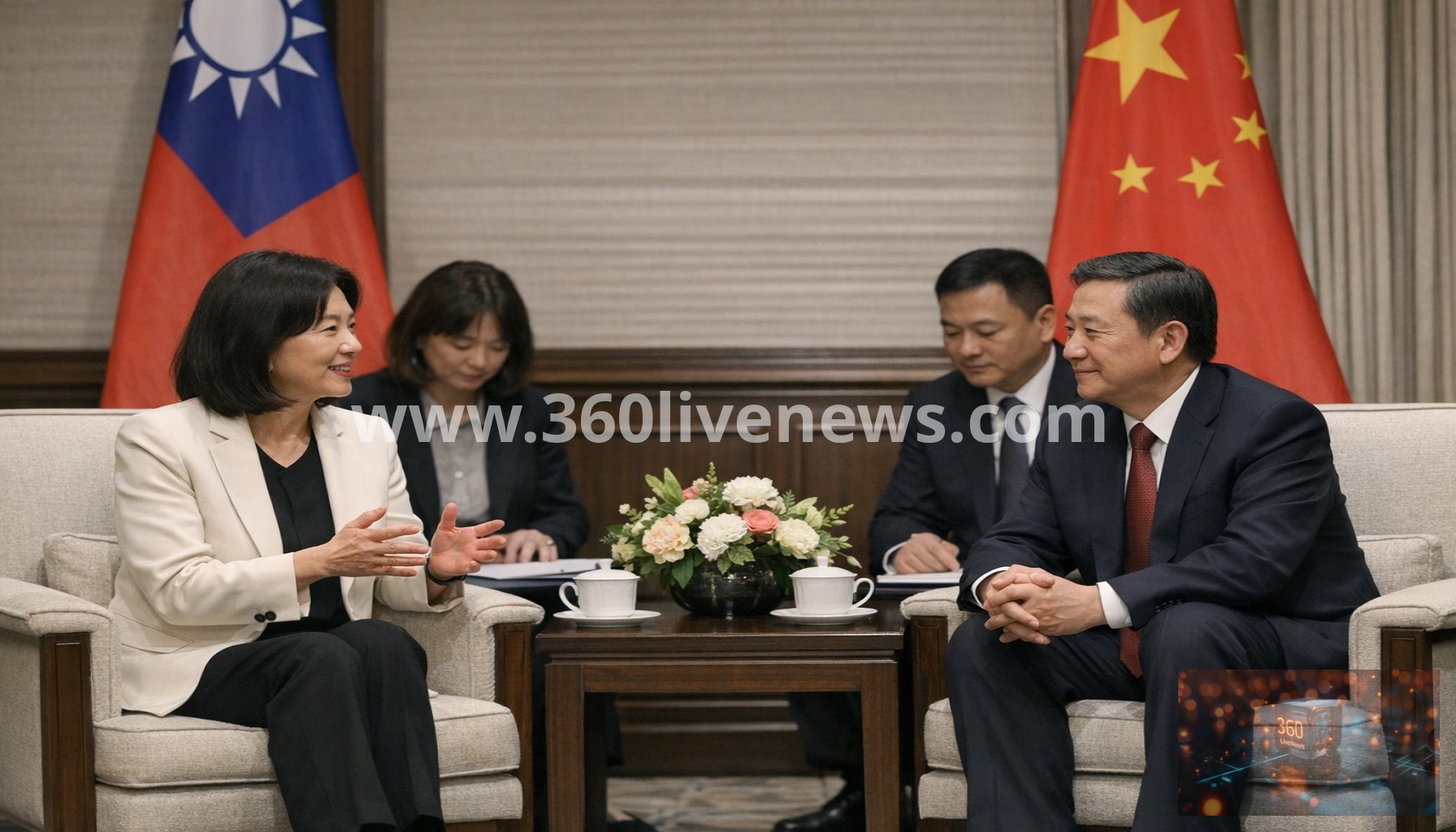
The political landscape in Taiwan has seen a significant shift with the recent meeting between Cheng Li-wun, chairwoman of the Kuomintang (KMT), and a representative from the Chinese Communist Party in Beijing. This marks the first direct dialogue between the two factions in nearly a decade, occurring against the backdrop of escalating military tensions across the Taiwan Strait. Cheng’s visit is being perceived as a critical step toward de-escalation and a potential thaw in cross-strait relations, which have been fraught with discord in recent years.
During her press conference, Cheng articulated a hopeful message that the KMT’s engagement could foster a stabilizing influence in Taiwan's political discourse. She underscored the necessity of a peaceful resolution, stating that utilizing cross-strait peace merely as a political tool by any party was detrimental. Cheng's remarks come in response to criticisms from the ruling Democratic Progressive Party (DPP), which has frequently scrutinized the KMT's outreach to Beijing. Her comments highlight the broader implications of peace versus conflict, emphasizing that Taiwan’s future may hinge on this dialogue.
The backdrop to these developments includes the DPP’s firm stance on Taiwan’s sovereignty, which has often aligned more closely with a pro-independence ideology. This has led to a period of heightened military activity from China, which asserts territorial claims over Taiwan, a move that many in the west view as aggressive. Cheng’s outreach to Beijing aims to provide an alternative narrative, potentially fostering a cooperative framework that may ease tensions, underscoring the KMT's position in Taiwanese society, where opinions about relations with China are deeply divided.
However, the international scale of this meeting cannot be ignored, with cross-strait relations being a focal point for regional security in East Asia. Analysts have warned that an inability to manage these tensions could lead to inadvertent conflicts, risking broader geopolitical instability. Cheng's statements suggest an attempt not only to redefine the KMT's relationship with the mainland but also to encourage a semblance of normalization in cross-strait exchanges. She described the choice between war and peace as crucial, indicating that dialogue needs to be prioritized over military confrontation.
Moreover, the KMT's historical context deepens the implications of this meeting. Traditionally viewed as pro-China, the KMT's leadership faced pressures to reconnect with Beijing while reconciling its electoral base, which is increasingly resistant to overtures seen as compromising Taiwanese sovereignty. This complexity illustrates the ongoing tug-of-war within Taiwan’s electoral politics; the KMT is attempting to present a robust front advocating for peace without alienating their core constituents.
Coupled with this internal dynamic are external factors that shape Taiwan's geopolitical Environment. The United States, as a key ally of Taiwan, maintains a position of supporting Taiwan’s defense capabilities while advocating for a diplomatic resolution to the Taiwan Strait dispute. The Chinese government has reacted strongly to U.S. interference in what it terms "domestic affairs". Thus, the KMT’s initiative to dialogue could also be interpreted as a strategic maneuver to mitigate the impact of U.S.-China tensions on Taiwan, potentially allowing it more autonomy in navigating foreign policy.
While the potential for peace and economic exchanges exists, skepticism remains high among many in Taiwan. A range of factors, including ongoing military exercises by the People's Liberation Army around Taiwan, continue to contribute to a climate of apprehension. The DPP and other factions critical of the KMT's strategies have suggested that trust must be repaired before any meaningful dialogue can take place. The KMT's approach will likely require more than just reassurances; it will necessitate genuine steps toward maintaining Taiwanese autonomy and addressing the aspirations of those who favor independence.
Looking ahead, Cheng's visit could mark a pivotal moment, not just for the KMT but for Taiwanese politics and its standing in the international community. As the dialogue unfolds, both the KMT and the Taiwanese public will be watching closely to see if this meeting can translate into tangible action and reduced tensions along the Strait. The international significance of cross-strait relations cannot be understated, as it is intertwined with global security narratives, particularly with regards to U.S.-China relations.
#Taiwan #KMT #Beijing #China #DPP #PLA #Geopolitics #USTaiwanRelations