China's financial institutions adopt cautious stance on AI amid U.S. discussions on emerging technologies
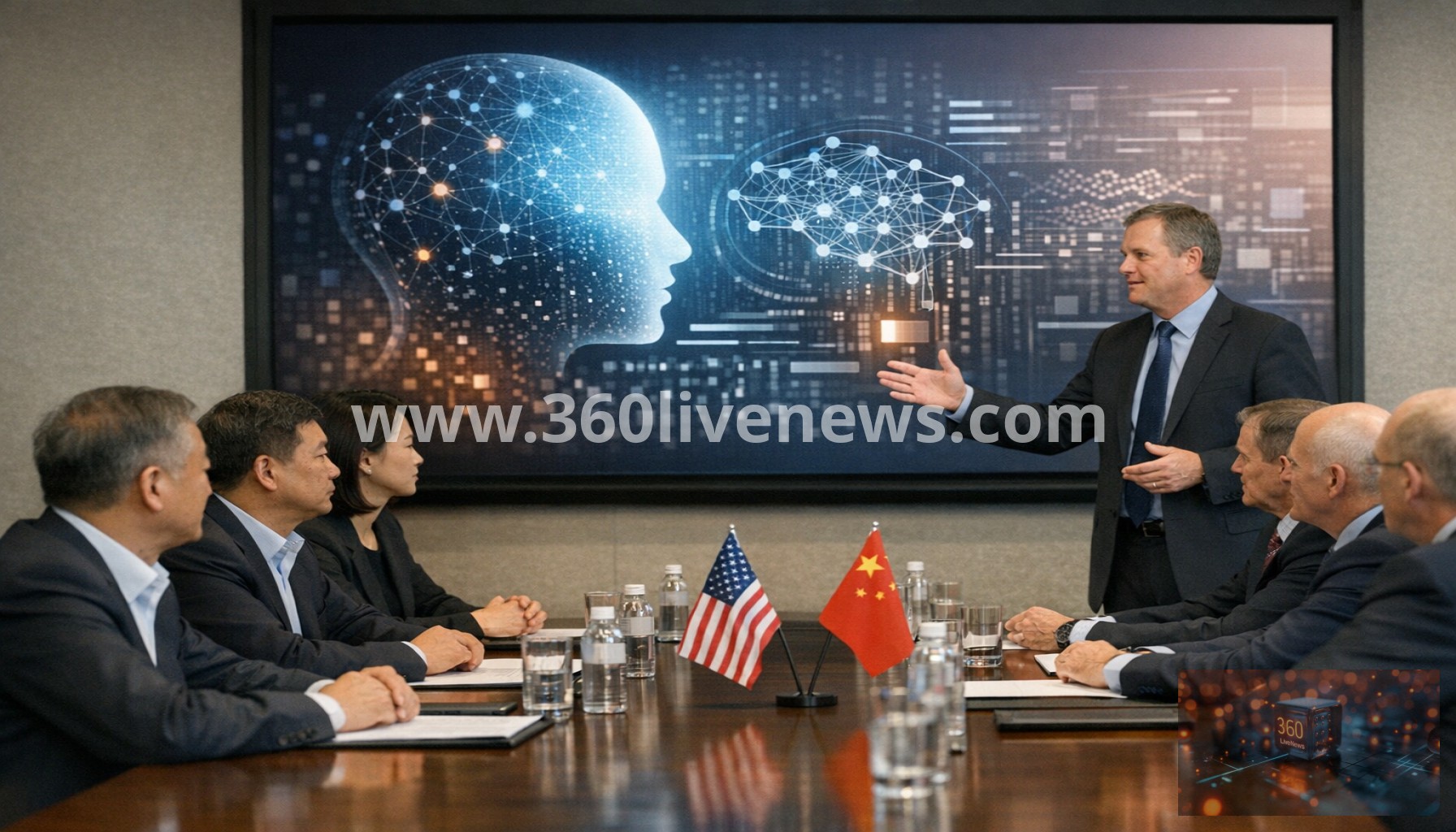
As concerns over developing artificial intelligence technologies rise, particularly regarding Anthropic's new AI model, Mythos, China's financial institutions are reportedly taking a measured approach. This comes as U.S. Treasury Secretary Scott Bessent and Federal Reserve Chair Jerome Powell convened with leading U.S. banks to address cybersecurity threats linked to AI. The discussions highlighted the urgent need for enhanced cybersecurity assessments to mitigate potential economic disruptions that could reach into the hundreds of billions of dollars.
In a recent report by Bloomberg, sources indicated that Bessent and Powell held an emergency meeting with major banking heads to discuss the implications of Mythos. They underscored the necessity for banks to be vigilant about the threat posed by both Mythos and future generative AI models, urging them to implement robust cybersecurity measures. This proactive stance emerges amid a backdrop of increasing scrutiny on AI technologies and their potential implications for financial stability globally.
On the other side of the Pacific, analysts suggest that China’s banks are adopting a cautious stance in light of the complex challenges posed by generative AI. According to Simon Goldstein, a philosophy professor at the University of Hong Kong focusing on AI safety, there is an urgent need for worldwide cybersecurity evaluations. These assessments are critical in understanding how advanced AI models could impact economic structures and critical infrastructure.
Complicating the situation further, Beijing has reiterated its dedication to maintaining financial stability. In this context, banks and financial regulators in China are closely monitoring developments in the U.S. to assess any potential contagion risks coming from the American market. The differing approaches of U.S. and Chinese financial institutions exemplify a broader divergence in handling technological advancements and their accompanying risks.
In a related developments, Premier Li Qiang has called for accelerated integration of AI into manufacturing sectors during his recent symposium with AI industry leaders in China. He emphasized the necessity for more aggressive exploration of what is referred to as the "AI plus" strategy, which aims to intertwine advanced manufacturing with modern services. Li's remarks signal Beijing's intent to harness AI for driving digital transformation within its manufacturing landscape, demonstrating a strong commitment to technological advancement as a pillar of economic growth.
During this meeting, Yang Zhilin, the founder of Moonshot AI, represented a wave of entrepreneurs pushing for significant advancements in AI technologies. Li acknowledged the vital role of these innovations in bolstering China's economic resilience amidst a complex global environment. Furthermore, he reinforced the imperative of combining traditional industry with advanced technological solutions to foster a more robust economic framework.
As AI technologies proliferate, the regulatory landscape is also evolving. The U.S. continues to deepen its scrutiny of Chinese telecom firms, with the Federal Communications Commission (FCC) considering placing stricter restrictions on companies like China Mobile, China Telecom, and China Unicom. These companies are already listed among entities posing national security risks, and the new regulations might compel them to divest or shut down their U.S.-based data centers. Such moves highlight the ongoing and escalating technological rivalry between the U.S. and China, reflecting broader geopolitical tensions surrounding security and technology.
These regulatory challenges align with debates over cybersecurity and data protection that are becoming increasingly central to discussions about trust in technology. Nations are facing pressure to implement rigorous safeguards while also encouraging innovation. This dual focus creates a complex landscape where the advancement of technologies like AI must be balanced with mitigating potential risks.
The current dialogue around AI also raises broader questions about the implications for multinational corporations operating within both markets. Companies will need to navigate not only the technical challenges associated with AI integration but also the ever-evolving regulatory frameworks meant to govern these technologies. As both the U.S. and China position themselves strategically, understanding the implications of AI on worldwide markets will be vital for stakeholders at every level.
#FinancialStability #ArtificialIntelligence #Cybersecurity #ChinaTelecom #USTreasury #FederalReserve #AIplusStrategy #FCC