Artemis II mission prepares for re-entry and splashdown after historic crewed moon voyage
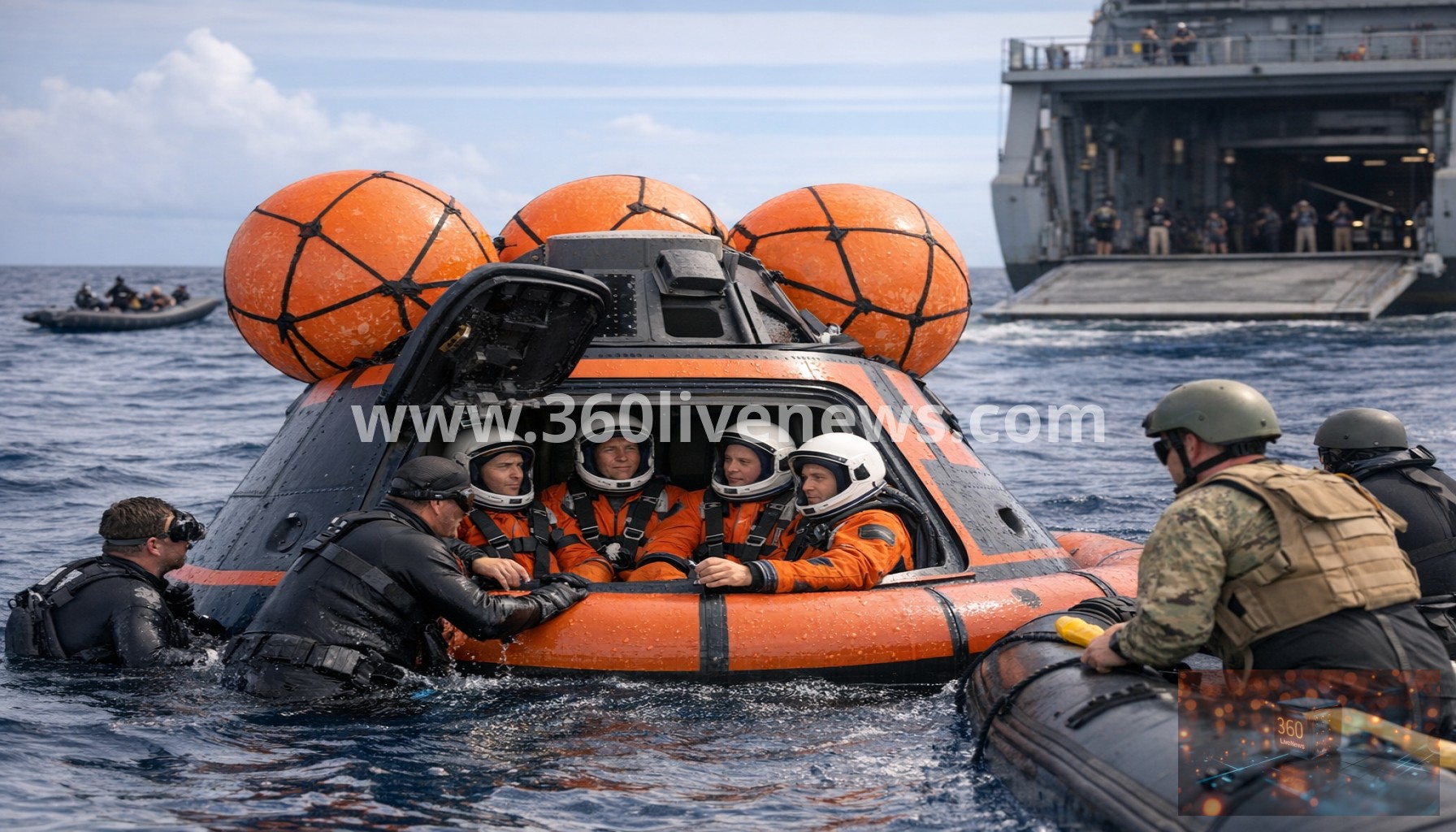
The Artemis II mission is nearing its conclusion as the crew prepares for a critical moment in their historic journey, which marks the first crewed moon voyage in over half a century. On Friday, the astronauts aboard the Orion spacecraft are organizing for a fiery re-entry through Earth’s atmosphere and a planned splashdown in the Pacific Ocean, just off the coast of Southern California. After a celebrated ten-day mission, the crew is expected to safely return to Earth following a series of vital maneuvers.
Earlier today, the Orion crew capsule performed an essential eight-second thruster firing, a maneuver designed to fine-tune the spacecraft’s descent trajectory. This adjustment is crucial for ensuring a safe re-entry leading up to the capsule's splashdown. The mission, overseen by NASA, signifies a monumental return to crewed lunar exploration, providing insights that are expected to benefit future missions.
The Artemis II mission is a key step for NASA in its long-term lunar exploration goals, particularly as it seeks to establish a sustainable human presence on the Moon. Following the jettison of the service module, which houses the spacecraft's main propulsion system, the Orion capsule will endure a six-minute communication blackout as it drives through the atmosphere at high speeds. Such measures are standard procedure to ensure safe navigation during re-entry phases. NASA’s Artemis program aims not only to revisit the Moon but also to lay the groundwork for potential human missions to Mars.
The crew's re-entry process involves entering the Earth's atmosphere at a speed exceeding 24,000 kilometers per hour (approximately 15,000 mph), which results in significant thermal stresses on the spacecraft. NASA’s operations team has prepared for all scenarios, ensuring that life support systems remain operational until the parachute deployment occurs and the capsule lands in the ocean. The Artemis II mission follows the successful Artemis I flight test, which concluded with a smooth landing last year.
While the Artemis II mission captures global attention, significant developments are unfolding elsewhere. Currently, Tropical Cyclone Maila has been reported to weaken as it moves westward towards Australia. Officials from the Bureau of Meteorology noted that Cyclone Maila is twice likely to downgrade into a tropical low, potentially making landfall late next week. Forecasts suggest that Queenslanders can expect a warm weekend while the storm subsides.
Both events, the successful culmination of Artemis II and the anticipated impact of Tropical Cyclone Maila, reflect the ongoing efforts within space exploration and natural disaster management. As both programs proceed, NASA and meteorological organizations emphasize the importance of preparedness and resilience against the backdrop of their respective challenges.
The upcoming splashdown event is expected to set a precedent for maritime recovery operations involving spacecraft. The United States Navy is involved in the recovery process, equipped with specific vessels and marine teams ready to ensure comprehensive safety measures are in place. This coordination is vital, given the complexity of recovering astronauts who have recently returned from deep space missions.
In addition to ensuring the astronauts' safe return, the Artemis II mission and the evaluation of Cyclone Maila's trajectory will further contribute to ongoing discussions surrounding space exploration’s future and disaster preparedness. Stakeholders across various sectors, including environmental, scientific, and aerospace domains, are closely monitoring these developments, contemplating their broader implications. With the increasing frequency of natural disasters and advancements in human spaceflight, the intersection of these topics remains paramount in today's global climate.
As NASA continues its ambitious exploration goals, the Artemis II mission exemplifies the agency's commitment to innovation and exploration. Future missions will build upon the experiences gained from these voyages to improve technology and strategy for executing crewed missions to both the Moon and beyond.
#Artemis_II #Nasa #Orion_spacecraft #Pacific_Ocean #Cyclone_Maila #Australia #Bureau_of_Meteorology #deep_space_exploration