US Intensifies Maritime Operations Against Venezuelan Oil Shipments
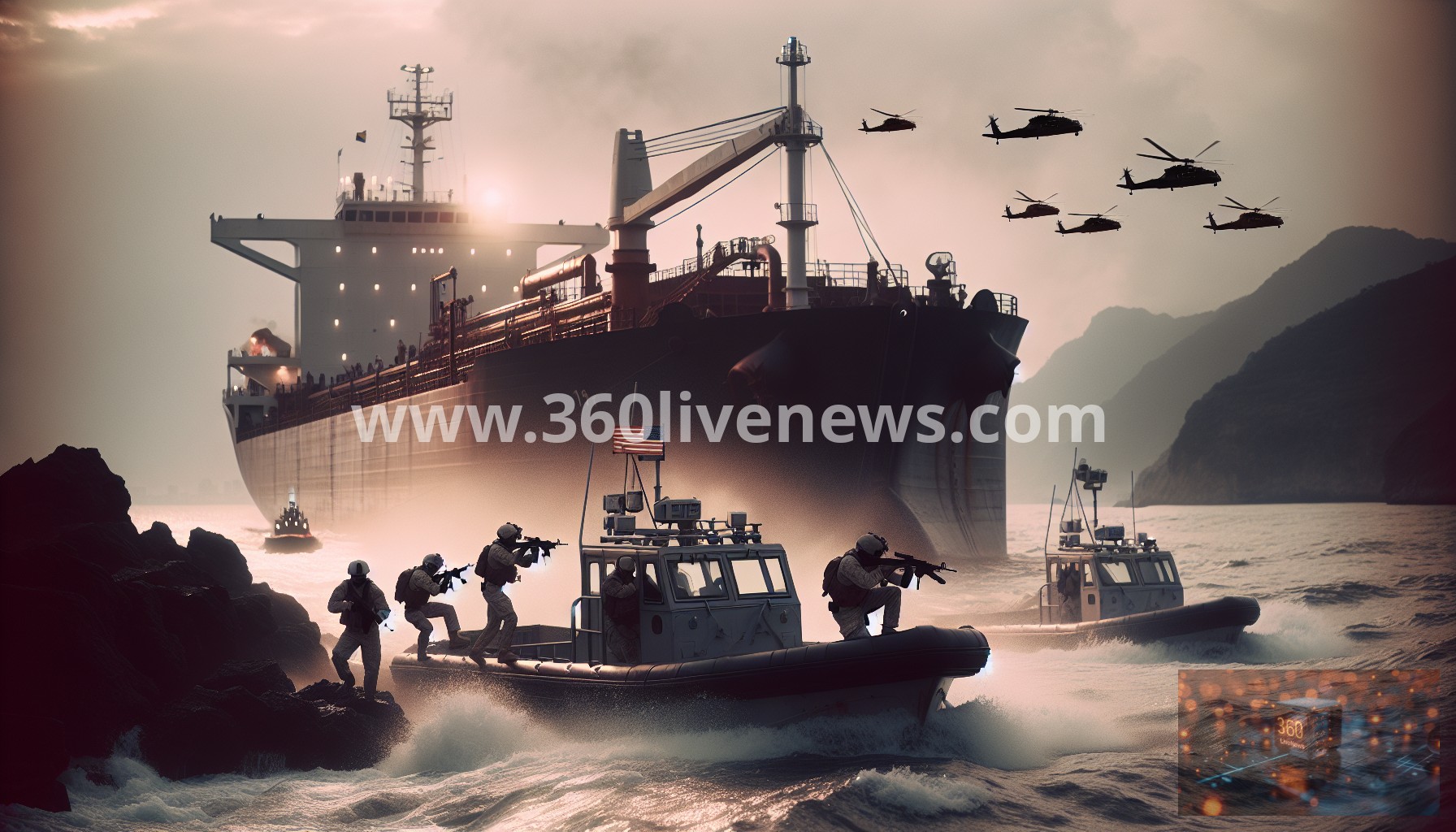
The United States is ramping up its naval operations in the Caribbean, focusing on vessels linked to Venezuela's oil exports. In a recent action, US military forces intercepted the Olina, a tanker reportedly flying the flag of Timor Leste, while it was in transit near Trinidad. This move marks the latest instance of a US campaign aimed at enforcing sanctions against the Venezuelan government due to its ongoing economic turmoil and political disputes.
Officials confirmed that the Olina had previously transported oil from Venezuela and returned to the region fully loaded. Its Automatic Identification System (AIS) tracker was last active approximately 52 days ago in Venezuela's Exclusive Economic Zone (EEZ), according to Vanguard, a British maritime risk management firm.
This incident follows the US seizure of another tanker, the Marinera, which was previously under the Russian flag, demonstrating the expanding scope of US actions to disrupt oil shipments amid deepening geopolitical tensions. The US Southern Command stated that the Olina was apprehended “without incident,” although further details regarding the tanker’s specific violations have not been clarified.
In January of last year, Washington had first sanctioned the vessel when it was known as the Minerva M, a part of an extensive shadow fleet operating with minimal oversight. As per US President Donald Trump, the objective of such operations is to liberate Venezuela's vast oil reserves from the control of Nicolas Maduro's administration, which the White House continues to accuse of corruption and mismanagement.
Since the high-profile abduction of Maduro on January 3, the United States has reinforced its blockade on sanctioned Venezuelan oil tankers. Federal investigations are underway concerning the actions of the Olina's crew. US officials have condemned the resurgence of ties between Russia and Venezuela, calling for a severance of relations with both Russia and China.
The coordination of US naval interceptions aligns with a series of sanctions imposed under the guise of promoting fair economic practices. Critics argue that the seizure of vessels could constitute violations of international maritime law. In late December, a group of United Nations experts asserted that the US lacks the authority to enforce unilateral sanctions through armed actions. They characterized the blockade as a form of illegal aggression under international law.
Amid this backdrop of maritime conflict, the European Union made notable strides by approving a long-awaited free-trade agreement with Mercosur, which comprises Brazil, Argentina, Uruguay, and Paraguay. The agreement, which has been in negotiation for over 25 years, is geared towards integrating trade practices among over 700 million inhabitants while addressing the tensions faced by local agricultural producers.
This strategic economic shift could have considerable implications for both Europe and South America as they navigate complex issues concerning agriculture, trade competition, and environmental standards amid rising populism and discontent within certain factions.
As the political landscape evolves, the impact of ongoing protests in countries like Iran cannot be overlooked. Following a wave of unrest attributed to economic hardships, Supreme Leader Ali Khamenei described demonstrators as “vandals,” asserting that protest actions are being manipulated by foreign influences, notably the United States.
As protests continue despite internet restrictions, estimates from human rights organizations indicate that at least 42 individuals have died and over 2,270 have been detained. The situation remains tense as demonstrators urge for significant political reform and challenge the current governmental structure.
At the same time, the political climate in the United States reflects mixed signals regarding economic stability. Official employment data revealed that the economy added 50,000 jobs last month, aligning with federal efforts to stimulate growth amid perceived global uncertainties.
However, some experts caution that these figures may mask deeper issues, as the labor market appears to be in a “no hire, no fire” phase, showing sluggish growth even during a well-documented recovery period.
With nations grappling with domestic challenges and international relations hanging in a delicate balance, subsequent developments will likely continue to shape the political and economic discourse across the globe.
#Venezuela #USNavy #Geopolitics #TradeAgreements #IranProtests
