Trump Hosts 'Shield of the Americas' Summit in Miami to Address Drug Cartel Violence with Latin American Leaders
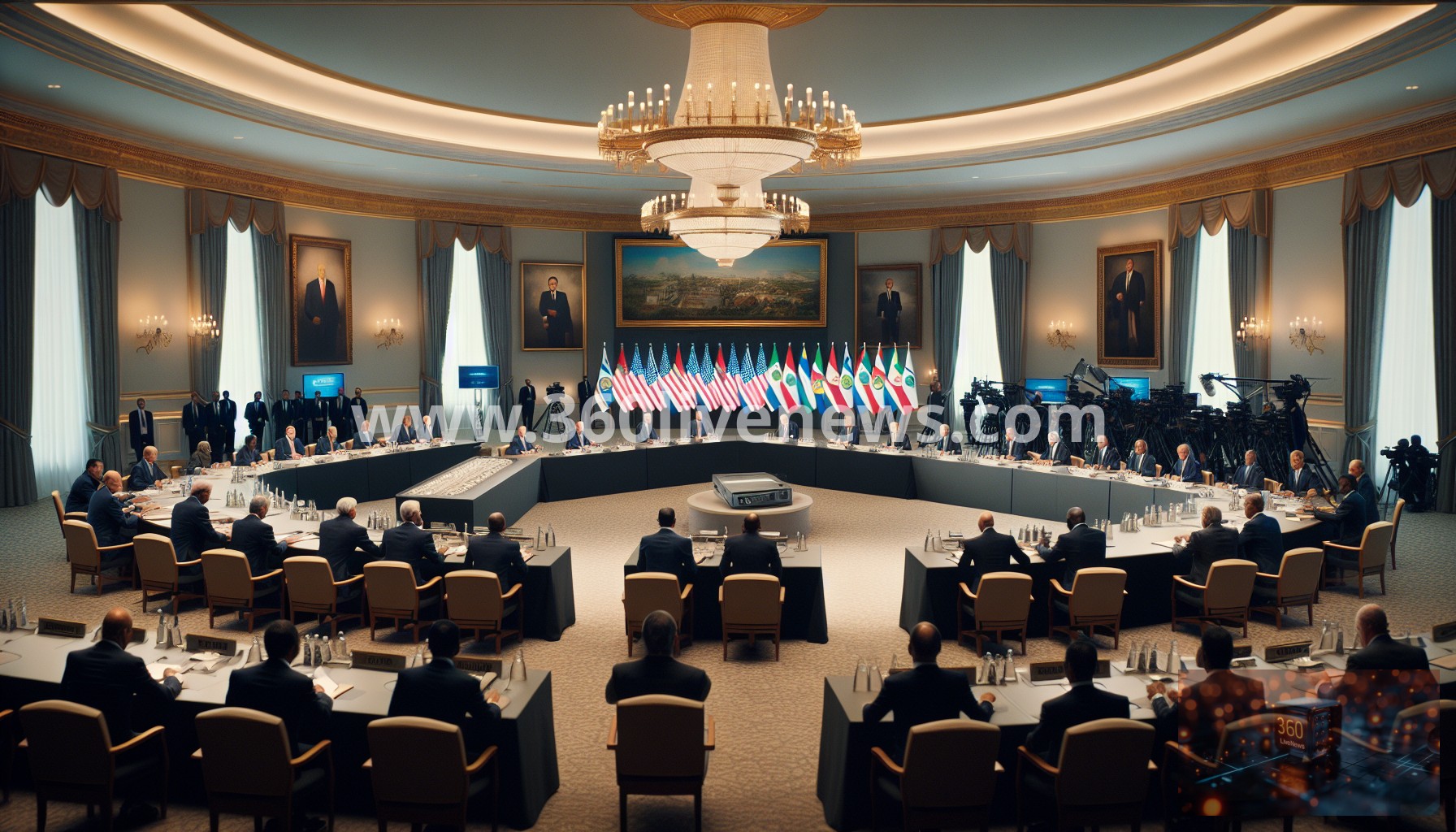
In a significant diplomatic move, US President Donald Trump convened the 'Shield of the Americas' summit in Miami, where he gathered twelve leaders from various Latin American nations to address the pressing issue of drug cartel violence in the region. This summit, held at Trump's Doral golf club, comes as part of a broader effort to establish a ‘counter-cartel coalition’ aimed at enhancing regional security and cooperation.
During the summit, which took place on a recent Saturday, Trump articulated a stance echoing his administration's focus on combating organized crime, stating, “Just as we formed a coalition to eradicate Isis, we now need a coalition to eradicate the cartels.” He underscored Mexico’s pivotal role as the 'epicenter' of cartel-related violence, suggesting that the “cartels are fueling and orchestrating much of the bloodshed and chaos in this hemisphere.” This rhetoric aims to galvanize support among participating nations against a common threat.
The summit included leaders from Argentina, Bolivia, Chile, Costa Rica, the Dominican Republic, Ecuador, El Salvador, Guyana, Honduras, Panama, Paraguay, and Trinidad and Tobago. This gathering is particularly critical coming just two months after a US military operation aimed at apprehending Nicolás Maduro, the former president of Venezuela, who is currently facing charges related to drug trafficking and arms conspiracy in the United States.
Trump's assertive approach at the summit included a proposal for military cooperation, where he offered support in the form of US missile strikes against drug kingpins. He referred to the drug cartels as a “cancer” that must be eradicated. “We’re working with you to do whatever we have to do. We’ll use missiles. You want us to use a missile? They’re extremely accurate,” Trump declared. This militaristic rhetoric marks a significant escalation in the US's stance towards narcotics-related violence in the region.
This development raises important questions about the motivations behind the summit and its implications for US-Latin America relations. The 'Shield of the Americas' initiative is not only a response to increasing drug-related violence but also reflects a concerted effort to counterbalance China's growing economic and political influence in the region. Trump’s administration has previously criticized Chinese investments as a threat to American interests, positioning US involvement in Latin America as a means to maintain regional stability and alignment.
The coalition established at the summit represents a formal commitment among the participating nations to employ “hard power” against drug trafficking organizations. Such a pledge is a notable departure from previous approaches that primarily focused on diplomatic engagement or financial assistance. The implications of this strategy may be profound, as it signals an intention to adopt a more aggressive policy framework in addressing narcotics and organized crime.
This recent summit follows a history of fluctuating relations between the United States and Latin America, characterized by periods of both cooperation and conflict. Previous efforts, such as Plan Colombia and various DEA-led initiatives, have sought to address drug trafficking but have often faced challenges related to sovereignty and effectiveness. The launch of the 'counter-cartel coalition' represents a new chapter in the ongoing struggle against drug-related violence and signifies an attempt to galvanize regional allies.
Additionally, the focus on military solutions could provoke a spectrum of reactions from within the involved nations, raising concerns about the potential ramifications on civil rights and sovereignty. Critics of aggressive military strategies often cite the risks of escalating violence and the potential for human rights abuses, a concern that could complicate the objectives of the coalition.
Trump’s initiative not only serves to consolidate leadership among allied nations but also seeks to reassert US influence in a region that has seen significant shifts in power dynamics. The summit's outcomes could reshape the landscape of US-Latin America relations, particularly in light of past policies focused on soft power and collaborative approaches.
The critical analysis of this new coalition must consider the broader geopolitical context, including ongoing tensions with Iran and other nations in the Americas. As Trump continues to position himself against perceived threats to US dominance, the actions taken during this summit will likely resonate through both security and diplomatic channels in the western hemisphere.
#Trump #LatinAmerica #DrugCartels #Summit #Missiles #Miami #Coalition #CivilRights #USForeignPolicy #Venezuela #NicolásMaduro #China Cuba">#Cuba
