Trump Orders Deployment of 5,000 Marines to Strait of Hormuz Amid Rising Tensions with Iran
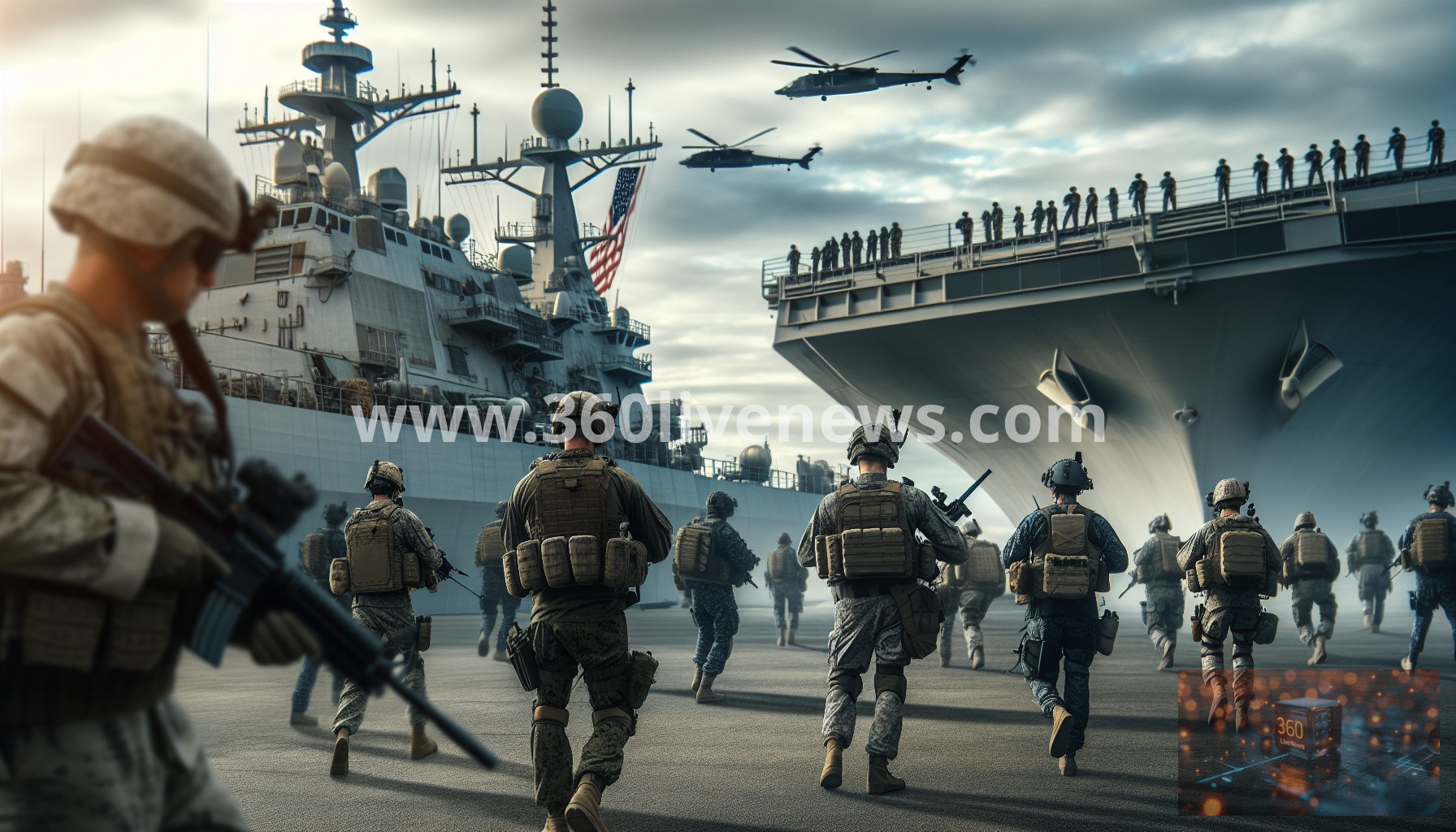
In response to escalating tensions following the ongoing conflict with Iran, President Donald Trump has ordered the deployment of approximately 5,000 United States Marines to the Strait of Hormuz. This strategic move comes as the United States seeks to secure its interests in the region amid rising oil prices and instability stemming from military actions.
The deployment was formalized after Secretary of War Pete Hegseth approved a request for an amphibious ready group. This group is composed of multiple warships, including the USS Tripoli, an amphibious assault ship weighing 18,500 tons, which carries around 2,000 Marines. In addition to the ship-based units, the White House has also dispatched an attached Marine expeditionary unit capable of rapid deployment from sea operations. The deployment underscores the United States' commitment to maintaining a military presence in the area where tensions have been high.
Specific details surrounding the mobilization indicate that American military capabilities will also be enhanced in the region with the introduction of the F-35 fighter jet. This advanced aircraft is intended to bolster the United States' readiness in the face of potential threats and unstable conditions resulting from the Iran war, which has already sparked considerable concern among allies and opponents alike.
The situation surrounding the Strait of Hormuz is critical, as it is a vital shipping lane for a significant portion of the world's oil supply. The presence of US Marines serves as both a deterrent against hostile actions and a reaffirmation of America's strategic interests. Military experts view this deployment as a direct response to perceived threats from Iran, which may escalate in light of the ongoing conflict.
The backdrop of this military action involves a complex web of geopolitical relations in the region. The United States has had a long-standing adversarial relationship with Iran, particularly related to nuclear ambitions and regional influence. Over recent weeks, this dynamic has been exacerbated by documented airstrikes in Iran, leading to intensified military posturing.
An earlier context for these developments includes a humanitarian crisis attributed to military operations that have resulted in civilian casualties, particularly in incidences like the strike on the Shajareh Tayyebeh School in Iran. Reports indicate that this strike, which killed 168 children, is under investigation by US military officials, adding further complexity to US-Iran relations.
Experts are debating the implications of the reinforcement of US forces in the region. From a security perspective, some believe that increased military presence may deter further Iranian aggression. Others argue that it could provoke a backlash and galvanize support for the Iranian regime, which has faced significant opposition internally. Former military officials have voiced concerns about escalating hostilities, which could ultimately lead to a wider conflict.
As this situation unfolds, the diplomatic ramifications are significant. Continued military action could lead to crucial discussions at the level of international organizations like the United Nations and influence the strategies of neighboring states. The international community is closely monitoring developments, particularly in regard to oil prices and global markets, which are sensitive to changes in supply routes through the Strait of Hormuz.
The operational readiness of US forces in the region highlights the broader implications of military strategy in ensuring energy security and addressing the complex challenges posed by Iran. This deployment aligns with the United States' ongoing policy goals and signifies a robust military posture designed to support allies, deter adversaries, and maintain open shipping lanes crucial to global commerce.
#Iran #UnitedStates #StraitofHormuz #Trump #Military #Deployment #F35 #PeteHegseth
