USS Tripoli Deploys to Middle East with 2,500 Marines Amid Regional Military Tensions
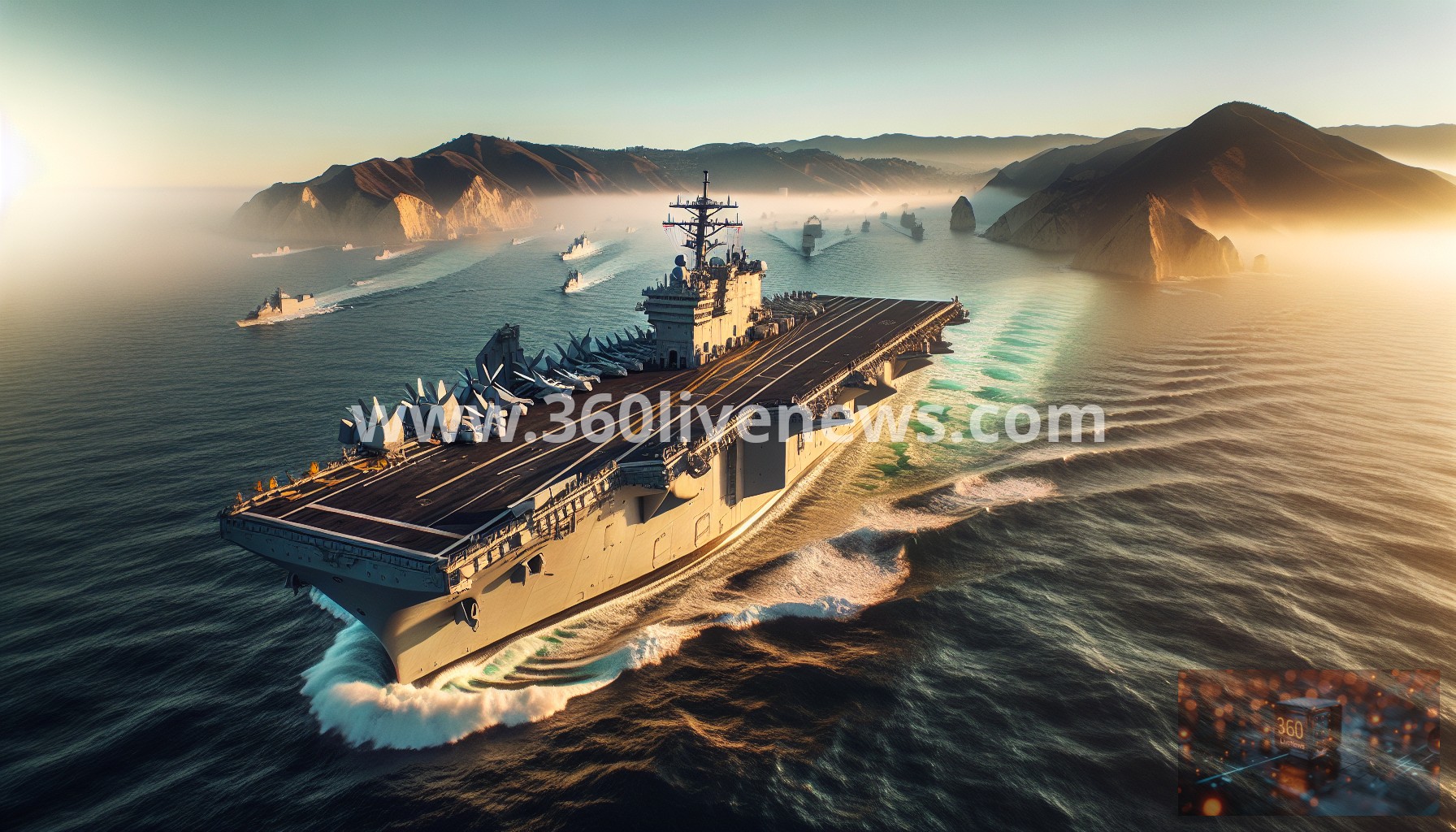
The USS Tripoli, an amphibious assault ship, is currently en route to the Middle East, leaving its home port in Okinawa, Japan, and carrying approximately 2,500 marines. This deployment, reported by various American media outlets, has stirred discussions regarding its implications for military deterrence in the region, particularly concerning China’s activities around Taiwan and in the South China Sea. The Tripoli is the lead ship in an amphibious ready group and was ordered by the Pentagon to transport additional troops from the 31st Marine Expeditionary Unit (MEU), comprised of around 2,200 personnel.
Recent tracking data from Marinetraffic.com indicated that the USS Tripoli departed Okinawa and was maneuvering through the Strait of Malacca into the Indian Ocean as of Thursday, further emphasizing its strategic movement towards the Middle East. The ship is usually accompanied by other vessels such as the USS New Orleans and USS San Diego, though their current operational status remains unclear. This deployment comes amid rising tensions and military posturing by China, which has led to a perceived reduction in deterrent capabilities against military activities by Beijing.
The onset of this deployment corresponds with heightened scrutiny of the broader geopolitical context in the region. China’s assertive military policy, particularly regarding Taiwan, has generated alarm among surrounding nations and the United States. Analysts have suggested that the USS Tripoli's movement could represent a strategic shift, signaling a focus on countering China’s naval expansion and influence. This action could be perceived as an effort to reassure allies in the region, particularly as China intensifies its maneuvers in the South China Sea.
Historically, the United States has maintained a significant military presence in the Asia-Pacific region, partly to deter aggression from China. The 31st MEU, involved in the deployment, is part of a larger framework of rapid-response forces designed to provide immediate military support when necessary. This escalation in military readiness may point towards a recalibration of U.S. strategic interests, particularly in response to perceived challenges from Beijing.
Furthermore, this deployment comes in the wake of recent judicial decisions in the United States affecting media access to military operations. A federal judge ruled that the Pentagon’s media access restrictions were unconstitutional, restoring journalist credentials and highlighting the importance of press freedom during military conflicts. This ruling reinforces the public's right to diverse reporting and may influence how military actions are communicated to the public, creating a backdrop for understanding military engagements like that of the USS Tripoli.
The involvement of such significant military assets in the Middle East at this time raises concerns about the allocation of U.S. military resources amid ongoing commitments in other regions. The implications of the Tripoli's deployment could stretch beyond immediate tactical responses to influencing long-term strategic dynamics between the United States and China. As this situation develops, it will be crucial for observers to monitor the actions taken by both U.S. and Chinese forces in the region.
In analyzing the potential ramifications of these developments, experts point towards the evolving nature of military deterrence in the Indo-Pacific theatre. With maritime tensions increasing, the U.S. may need to bolster its collaborative engagements with allies such as Japan and India, who share concerns over China’s aggressive posturing. The ability of the USS Tripoli and its accompanying forces to project power and deter adversaries not only reinforces U.S. military credibility but also plays a critical role in regional security arrangements.
The deployment highlights key themes in modern military strategy where naval capabilities are pivotal in ensuring stability in contested environments. The amphibious readiness group to which the Tripoli belongs can conduct various operations ranging from humanitarian assistance to combat missions, showcasing the versatile and strategic nature of such deployments.
As the USS Tripoli continues its journey towards the Middle East, its ingress will undoubtedly be scrutinized both militarily and politically. This deployment encapsulates the challenges and complexities faced by the United States in balancing deterrent postures against both immediate threats and broader strategic objectives in a rapidly changing geopolitical landscape.
#USSTripoli #MilitaryTensions #USNavy #MarineForces #ChinaMilitary #Taiwan #IndoPacific #31stMarineExpeditionaryUnit #Pentagon #MilitaryStrategy #PressFreedom #SouthChinaSea
