Millions Participate in Third No Kings Protest Across the U.S. with Events in Over 3,000 Locations
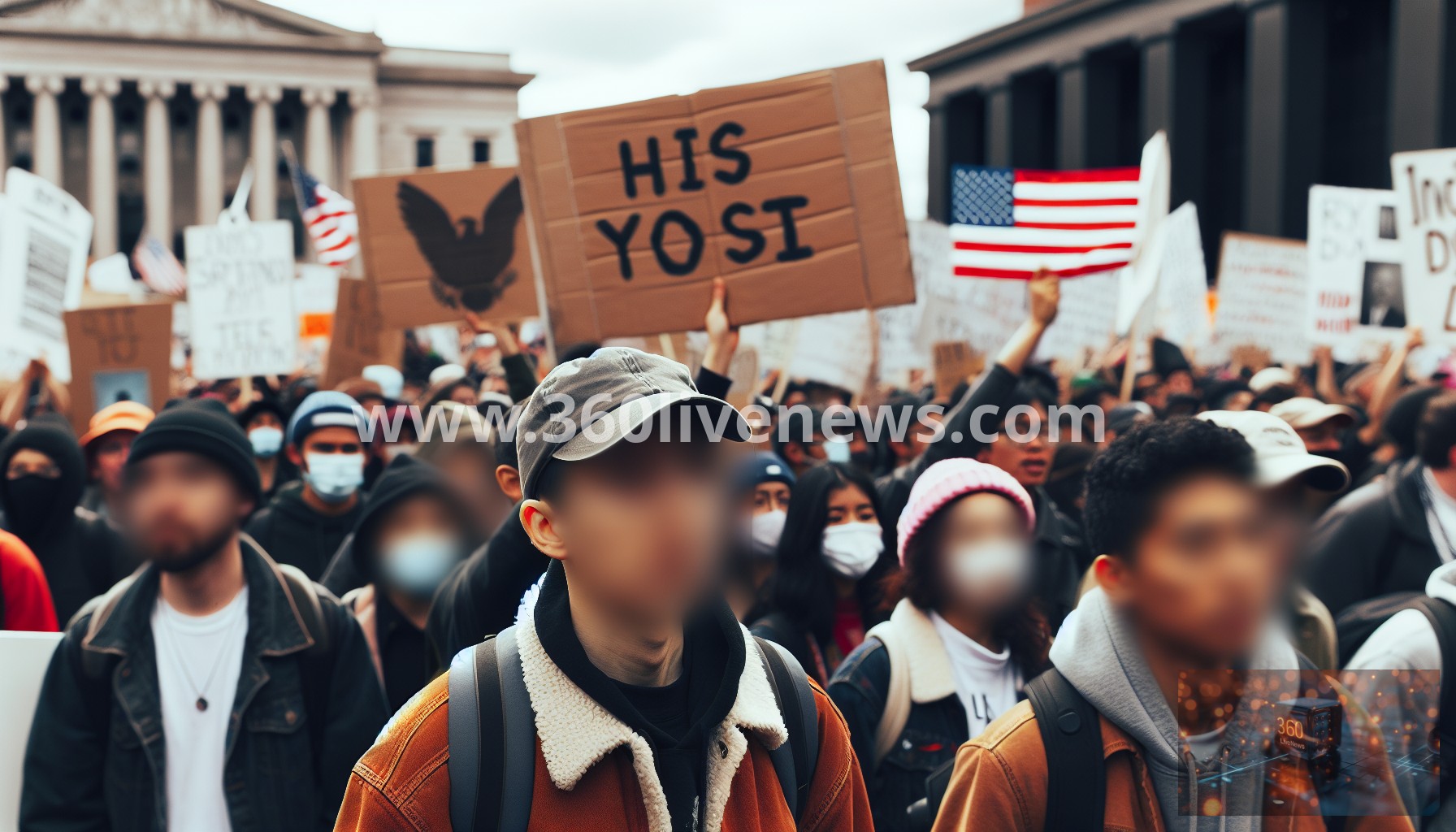
Demonstrations across the U.S. are currently unfolding as part of the third No Kings protest, with millions participating in over 3,000 events nationwide. The flagship event takes place in Minnesota's Twin Cities, encompassing Minneapolis and St. Paul. Activists are mobilizing against the actions of Immigration and Customs Enforcement (ICE), highlighting their opposition to what they describe as the agency’s "reign of terror" in immigrant communities.
Ezra Levin, co-founder of Indivisible, an organization intricately involved in coordinating the protests, anticipates that this event could become "the biggest protest in American history." The No Kings protests are notably a response to recent federal immigration actions that have escalated in intensity over the last year, culminating in tragic incidents where agents reportedly killed two residents, Renee Good and Alex Pretti, during ICE operations.
At the forefront of the protests is a palpable sense of outrage from various communities towards ICE and the Department of Homeland Security (DHS). Activists contend that the government’s aggressive stance on immigration is causing widespread fear and trauma among immigrant families. The No Kings platform is broad, with Leah Greenberg, co-founder of Invisible, emphasizing that these protests are tied to numerous pressing issues, including recent foreign policy decisions, specifically the involvement in Iran, that are prompting citizens to take a stand.
The protests are being characterized as a vital outlet for public dissent against policies perceived to undermine democratic values. As stated by Greenberg, "Every No Kings is going to be about the issues that are driving people most at that moment," illustrating the event's evolving nature relative to current social, political, and international dynamics.
Significantly, this occurs amidst heightened scrutiny of ICE, as recent reports indicate that ICE agents are now actively patrolling U.S. airports, reflecting a broader pattern of aggressive enforcement actions. These developments come at a time when budgetary disputes within the DHS have resulted in operational disruptions, including closed security checkpoints leading to long wait times and missed flights for travelers across the country.
The implications of the No Kings protests extend beyond immediate policy critiques. They are part of a larger narrative concerning civil rights and immigration reform in the U.S. Drawing supporters from various sectors, including grassroots organizations, the protests aim to galvanize public opinion against what many see as oppressive government practices. The protests are also reflective of broader debates on immigration policy that have been contentious for several administrations.
The institutional backdrop for these protests is rooted in a longstanding tension between immigrant communities and federal enforcement agencies. The rhetoric surrounding immigration has evolved significantly, with ICE often portrayed in a negative light by opposition groups. The recent escalation in protests against ICE coincides with a historical context where immigrant rights advocates have sought to challenge the government’s policies, advocating for humane treatment and fair immigration processes.
Furthermore, the protests are significant in terms of their geographic dispersion, demonstrating a nationwide mobilization against ICE’s operations. Communities affected by immigration enforcement are not only located in urban centers but also in rural areas where immigrant populations may be smaller but nonetheless impacted. This inclusivity reflects a strategic approach by organizers to engage diverse communities in the fight for immigrant rights.
As these No Kings protests develop, they contribute to a critical moment within U.S. history. They exemplify the growing resistance against an administration perceived as hostile to immigrant rights and serve as a rallying point for broader social justice movements. Policymakers and the public alike are closely monitoring these events, recognizing that the outcomes could have lasting implications for immigration policy and community relations going forward.
#US #Immigration #ICE #DHS Protests" class="hashtag">#Protests #NoKings #Minnesota #Democracy
