Denmark's ruling Social Democrats fall short of expected votes in recent elections, impacting coalition majority prospects
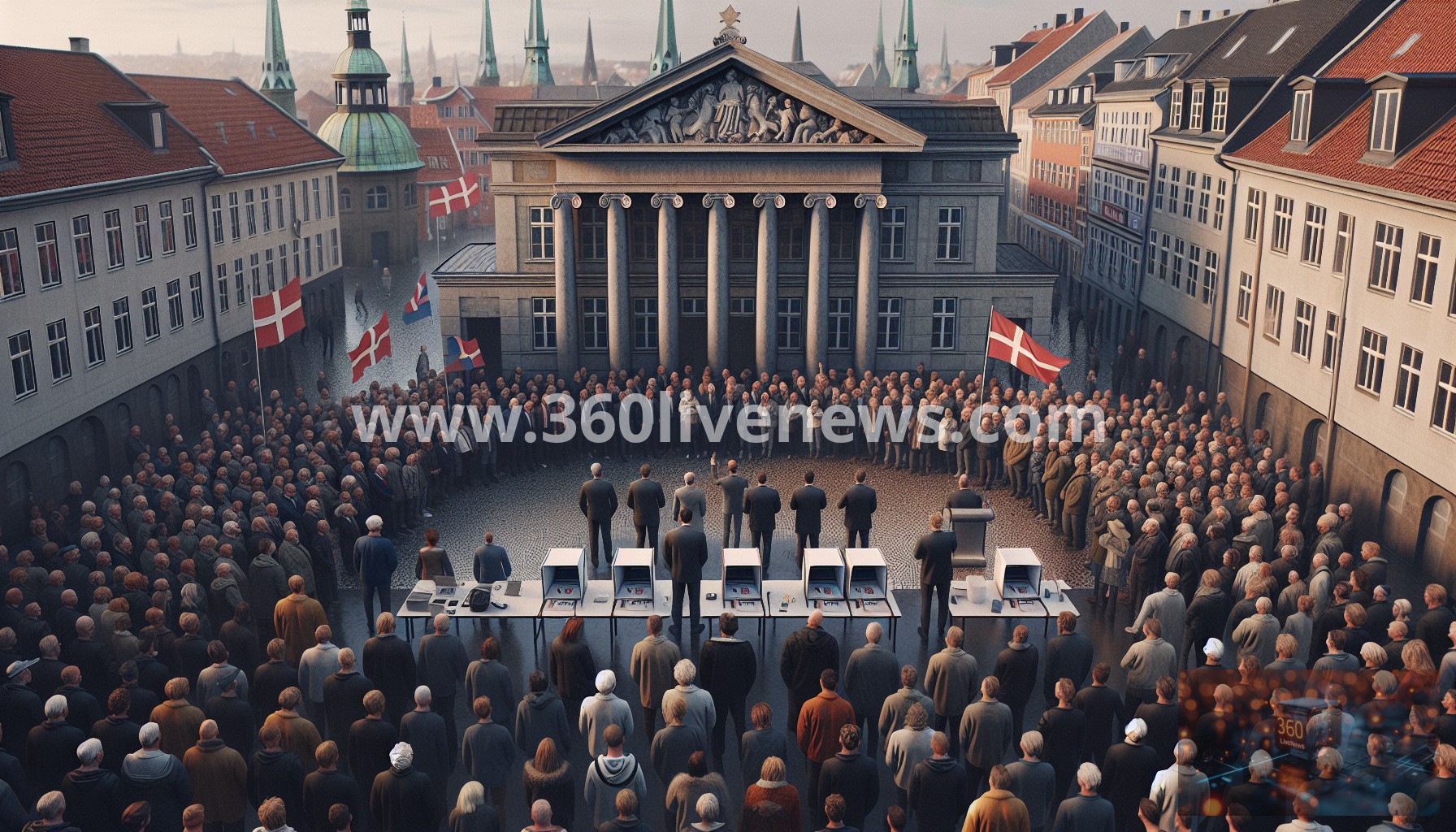
In a significant political development, exit polls from recent elections in Denmark indicate that the ruling Social Democrats, led by Prime Minister Mette Frederiksen, have failed to secure a clear mandate for governing. Initially predicted to emerge with a solid foothold, the party has reportedly garnered only between 19% and 21% of the overall votes, which falls short of expectations. This outcome may preclude the left-leaning political coalition known as the "red bloc" from attaining a majority in the Folketing, Denmark's parliament. The implications of this election may also resonate with the European Parliament as it reflects broader trends in European politics.
The election was characterized by notable geopolitical tensions, particularly regarding Denmark's relationship with the United States over Greenland. As voting concluded on Tuesday evening, two exit polls indicated that the left-leaning bloc, despite being the largest faction, was still significantly short of the 90 seats needed for a majority out of 179. Instead, the rise of centrist and right-leaning parties, collectively referred to as the "blue bloc," has created a complex political landscape where coalition-building is of utmost importance. This situation mirrors challenges faced by other parliamentary systems in Europe.
Although the Social Democrats appear set to acquire the highest share of votes, the implications of the election results are profound. The coalition government, which includes parties leaning to the left, may face considerable challenges in negotiating between factions, as no clear alliance has emerged. The right-leaning parties, led by Lars Løkke Rasmussen, leader of the non-aligned Moderates, may hold substantial influence as a potential “kingmaker” in this politically intricate scenario. The concept of a "kingmaker" is often discussed in the context of coalition governments.
The Social Democrats have been in government since 2019, and were able to establish a parliamentary majority by aligning with other left-leaning groups. However, the changing dynamics suggest that their governance might be challenged by the need for cooperation with fragmented opposition groups and smaller parties. The political uncertainty has underscored the potential for future coalitions that involve more centrist agreements, thereby altering the current political discourse in Denmark. This reflects a broader trend of shifting political alliances seen in Scandinavia.
Official results are expected to be released in the coming hours, with many awaiting confirmation on the social and political ramifications that will follow. The potential shifts in power dynamics will likely affect not only domestic policies but also Denmark's foreign relations, particularly in light of tensions over Greenland, a territory of increased interest to the United States amid broader strategic concerns. These concerns are often linked to geopolitical strategies in the Arctic region.
The larger regional implications of these election results may resonate across Scandinavian politics, where issues such as immigration policies, environmental initiatives, and social welfare have been central themes for various parties. With the leftist bloc unable to achieve sufficient unity, questions regarding national strategy, especially concerning European Union relations and North Atlantic security dynamics, arise. Such concerns are especially salient given the ongoing discussions about defense and military strategies across the continent, including NATO commitments.
The rise of centre-right forces may also reflect a shift in public sentiment, possibly influenced by economic factors, global environmental initiatives, or the lingering effects of the COVID-19 pandemic on social stability. The Danish electorate, traditionally receptive to social democracy, is now navigating an evolving political sphere that prioritizes pragmatism over ideology. This shift may also be indicative of broader trends in political economy.
This election could presage a wave of change, with the potential for a new coalition to redefine Denmark’s domestic and foreign agendas. Political analysts speculate that the centre-right's potential forking may lead to more substantial legislative negotiations moving forward, challenging the Social Democrats’ ability to enact policy reforms effectively. The dynamics of this election may also influence future election campaigns in the region.
The outcome of this election is likely to keep Denmark under close international scrutiny, as observers look for cues on how this reconfigured political landscape will approach critical issues, from climate change initiatives to economic recovery strategies in the realm of the global economy. The focus on sustainable development is becoming increasingly important in global discussions.
#DanishElection #MetteFrederiksen #Greenland #SocialDemocrats #Denmark #LarsLøkkeRasmussen #EU #politics #electionresults #bluebloc #redbloc #Folketing #Moderates
