Aid convoy "Nuestra America" arrives in Havana with essential supplies amid escalating humanitarian crisis in Cuba
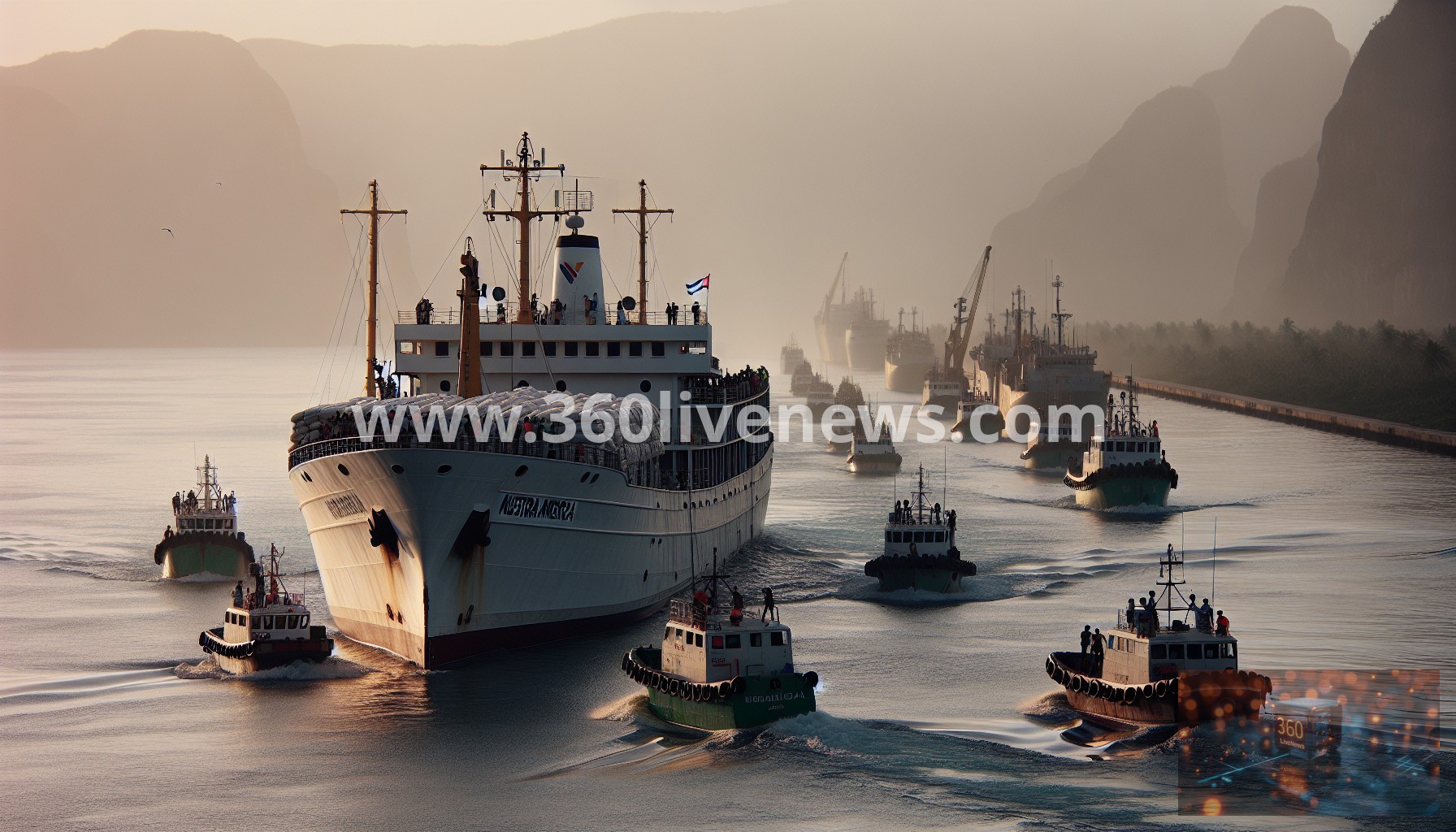
The humanitarian situation in Cuba continues to escalate as the first boat from the "Nuestra America," or "Our America," aid convoy arrived in the capital city, Havana, on Tuesday. The vessel included a group of approximately 30 activists and delivered essential supplies such as food, medicine, solar panels, and bicycles to the island, which has been severely affected by a stringent energy blockade imposed by the United States.
The current aid delivery marks a significant development in the ongoing economic crisis faced by Cuba, exacerbated by what many activists label as economic warfare. According to activist Thiago Avila, the blockade has led to a nearly total ban on petroleum imports over the past three months, further straining the nation's economic fabric. Avila criticized the US for its actions, describing them as representative of a "pirate state" that disregards international law.
The arrival of the flotilla is seen as a modest "gesture of solidarity" amid the acute humanitarian needs faced by many in Cuba. Activists assert that while the supplies provided are crucial, they represent only "a drop in an ocean of need," highlighting the severity of the situation on the ground.
Cuban authorities have reported an intensifying energy crisis that includes rolling blackouts and shortages of fuel, affecting both residential and commercial activities. This chronic lack of resources has provoked widespread discontent and protests among the population, especially as the summer months approach and the demand for electricity surges.
This humanitarian aid initiative comes at a time when the Biden administration has faced criticism for maintaining policies similar to those of its predecessor regarding Cuba. Critics argue that the sanctions have stifled economic growth and exacerbated poverty levels on the island. Despite calls for a reevaluation of the US's stance, the administration appears to be firm on its policy of isolation in response to Cuba’s political and economic alignment.
The flotilla started its journey from Mexico, a response to the dire circumstances in Cuba, which has seen a rise in solidarity movements throughout Latin America. The coordination of the flotilla underscores efforts to address the current humanitarian plight through grassroots activism. The sending of this aid is a demonstration of transnational solidarity against what activists describe as unjust economic constraints imposed by more powerful nations.
This event not only reflects the immediate humanitarian response but also encapsulates the deeper geopolitical dynamics at play. The US's economic sanctions and the broader historical context of US-Cuba relations, which have been fraught with tension since the 1960s, proliferate discussions around state sovereignty and human rights. Activists argue that the blockade infringes on Cuba's right to self-determination and undermines the well-being of its citizens.
The delivery of aid is part of broader international efforts attempting to alleviate the impact of sanctions on vulnerable populations. Various humanitarian organizations have expressed a willingness to engage in dialogue with Cuban officials to facilitate further aid efforts, although navigating the political landscape remains challenging. The conversation around humanitarian aid and intervention evokes the complexity of international diplomacy, particularly in Latin America where historical grievances often color present-day policies.
Looking ahead, the developments in Cuba's situation may prompt both domestic and international stakeholders to reconsider their approaches and responses. The effectiveness of the humanitarian aid, coupled with the persistent economic challenges, is likely to keep Cuba at the forefront of geopolitical discourse in the region, as the island grapples with both immediate needs and long-term structural changes.
#Cuba #Humanitarian #USBlockade #EnergyCrisis #NuestraAmerica #Activism #Solidarity #LatinAmerica
