Protesters in Dublin call for urgent passage of Occupied Territories Bill outside Leinster House
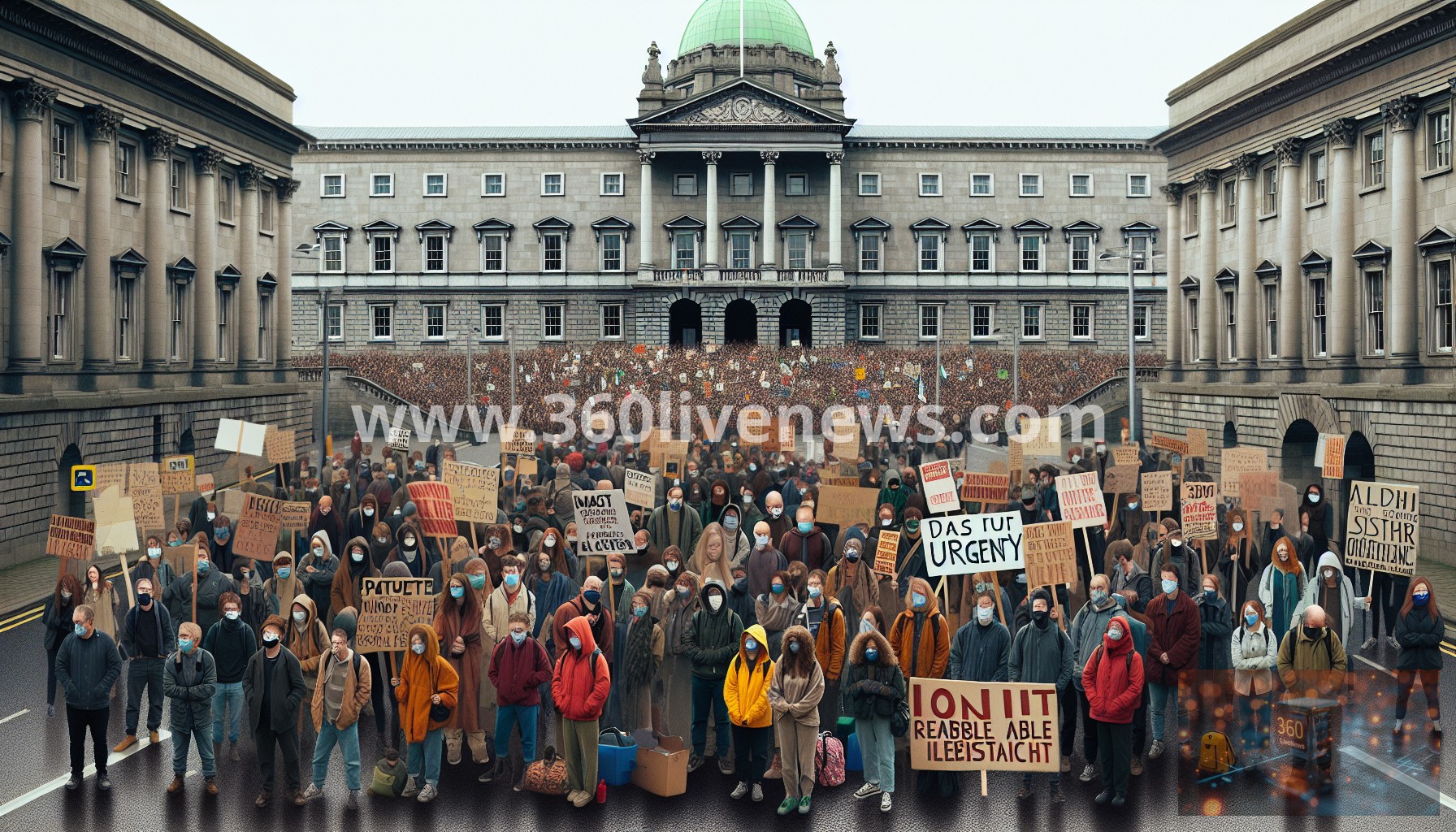
Protesters gathered outside Leinster House in Dublin, demanding the urgent passage of the Occupied Territories Bill (OTB) by the Oireachtas. The demonstration, which extended throughout the day, saw participants chanting and displaying Palestinian flags while maintaining access for traffic along Kildare Street. Speeches were delivered by several speakers, including Senator Frances Black, the bill's originator, who emphasized the importance of the legislation in addressing the rights of Palestinians.
The Occupied Territories Bill seeks to prohibit the importation of goods or services from territories under occupation, a contentious issue in the political landscape of Ireland and beyond. Throughout the day, protesters expressed not only their support for the bill's passage but also their desire for it to encompass services in addition to goods. The Irish government has noted that the inclusion of services is currently under review, reflecting ongoing debates about the bill's specific provisions and implications.
The OTB has become a focal point of advocacy and activism within Ireland, particularly among groups committed to solidarity with Palestinian causes. It has sparked discussions regarding human rights, international law, and Ireland's role in addressing global injustices. The demonstration concluded without reported incidents, though the persistence of calls for action demonstrates the significant public interest in the bill and the wider issues it seeks to address.
Historically, Ireland has maintained a humanitarian approach to foreign policy, particularly regarding Palestine. The country has a history of supporting resolutions aimed at improving the rights and conditions of Palestinians under occupation. The ongoing responsibilities that accompany this stance have led to increased scrutiny of bilateral trade practices with Israel and the occupied territories. As the OTB continues to navigate the legislative process, the question of how Ireland will position itself within international frameworks on human rights remains critical.
Demonstrators, influenced by grassroots movements and transnational networks advocating for Palestinian rights, view the OTB as a moral obligation. Among the crowd, various civil society organisations and activists underscored that the bill aligns with longstanding commitments to opposing apartheid and colonial policies. The participation of Senator Frances Black, who has long championed the rights of Palestinians, represents not only political support but also a continued push from elected officials to integrate such values into legislation.
In addition to this protest, a growing number of international voices have joined in solidarity, amplifying concerns over human rights violations in the occupied territories. Various human rights organisations closely monitor abuses faced by those living under occupation and advocate for accountability measures against states supporting such policies through trade. The United Nations and various humanitarian groups have documented systematic violations purportedly facilitated by these relationships, raising alarm within the international community.
The evolving situation in the Levant and the increasing visibility of Palestinian rights issues have led some experts to posit that the proposed legislation mirrors a larger trend within global politics toward accountability and justice. As movements to support Palestine gain traction, Irish civil society remains vigilant in pushing forward the OTB. Legislative debates will undoubtedly intersect with broader geopolitical dynamics as Ireland grapples with its national identity through the lens of foreign policy.
Domestic support for the bill, as reflected in large public demonstrations, underscores a societal willingness to challenge the status quo on issues of international law. While the Irish government remains critical of unilateral measures that could escalate tensions, the urgency for legislative action aligns with a larger narrative of ethical considerations in international relations. This rendering of the OTB reveals the complexity of navigating both economic interests and moral imperatives in modern-day governance.
The outcome of the Occupied Territories Bill could potentially reshape Ireland's interactions with both Israel and the occupied territories, instigating wider debates within the EU regarding trade agreements and human rights considerations. Such movements underscore the role of domestic advocacy in influencing foreign policy, prompting further inquiries into how nations balance economic relationships with ethical responsibilities.
#Ireland #Palestine #Protest #OccupiedTerritoriesBill #FrancesBlack #HumanRights #InternationalRelations #Solidarity
