Italy's national football team fails to qualify for World Cup for third consecutive time after penalty loss to Bosnia and Herzegovina
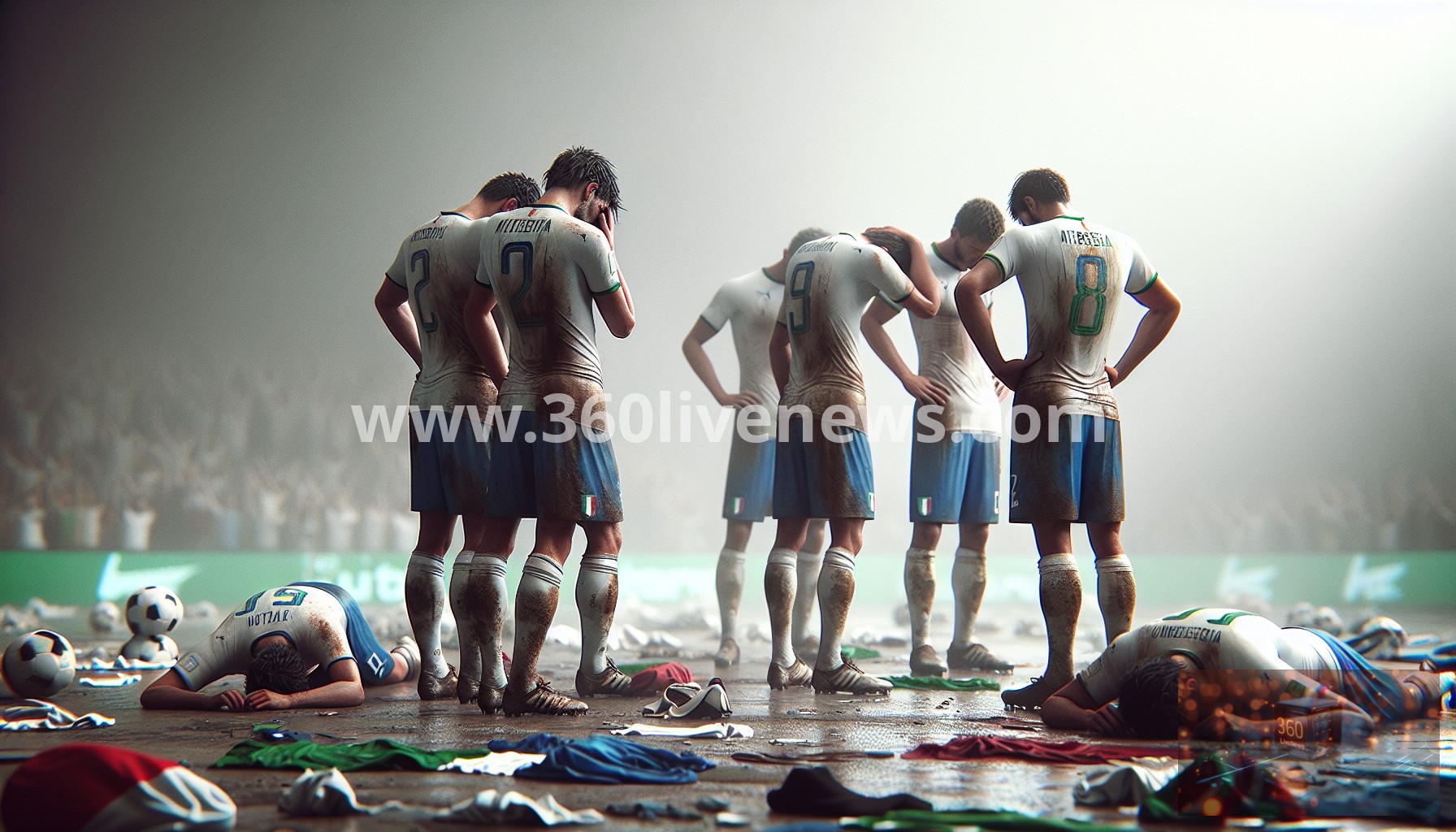
Italy's national football team faced a devastating defeat in their latest qualifying match, which has left fans and experts reflecting on a declining football legacy. On Tuesday night, the Azzurri lost 4-1 on penalties to Bosnia and Herzegovina in Zenica, a result that sealed their failure to qualify for the World Cup for a third consecutive time. The emotional aftermath has been dubbed by the Italian media as a 'third apocalypse', highlighting the national team's significant decline since their last triumph in 2006.
During the match, Italy struggled, facing the challenge against Bosnia and Herzegovina with only ten players for a significant portion of the game after a red card was issued before halftime. This series of unfortunate events for the four-time World Cup champions has prompted criticism and disappointment among fans, as echoed by Tommaso Silvestri, a 65-year-old onlooker in Rome who lamented that the team “couldn’t even find the target.”
The Azzurri's failure in this latest campaign marks another chapter in a series of disappointments that have plagued Italian football, particularly in international tournaments. Since their stunning victory at the UEFA European Championship in 2021 against England, expectations were raised, but this latest failure is a stark reminder of past struggles. Italy's inability to qualify for the last three World Cups highlights a troubling trend in their recent footballing history.
The roots of this decline can be traced back through several tournaments, where Italy failed to impress consistently. Their last major triumph, winning the FIFA World Cup in 2006, has been overshadowed by a series of underwhelming performances. In the intervening period, the Azzurri have seen their reputation as one of football's giants wane, with a series of early exits in subsequent competitions compounding the disappointment for fans.
Italy’s football administration will undoubtedly face pressure to provide answers and solutions following this latest candidacy failure. The Italian Football Federation, known as FIGC, has presided over this downward trajectory, battling allegations of mismanagement and strategic shortcomings. This overlap of sporting and administrative failures highlights the pressing need for a comprehensive approach to rejuvenate the national team.
In the wake of such a defeat, discussions surrounding the development of young talent within Italian football have grown increasingly urgent. Football academies and grassroots programs need reinforcement to ensure that the pipeline for young talent entering the national ranks is both robust and competitive. Despite having a rich footballing history and a devoted following, Italy’s football structure faces a critical re-evaluation period to prevent future failures like this.
The broader implications of Italy's footballing failure extend beyond just national pride; they resonate with fans' sentiments and reflect a significant identity crisis within Italian football culture. Loss in football not only translates to lost matches but also evokes a sense of nostalgia encapsulated by past glories, raising questions about what future generations will experience if such patterns continue.
Experts in the field of sports analysis argue that without strategic reform and a clear roadmap forward, Italy risks a prolonged period of mediocrity in the world of football. The lack of resilience shown by players during crucial matches, combined with the inadequacies within the footballing structure, reinforces the perception that Italian football must innovate to recover from its current malaise.
This most recent match has triggered a wave of emotional responses across Italy, many of whom experienced the nation’s glory days. For many fans, the heartbreak felt today is all too familiar, bringing into question whether the golden days of Italian football can be revived. The sentiments shared by fans in Rome, along with mixed reviews of Italy’s football approach, lay the foundation for anticipated conversations about how to restore success to what was once a powerhouse.
#football #Italy #WorldCup #Azzurri #Bosnia #FIGC #soccer #sports
