Australia and Singapore reaffirm commitment to uninterrupted fuel supply during Prime Minister Albanese's visit
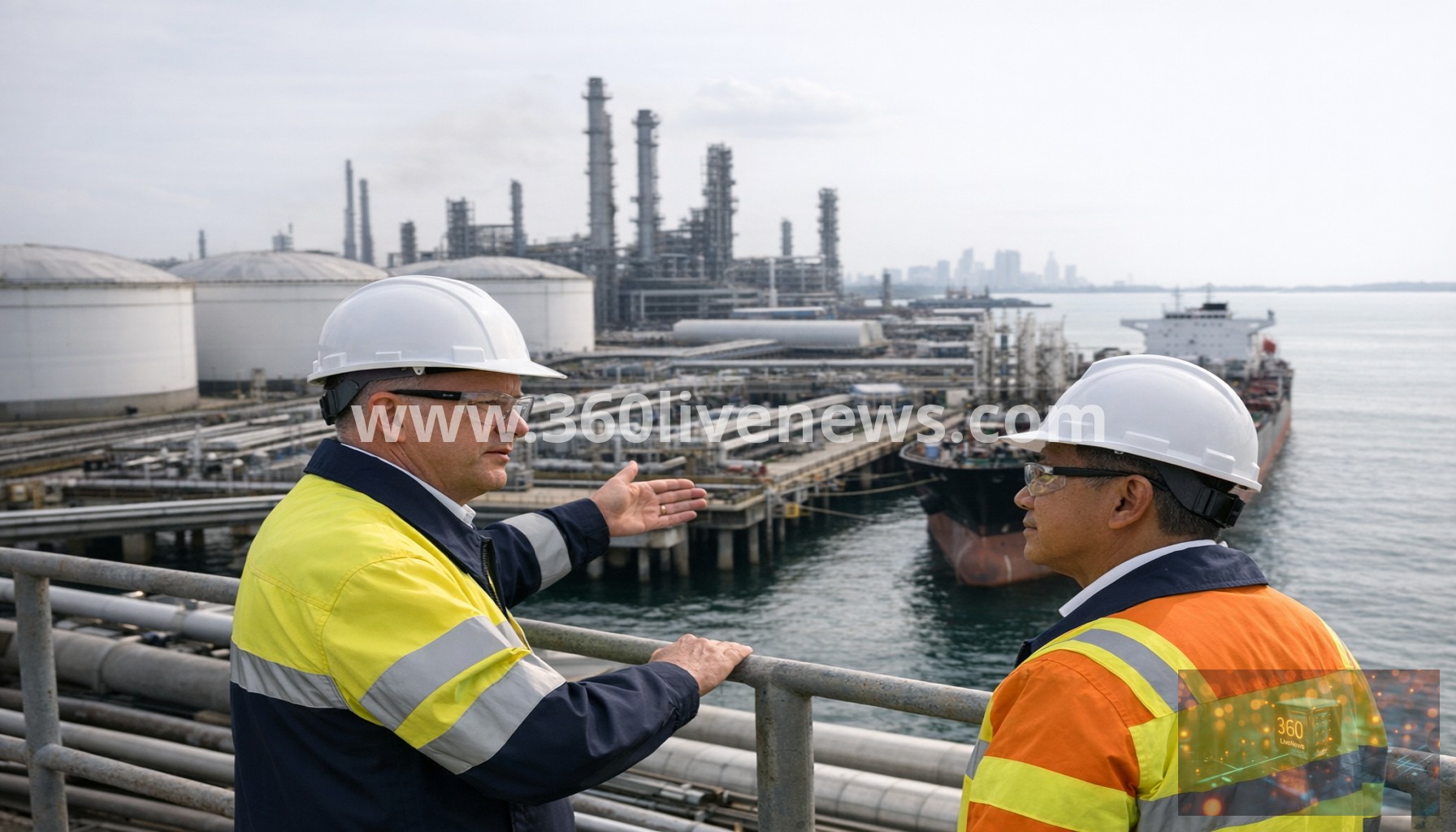
In a significant development for international energy cooperation, Australia and Singapore have reaffirmed their commitment to maintaining an uninterrupted fuel supply amidst ongoing global energy shocks. This commitment was articulated during Australian Prime Minister Anthony Albanese's recent visit to Singapore, where he engaged in discussions focused on the importance of Australia's liquefied natural gas (LNG) supply to the Southeast Asian nation. The visit, which began on Thursday, highlights the deepening economic ties and resilience agreements between the two countries.
During his media address, Albanese asserted the reliability of Australia as a pivotal supplier of LNG, stating, "Australia has been a very reliable supplier of LNG, and we will remain so." He emphasized that this reliability not only strengthens Australia's reputation in the energy sector but also plays a crucial role in encouraging investment in the extraction and supply of these essential resources. The remarks come at a time when nations worldwide are grappling with fluctuating energy supplies due to geopolitical tensions and market volatility.
In conjunction with affirming their energy partnership, both Australia and Singapore are working towards a legally binding agreement aimed at enhancing economic resilience and ensuring the stability of essential supplies. This agreement is expected to bolster cooperation in energy security, supply chains, and technology exchanges, which are vital for navigating the current energy landscape. The urgency of such agreements is amplified by the ongoing global disruptions that have affected energy markets significantly.
The bilateral discussions are set against a backdrop of increasing energy demands in the Asia-Pacific region, where Singapore plays a crucial role as a regional energy hub. The country's strategic location and advanced energy infrastructure make it an essential partner for Australia, which seeks to expand its influence in the Southeast Asian market. This partnership is also pivotal given the broader context of energy transition efforts aimed at reducing carbon emissions while meeting growing energy needs.
Albanese's visit is part of a broader initiative to strengthen Australia’s regional relationships, particularly amid rising tensions between global powers and shifting energy dynamics. As countries like China exert more influence in regional energy markets, Australia aims to solidify its position as a key energy supplier to Southeast Asia, which has been underscored by its recent energy policy initiatives. This includes efforts to pivot towards renewable energy while maintaining robust fossil fuel exports, particularly LNG.
In addition to the energy cooperation framework, both nations are also expected to explore further avenues for collaboration, including advancements in clean energy technologies and sustainable fossil fuel extraction practices. This multi-faceted approach aligns with Australia’s broader economic strategy to enhance trade relationships within the region, particularly in light of recent disruptions caused by COVID-19 and geopolitical tensions.
The establishment of a legally binding agreement for essential supplies and economic resilience emphasizes the importance of stable partnerships in times of uncertainty. Such frameworks not only ensure reliable energy for both nations but also serve as a model for other countries striving for energy security amid a rapidly changing global landscape.
The developments highlight Australia’s proactive stance on energy diplomacy and its commitment to creating resilient supply chains amid a backdrop marked by potential conflicts and negotiations over energy resources. Singapore's strategic alignment with Australia on energy supply reaffirms its role as a significant player in establishing stable energy markets in the region.
As both countries embark on this strategic partnership, the implications of the agreement will be closely monitored by analysts who point out that the success of such initiatives will depend predominantly on geopolitical factors, including market response to changing energy needs and international diplomatic relations. The focus on energy security embodies not just immediate practicalities, but also long-term bilateral relations that could reshape energy supply dynamics in the Asia-Pacific region.
#Australia #Singapore #LNG #EnergySecurity #EconomicResilience #GeopoliticalTensions #EnergyPartnership #GlobalEnergyMarket