Thousands of Australians stranded as US and Israel military actions disrupt flights in the Middle East
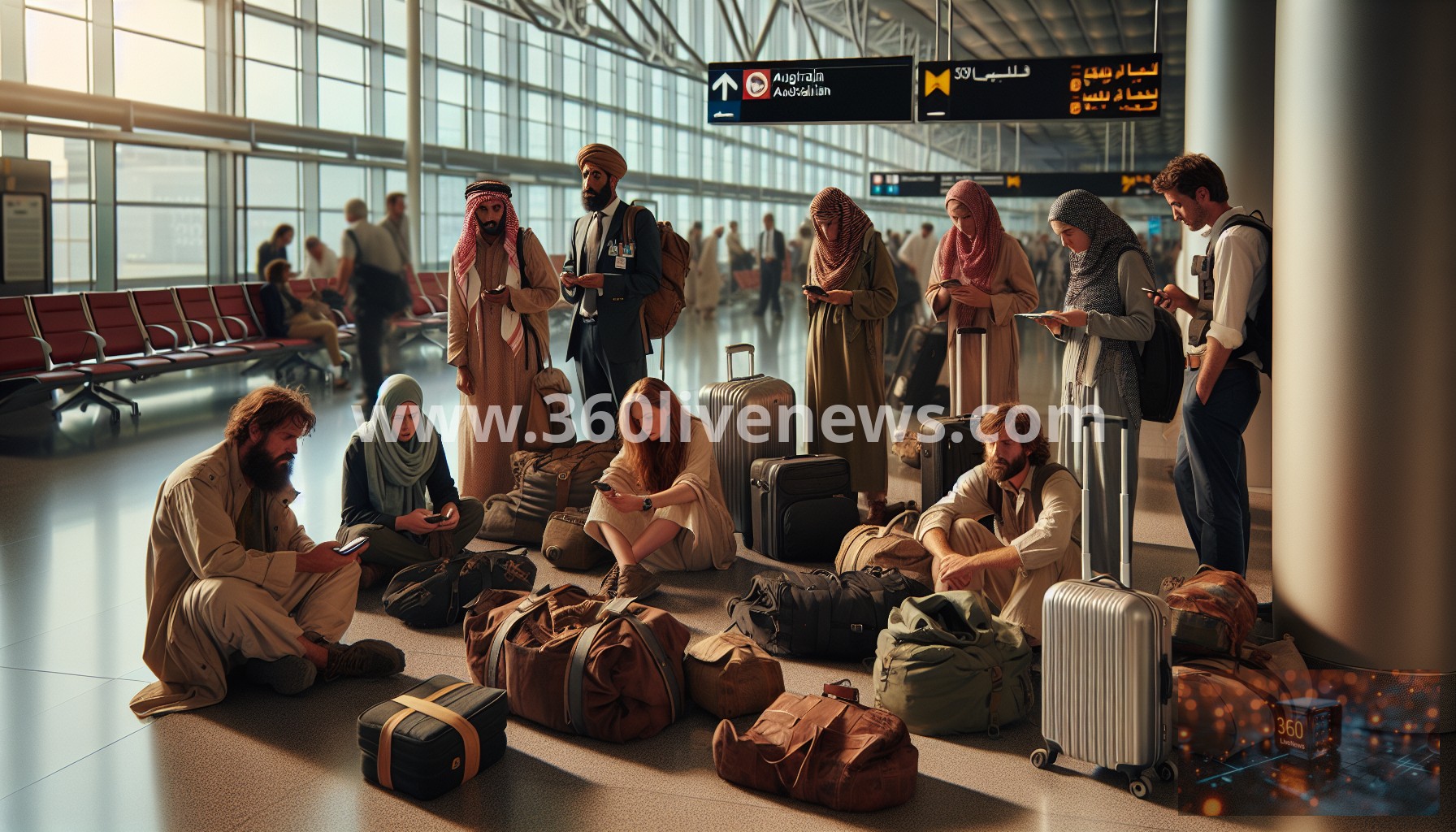
Recent military actions by the United States and Israel against Iran have thrown the Middle East into turmoil, with significant repercussions felt globally. As hostilities escalate, thousands of Australians find themselves stranded in international airports across the region, as flight services have been heavily disrupted. The unannounced airstrikes, which occurred on a recent Saturday, prompted multiple country closures of their airspace, severely impacting travel routes.
According to the Australian Travel Industry Association, the sudden cessation of commercial flights and subsequent cancellations have affected an estimated 115,000 Australians currently in the region. Affected areas include major international transit hubs in countries like Iran, Iraq, Syria, and the United Arab Emirates. Travel disruptions have left many Australians in precarious situations, including experiences described vividly by a woman from Brisbane, who recounted sleeping on an airport floor while hearing "missiles flying overhead."
The strikes, which were confirmed to have been launched by the United States and Israel, are seen as part of a broader strategic initiative to prevent Iran from advancing its nuclear capabilities. Australia's Deputy Prime Minister Richard Marles expressed support for these actions during a recent interview, noting that the Australian government views the Iranian regime as a significant threat. Marles highlighted that Australia's stance aligns closely with the United States' objectives in the region, particularly concerning nuclear non-proliferation initiatives.
As the conflict unfolds, there has been a growing concern over the economic implications for global markets. Financial analysts predict that the escalation in military tensions is likely to drive investors towards "safe haven" assets, notably gold, as instability in oil shipment routes could lead to increased prices. Already, major financial indices reflected caution, with Wall Street experiencing a downturn amid fears surrounding the credit quality of large banks and the ongoing sell-off of technology-related stocks.
Conversely, the Australian government is delaying any repatriation flights until the situation stabilizes and commercial flights potentially resume. Foreign Minister Penny Wong has indicated a careful approach, urging citizens to remain calm as the government monitors the situation. The government's priority is both the safe return of its nationals and managing financial costs associated with repatriation.
The implications of the conflict extend beyond immediate travel chaos, raising concerns about the overall regional security landscape. The closure of airspace by multiple nations, including key players such as Iraq and Syria, signals a heightened state of alert and preparation for potential further military actions. This pattern of rapid escalation exemplifies how fragile the security dynamics in the Middle East can be, often overshadowed by ongoing diplomatic tensions and previous military engagements.
This recent confrontation recalls earlier phases of U.S.-Iranian hostilities, where similar patterns of military interventions have subsequently shaken regional stability. Historically, the U.S. has conducted military operations in the Middle East under various justifications, but the absence of warning to international allies about the strikes has raised eyebrows, complicating diplomatic relations further. This incident emphasizes the complexities and intertwined nature of security, political alignments, and national objectives in an area of continuous volatility.
In the context of long-term geopolitical strategies, the Australian government's response and stance are particularly pivotal. Advocacy for strong diplomatic relations with allies like the United States, while managing domestic safety concerns, places Australia at a crossroads of international relations and national security. The reliance on coalition partners in such incidents can have ripple effects, shaping future foreign policies towards the Middle East and influencing military strategies regarding similar threats.
Ultimately, as events unfold, this escalation not only endangers the lives of Australians abroad but also carries significant socio-economic ramifications on a global scale. Observations from economic experts suggest that sustained tension could disrupt international markets, leading to an increased cost of living and broader economic instability. The connection between military action and financial health on a global stage proves how integral geopolitical dynamics are to everyday life.
#Iran #Israel #UnitedStates #Australia #military #economy #foreignpolicy #diplomacy
