Drone attack on Victory Base near Baghdad by Iranian-backed militia marks escalation in US military operations in Iraq
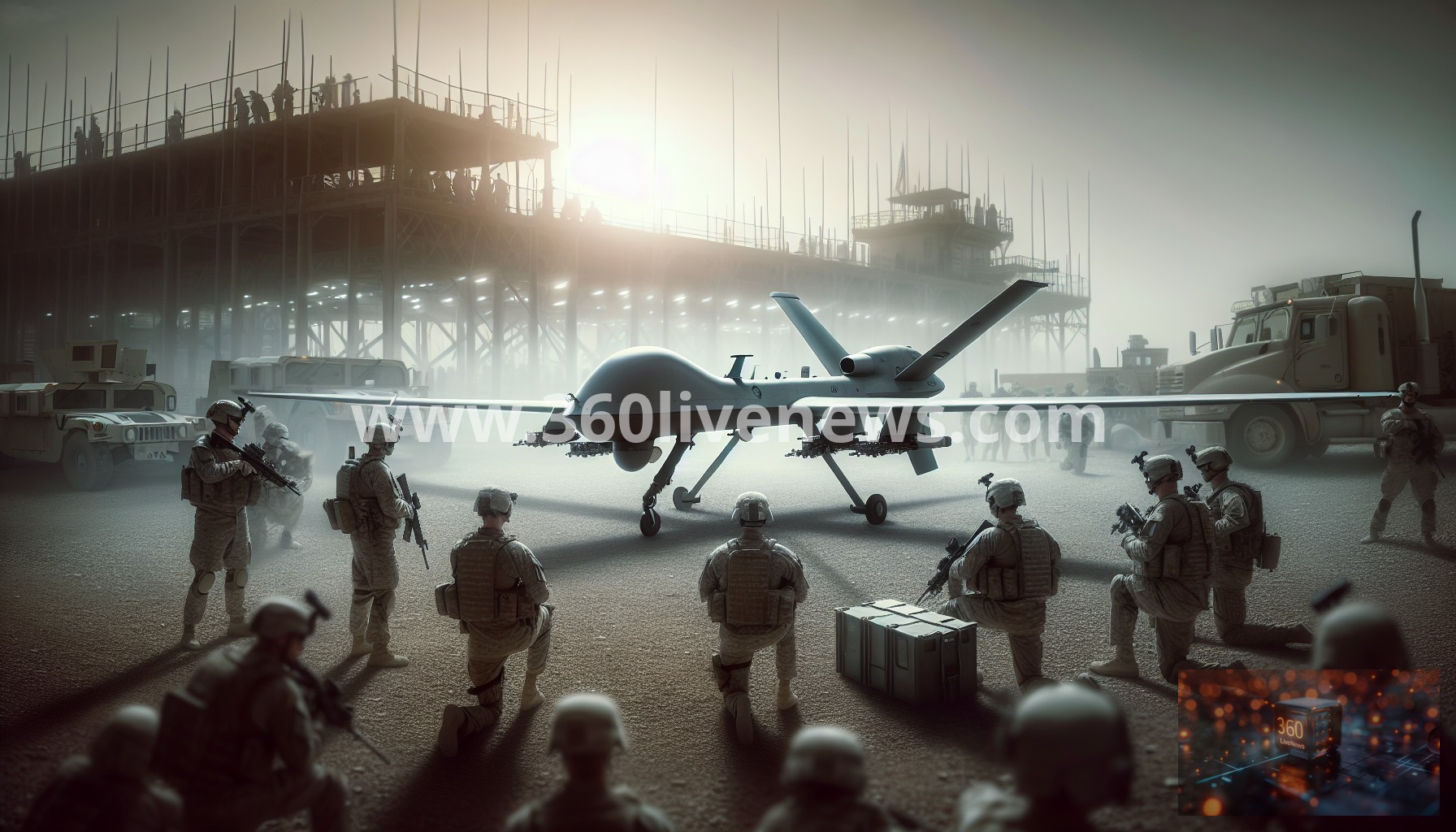
The situation surrounding US military operations in Iraq escalates following a recent drone attack on the Victory Base, located near Baghdad International Airport. The attack was carried out by Kataib Hezbollah, an Iranian-backed militia, which released drone footage claiming responsibility. This incident marks a significant advancement in the militia's capabilities, described as the first successful use of a first-person view (FPV) drone to bypass US defenses.
The drone attack occurred shortly before 06:08 UTC, and the successful strike introduces a worrying dynamic in the ongoing conflict. Drone warfare has become a critical element of military strategy for various non-state actors, and this incident suggests a shift in tactics employed by Kataib Hezbollah. Using advanced drone technology poses new risks for US personnel stationed in the region, heightening concerns over their safety and operational effectiveness.
General David Petraeus, a former CIA chief, highlighted the complexities of the current geopolitical climate. He noted that US actions in the region appear to aim at impairing Iranian defenses, particularly in light of known Israeli military strategies against Iran. His comments point toward an intertwined narrative of US and Israeli policy which complicates the landscape in which such attacks are taking place.
Kataib Hezbollah has been at the forefront of Iranian proxy activities in Iraq, receiving substantial support from the Iranian government. Their capabilities have notably increased in recent years, allowing them to launch more sophisticated attacks against US assets. These developments suggest a broader strategy by Iranian-backed forces to undermine US presence and influence in Iraq, and potentially retaliate against perceived aggressions.
Historically, the presence of US troops in Iraq has been a source of contention. Following the withdrawal of US forces, various militia groups have attempted to fill the power vacuum, positioning themselves as defenders of Iraqi sovereignty against foreign influence. However, the recent drone strike underscores a shift from localized militancy to a more coordinated and technologically adept approach to warfare, complicating the efforts of US and coalition forces to stabilize the region.
US officials have publicly recognized the increasing risk posed by drone technology in the hands of non-state actors. The capabilities demonstrated by Kataib Hezbollah signal an adaptation within their operational doctrine, which may inspire other militias to follow suit. This incident could lead to heightened security measures on US bases, potentially reshaping the operational landscape for American troops deployed in the area.
The implications of this attack are far-reaching and could influence US foreign policy decisions moving forward. The administration may reassess its military posture in Iraq, factoring in the enhanced threat posed by drone warfare. Such evaluations will likely lead to discussions regarding further support for the Iraqi security forces and possible adjustments to the rules of engagement for US military personnel.
This drone attack reflects the broader tensions that have characterized US-Iran relations in recent years, particularly concerning Iraq and the role of proxy groups. As these militias adopt more sophisticated tactics, the potential for conflict escalation increases, drawing in regional powers and complicating international diplomatic efforts. The situation is dynamic and will require close monitoring as further developments unfold.
#Iraq #DroneAttack #USMilitary #KataibHezbollah #Baghdad #Iran Geopolitics">#Geopolitics #MiddleEast
