Belarus and North Korea strengthen ties with friendship treaty and firearm gift exchange between leaders
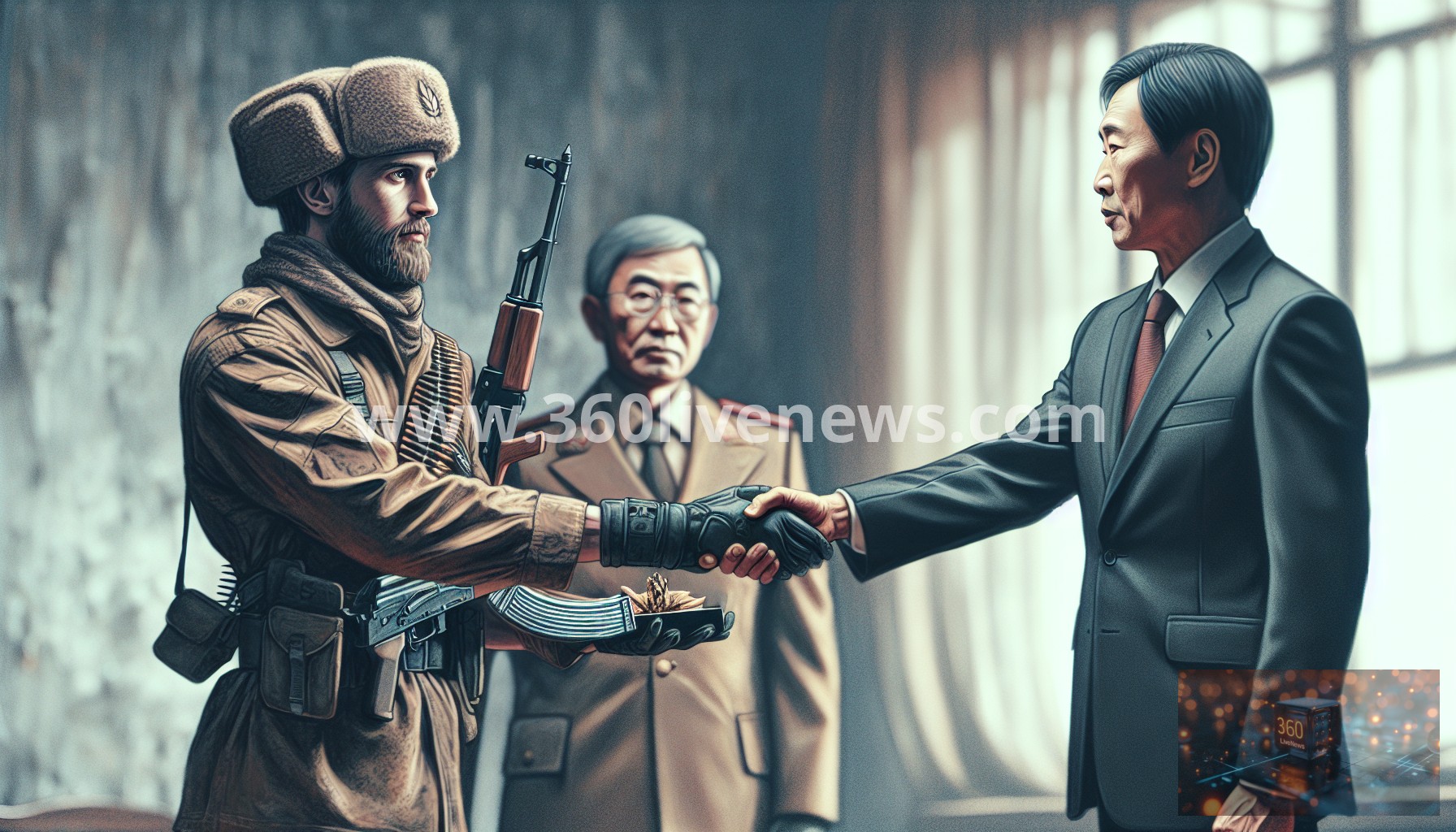
At a recent meeting between leaders of Belarus and North Korea, Belarusian President Alexander Lukashenko presented a firearm to North Korean leader Kim Jong Un. This gift exchange occurred in the context of signing a friendship treaty, as both nations seek to deepen their ties. The meeting is viewed as a significant moment in Belarus's attempt to forge stronger relationships with allies of Russia while attempting to navigate its relationship with the United States.
The meeting marks a further operationalization of Belarus’s foreign policy goals under Lukashenko. The Belarusian leader has been keen to bolster his country’s relations with partners considered adversaries by the West. Following a period marked by isolation due to its domestic policies and support for Russia's actions in Ukraine, Belarus appears to be pivoting back towards engaging with countries like North Korea. This new alignment is reflected in Lukashenko's stated desire to support Russian allies while also signaling a potential shift towards a more normalized relationship with the United States, a position few anticipated given the contentious past interactions.
Official statements reveal that this friendship treaty is aimed at fortifying defense ties between the countries. Belarus has historically served as a tactical supporter for North Korea against increasing international sanctions. As both nations face scrutiny from the West, this alliance may offer mutual benefits in terms of security and military collaboration. Analysts suggest this partnership could lead to increased military and technological exchanges, enhancing both nations' defense capabilities in an increasingly fractious global order.
Historically, Belarus and North Korea have maintained a complicated relationship characterized by sporadic engagements and economic exchanges. Traditionally considered a pariah state, North Korea maintains limited foreign relations, which have mainly been strategic and driven by military cooperation. For Belarus, aligning with North Korea represents an effort to regain international leverage and assert its presence on the geopolitical stage amidst mounting challenges from the West.
The broader implications of this friendship treaty signal a potential shift in the geopolitical landscape, particularly as key players like the U.S. and European nations closely monitor these developments. With the rise of authoritarian regimes, the partnership between these two states may embolden other such alliances that defy Western influence. The treaty could function as a litmus test for how Western sanctions are circumvented and how non-Western powers might collaborate against perceived common adversaries.
Additionally, this growing alliance has implications for military strategies in the region, with analysts warning of the potential for increased provocations in the Asia-Pacific. Kim Jong Un's government has been historically belligerent in its defense posture, and bolstered by external support, the North Korean regime may become emboldened to pursue more aggressive military postures. This could unsettle the already tenuous balance of power in Eastern Asia, prompting responses from neighboring countries like South Korea and Japan.
The current developments also pose challenges to U.S. policy regarding North Korea. American strategy has focused on denuclearization and regional security. As North Korea strengthens its military ties with Belarus, this complicates an already intricate diplomatic nexus where previous negotiations have continually faltered. Experts predict that new tactical partnerships like this might necessitate a reevaluation of existing policies to counterbalance the influence of these emerging alliances.
In this context, the meeting between Lukashenko and Kim serves as both a symbolic and strategic gesture. Not only does it signify the potential for renewed military collaboration, but it also reflects a broader trend of countries enduring sanctions seeking novel partnerships. As Belarus peels away layers of isolation and aligns itself more closely with North Korea, the international community may be watching with concern. How this relationship develops in the near future could have unforeseen ramifications on international security dynamics.
#Belarus #NorthKorea #USRelations #Russia #Military #Geopolitics #Defense #ForeignPolicy
