Thousands protest in Iraq against US and Israeli actions amid rising regional tensions involving Iran
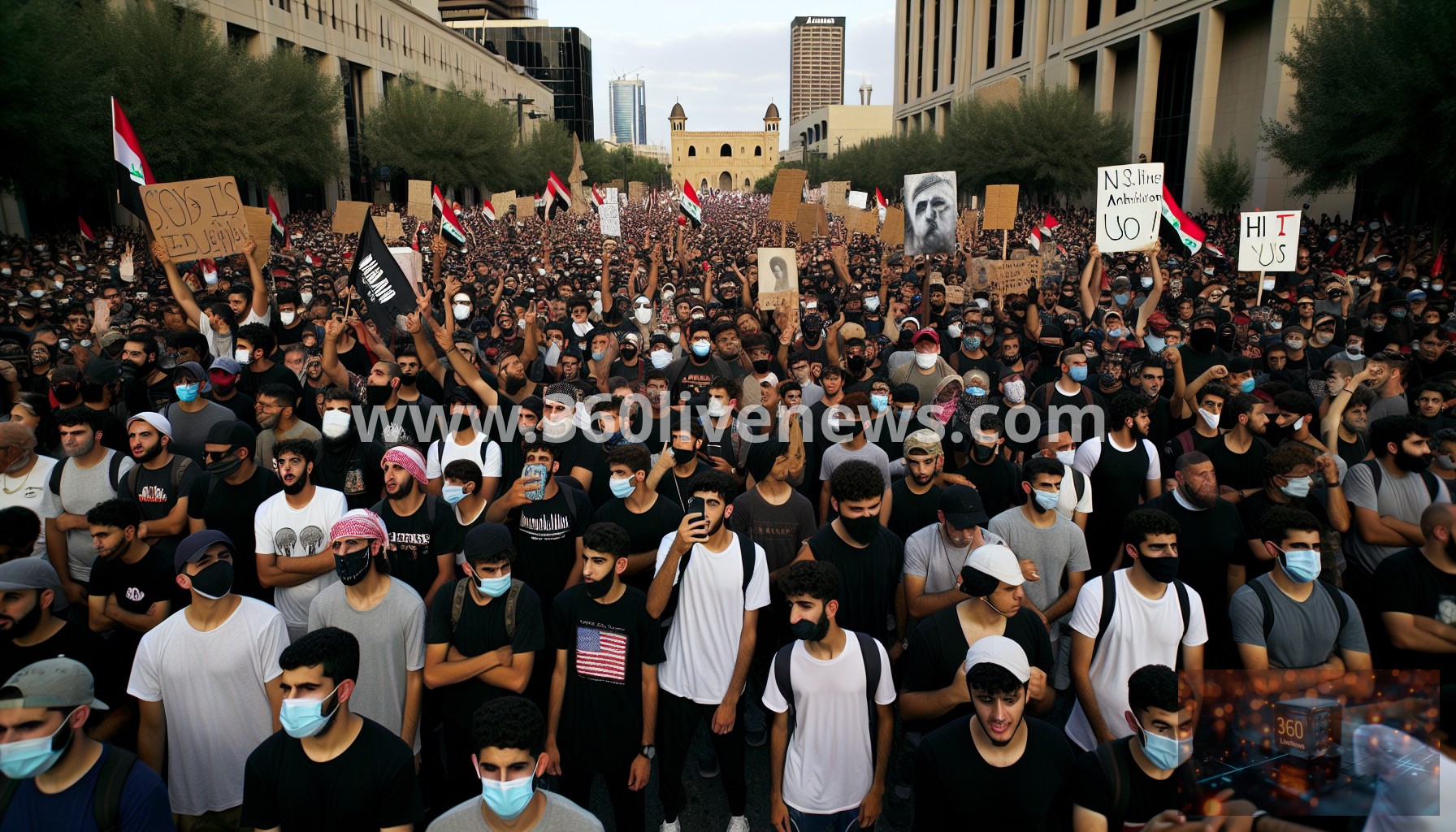
Thousands of demonstrators have taken to the streets in Iraq, vocally opposing the ongoing conflict between the United States and Israel against Iran. This rally, primarily organized by the supporters of Iraqi Shia leader Muqtada Sadr, unfolded across major cities including Baghdad, where large crowds gathered in Tahrir Square chanting slogans denouncing both nations’ military actions in the Middle East. The protests come in the wake of increasing regional tensions characterized by a series of events depicting Iraq as an unwilling participant in a broader geopolitical conflict involving Iranian interests.
During the protests, participants expressed vehement opposition to U.S. military operations and the perceived aggression from Israel, with some demonstrators stating, “No, no to Israel” and “No, no to America.” As the conflict appears to escalate, Iraqi citizens are grappling with the direct impact on their homeland, which has become a battleground for the competing interests of external powers. Reports indicate that attacks targeting U.S. forces and pro-Iranian factions within Iraq have intensified, further complicating the nation's stability amid these protests.
Individuals like Dhirgham Samir, a participant in the demonstration, articulated their frustrations, criticizing the military conflict as "senseless." Many in Iraq believe these foreign engagements are not simply military actions but aggression that undermines national sovereignty and exacerbates local hardships. The protests signal widespread dissatisfaction not only with external military actions but also with the Iraqi government's inability to navigate these complex geopolitical waters, raising questions about governance and foreign policy.
In the broader context of Middle Eastern politics, the conflict involving U.S. and Israeli forces against Iran has deep historical roots. The United States has maintained a presence in the region, primarily aimed at curbing Iran's influence, which has cyclically resulted in heightened tensions. Barbara Slavin of the Stimson Center notes that international efforts to pressure Iran have faltered, with Iran's leadership displaying notable resilience against external coercion. The strategic chokehold of the Strait of Hormuz exemplifies the critical nature of maritime routes that could trigger significant global economic disruptions if closed due to military actions.
As Iraq's protests unfold, the geopolitical ramifications could extend far beyond its borders. The country has been a witness to various regional conflicts that have drawn in external actors like the U.S. and European allies, raising concerns about prolonged instability. The recent rallies may also influence discussions at international forums regarding the approaches taken toward Iran and its allies, potentially shifting diplomatic takes on Middle East policy.
The protests underscore the complex interplay between domestic sentiment in Iraq and international relations. Given Iraq's historical context as a battleground due to foreign interventions, the repercussions of escalating tensions in the region could lead to further civil unrest, complicating governmental efforts to maintain order. The events unfolding not only highlight the concerns of Iraqi citizens but also reflect a broader struggle for control of narratives around national identity and resistance to external influence.
Simultaneously, the situation continues to evolve, necessitating ongoing analysis of not only military strategies but also economic implications and local social dynamics. A significant concern is the potential for worsening humanitarian conditions as access to resources may become further restricted in light of conflict escalation. The protestors' demands could resonate widely among populations affected by military decisions made thousands of kilometers away, which highlights the interconnected nature of modern geopolitics within the Middle East.
As the situation develops, various stakeholders, including regional powers and global governance bodies, will be observing closely. The responses to the Iraqi protests and the broader implications of the U.S.-Israel-Iran dynamics will shape the security architecture of the region in ways that may redefine alliances and enmities in the future. The unfolding narrative in Iraq serves as a critical reminder of the impact that external conflicts can have on national pride and the quest for sovereignty in a landscape fraught with historical grievances and current pressures.
This moment in Iraq is pivotal, capturing the intersection of local activism, geopolitical maneuvering, and the quest for national autonomy within a context marked by foreign interventions. The outcome of these protests could potentially reshape Iraq's political landscape and alter its role in regional power dynamics, as the citizens demand accountability and assert their position in the face of overwhelming external pressure.
#Iraq #US #Israel #Iran #MiddleEast #Protests #MuqtadaSadr #Geopolitics
