Iran Increases Military Presence in Tehran Amid Ongoing Conflict with US and Israel
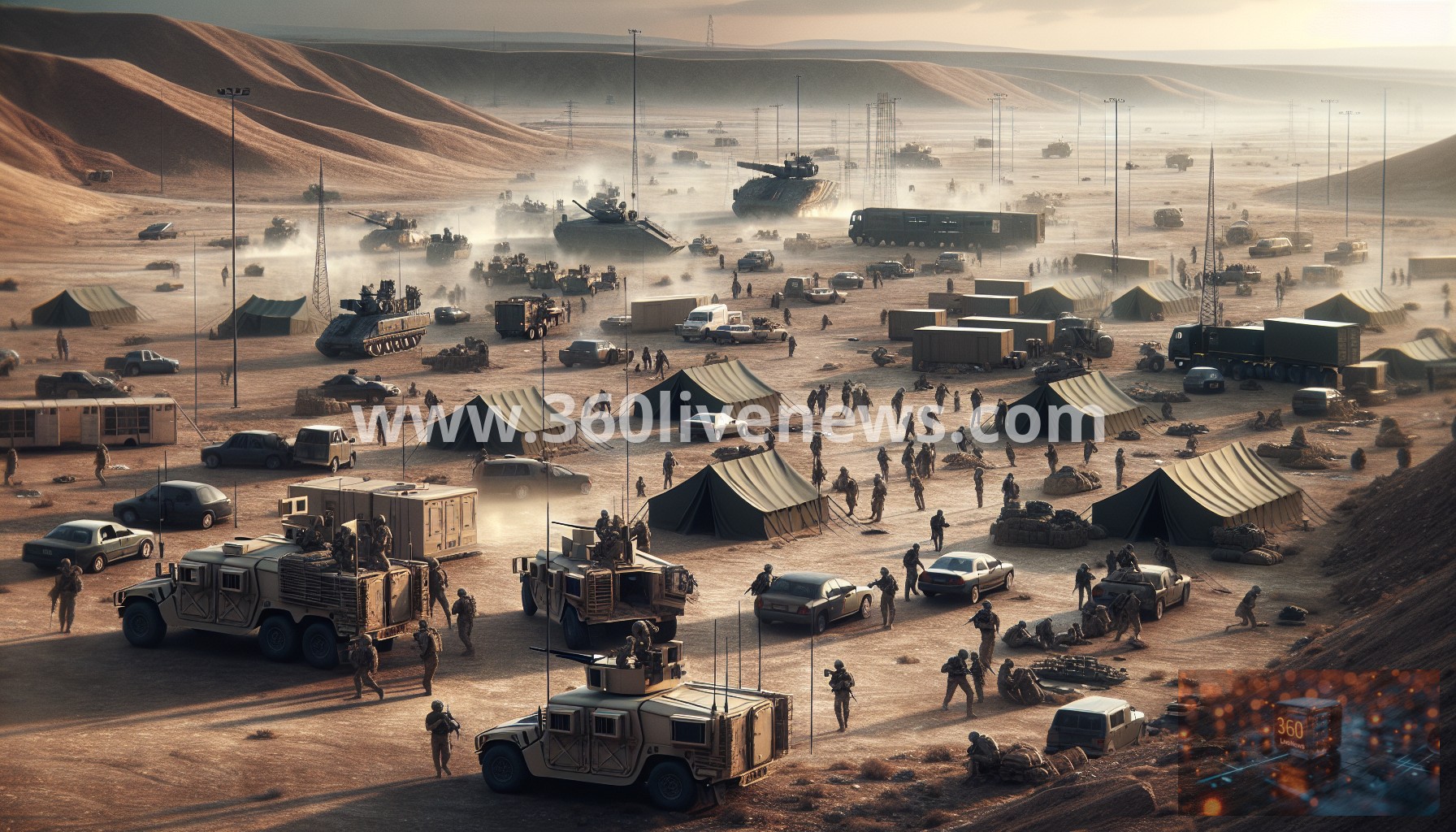
In recent developments, the Islamic Republic of Iran is witnessing a marked increase in military activities, as heavily armed state forces enforce control in key urban areas, notably Tehran. This comes amidst a backdrop of escalating strikes launched by the United States and Israel, which are reportedly intensifying their military objectives against Iran, now entering nearly a month of conflict with no resolution in sight. Various checkpoints, roadblocks, and armed patrols have established a strong security presence on the streets of Tehran, with some being operated by masked members of the Basij force, part of the Islamic Revolutionary Guard Corps (IRGC).
Eyewitness accounts from Tehran highlight the visibility of armed forces, who are reportedly equipped with assault rifles and machine guns mounted on vehicles. Residents have described groups of cars parading through neighborhoods while displaying flags and loudspeakers broadcasting religious slogans. The IRGC has indicated that children as young as 12 may join these armed patrols, reflecting Iran's commitment to maintaining security amidst rising tensions. Notably, many of these checkpoints have been targeted in recent weeks by drone strikes, forcing their operators to remain mobile and reposition in response to these threats.
Adding to the complexities of the ongoing hostilities, Iranian hackers, identified as part of the Handala Hack Team, have recently made headlines by releasing personal emails and photographs of the current FBI director, Kash Patel. This act is seen as a retaliatory measure linked to Iran’s escalating cyber warfare capabilities and a broader strategy to destabilize U.S. operations. The hackers claimed that they were able to breach the FBI's systems, highlighting vulnerabilities in what they referred to as “impenetrable” security systems.
The situation is compounded by escalating rhetoric from political entities, including discussions at the Conservative Political Action Conference (CPAC) in the United States. The conference has witnessed shifts in perceptions regarding military engagement in Iran, as supporters of former President Trump grapple with the implications of a potential conflict following his previous assertions about military action. The divide in sentiment reflects broader concerns regarding U.S. military strategies in the Middle East and the implications for U.S.-Iran relations.
Furthermore, a poignant moment arose during a recent meeting of the United Nations Human Rights Council when a grieving Iranian mother recounted the loss of her children, who were killed in an airstrike on their school. This tragic instance underscores the human cost of the ongoing conflict and serves as a rallying point for Iranian narratives regarding civilian casualties resulting from U.S. and Israeli military operations.
Reacting to the actions in Lebanon, Lebanese Prime Minister Nawaf Salam emphasized that the ongoing Israeli offensive was “imposed” on Lebanon, citing the aggressive response from Hezbollah following the assassination of Iran's Supreme Leader, Ayatollah Ali Khamenei. This incident has further complicated the geopolitical landscape, with Israel’s military objectives expanded to include maintaining control over southern Lebanon near the Litani River, an area that holds strategic importance.
The use of drone strikes in the Iranian military equation marks a significant escalation in the conflict dynamics between the involved states, pushing the region towards wider military engagements. Checkpoints and roadblocks which had once been viewed as standard security measures are now being perceived as preparation for extended military engagements amidst the increasing likelihood of ground warfare.
As Iran solidifies its military position against perceived threats, the international community watches closely to assess implications for regional stability. The U.S. has reiterated its commitment to support Israeli operations, while Iran articulates its resolve to defend against foreign aggression, suggesting that the regional conflict may extend in duration and intensity. The actions taken in the coming days will likely define both military and diplomatic trajectories for all parties involved.
In summary, the ongoing situation in Iran, bolstered by significant military maneuvers and heightened tensions, represents a critical juncture in the landscape of U.S.-Iran relations. As the conflict continues to evolve, the broader implications of military presence and state actions resonate through the political and social fabric of the Middle East, affecting not only local populations but also international policies and agreements.
